If you’re planning to get SOC 2 compliant, one of the first questions you’ll face is:
Should you go for SOC 2 Type 1 or Type 2?
Choosing the wrong one can cost you time, money, and even deals.
Let’s break it down in simple terms so you can make the right decision.
What is SOC 2? (Quick Context)
SOC 2 is a security compliance framework designed for companies that handle customer data.
It focuses on how well your systems protect:
- Data security
- Availability
- Confidentiality
Most SaaS and service companies need it to work with global clients.
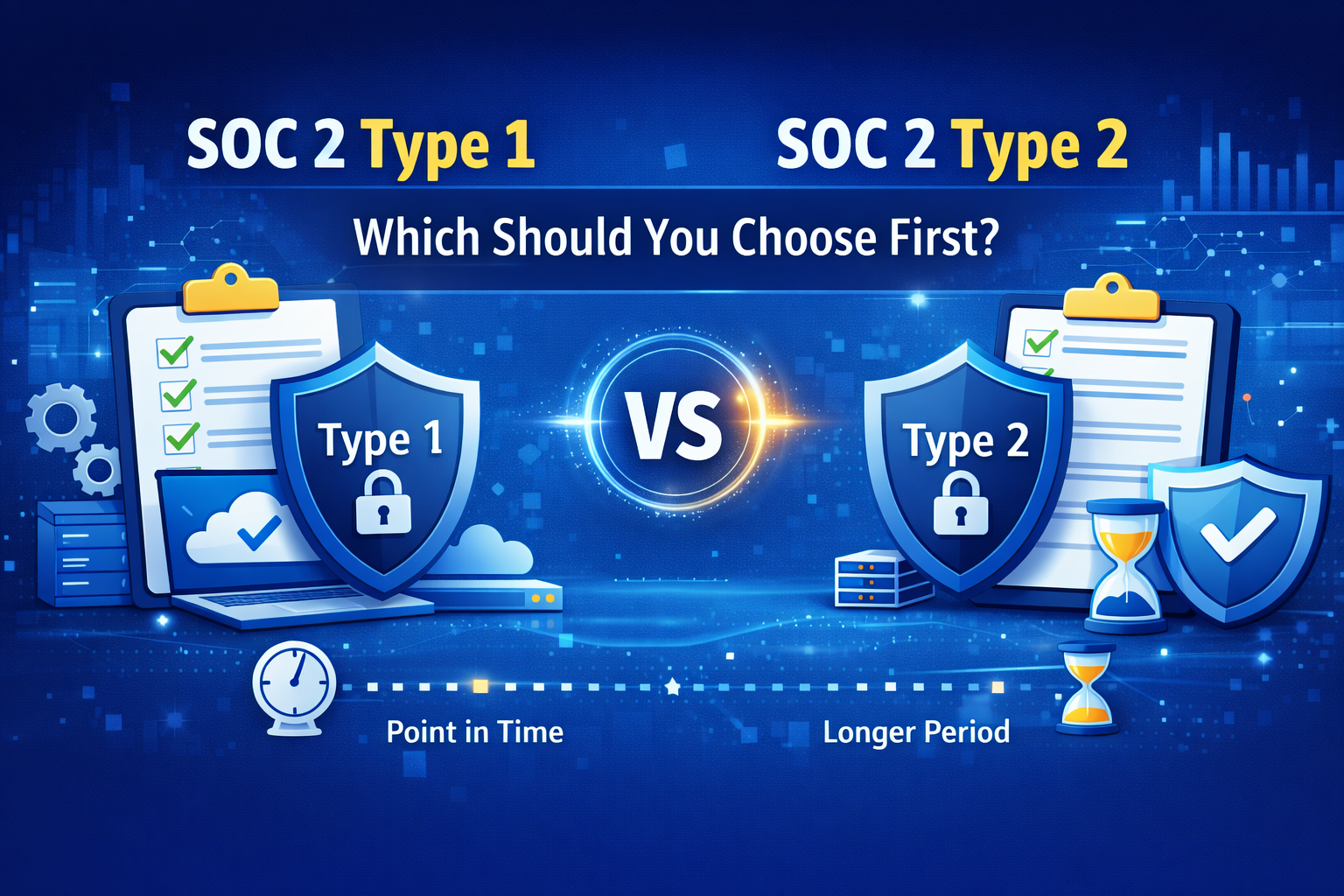
What is SOC 2 Type 1?
SOC 2 Type 1 evaluates your controls at a single point in time.
It answers:
“Are your systems designed properly?”
Key points:
- Snapshot-based audit
- Faster to complete
- Focuses on design, not performance
What is SOC 2 Type 2?
SOC 2 Type 2 evaluates your controls over a period of time (usually 3–6 months).
It answers:
“Are your controls actually working consistently?”
Key points:
- Time-based audit
- More credible
- Required by most enterprise clients
SOC 2 Type 1 vs Type 2 (Comparison Table)
| Feature | Type 1 | Type 2 |
|---|---|---|
| Audit Focus | Design of controls | Effectiveness of controls |
| Time Period | Point-in-time | 3–12 months |
| Difficulty | Easier | More complex |
| Trust Level | Moderate | High |
| Client Preference | Limited | Strongly preferred |
Key Differences Explained (Simple Terms)
- Type 1 = You have security controls
- Type 2 = Your security controls actually work
That’s the biggest difference.
When Should You Choose SOC 2 Type 1?
Go for Type 1 if:
- You’re just starting SOC 2
- You need quick certification
- You want to show initial compliance to clients
- Your processes are still evolving
Best for startups and early-stage companies
When Should You Go for SOC 2 Type 2?
Choose Type 2 if:
- You have enterprise clients
- You want higher trust and credibility
- You’ve already implemented controls
- You need long-term compliance
Most companies ultimately need Type 2
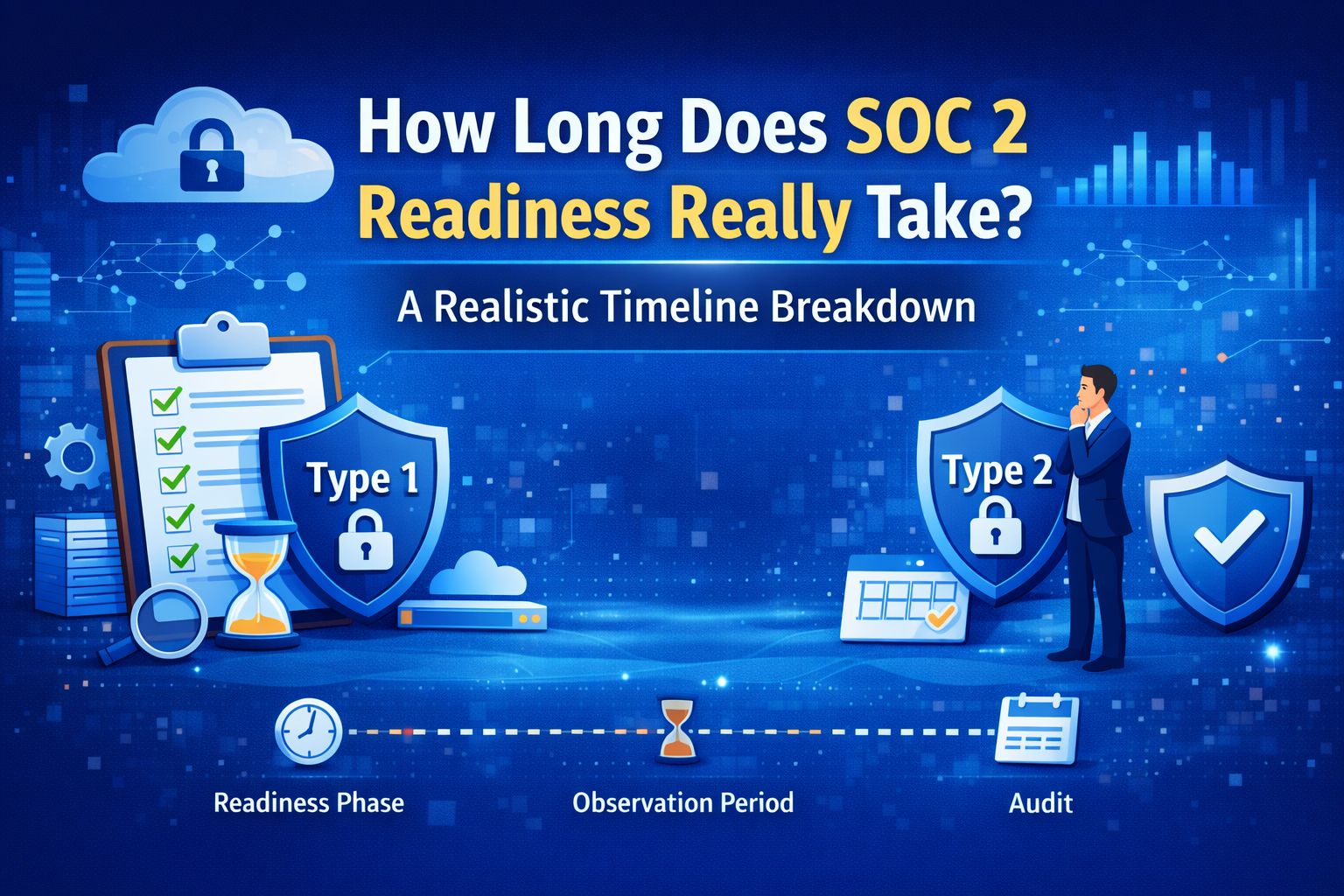
SOC 2 Type 1 vs Type 2 Timeline
Typical timeline:
- Type 1: 4–8 weeks
- Type 2: 4–9 months (including observation period)
Type 2 takes longer because auditors need real performance data.
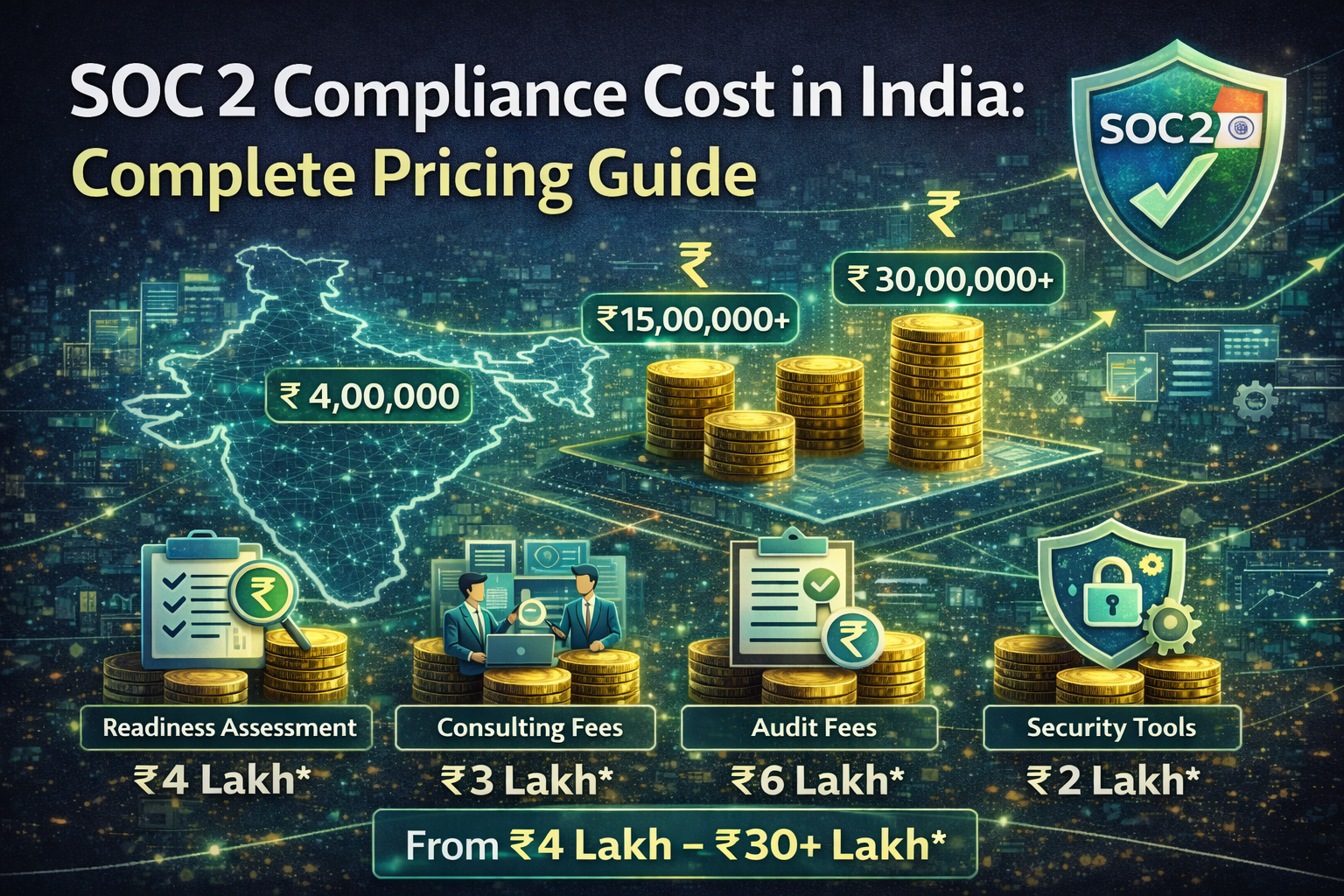
SOC 2 Cost Comparison (India + Global)
Estimated cost:
- Type 1: ₹3L – ₹7L
- Type 2: ₹6L – ₹15L
Costs depend on:
- Company size
- Scope
- Tools used
Common Mistakes Companies Make
- Jumping directly to Type 2 without readiness
- Choosing Type 1 but never upgrading
- Ignoring evidence collection
- Underestimating timeline
Expert Recommendation (Based on Real Projects)
From practical experience working with SaaS and service companies:
Start with Type 1 if:
- You need quick market entry
- Your controls are newly implemented
Move to Type 2 within 3–6 months
This approach gives you:
- Faster sales enablement
- Strong long-term credibility
Final Decision Framework
Ask yourself:
- Do I need compliance quickly? → Type 1
- Do my clients demand proof over time? → Type 2
- Am I ready with stable controls? → Type 2
If unsure, start with Type 1 and plan for Type 2.
FAQs (SEO + Featured Snippet)
Is SOC 2 Type 1 enough?
For early-stage companies, yes. But most clients will eventually require Type 2.
Can I skip Type 1?
Yes, but only if your controls are mature and ready for long-term evaluation.
How long after Type 1 should I do Type 2?
Usually within 3–6 months.
Final Thoughts
SOC 2 is not just about passing an audit.
It’s about building trust.
Type 1 gets you started.
Type 2 proves your reliability.
If you plan strategically, you can use both to grow faster.
Need Help with SOC 2?
If you’re planning SOC 2 compliance:
- Get a readiness assessment
- Implement controls properly
- Prepare for audit without delays