If your company runs on the cloud, SOC 2 compliance is no longer just about policies.
It’s about how securely your cloud environment is actually configured and managed.
Whether you’re using Amazon Web Services, Microsoft Azure, or Google Cloud Platform, auditors will look deep into your infrastructure.
This guide breaks down practical best practices you can implement to stay compliant and secure.
Why Cloud Security is Critical for SOC 2
Most SOC 2 failures today are not due to missing policies.
They happen because:
- Misconfigured cloud settings
- Weak access control
- Lack of monitoring
Your cloud environment is your backbone. If it’s not secure, compliance won’t hold.
Shared Responsibility Model (AWS, Azure, GCP Explained)
Cloud providers secure the infrastructure.
You are responsible for:
- User access
- Data protection
- Configuration
- Monitoring
Many companies misunderstand this and assume the cloud provider handles everything.
They don’t.
SOC 2 Trust Service Criteria in Cloud Context
Here’s how SOC 2 maps to cloud:
- Security → IAM, firewalls, monitoring
- Availability → uptime, backups
- Confidentiality → encryption
- Processing Integrity → system accuracy
- Privacy → data handling
Most companies focus first on Security.
Core Cloud Security Risks (Real-World)
These are the most common issues auditors find:
- Publicly exposed storage (S3 buckets, blobs)
- No MFA on admin accounts
- Over-permissioned users
- No logging enabled
- Weak network rules
These are not rare. They’re everywhere.
SOC 2 Best Practices for Cloud Security
Let’s get practical.
Identity & Access Management (IAM)
- Use role-based access (RBAC)
- Follow least privilege principle
- Avoid shared accounts
Access control is one of the most audited areas.
Multi-Factor Authentication (MFA)
- Enable MFA for all users
- Mandatory for admins
No exceptions here.
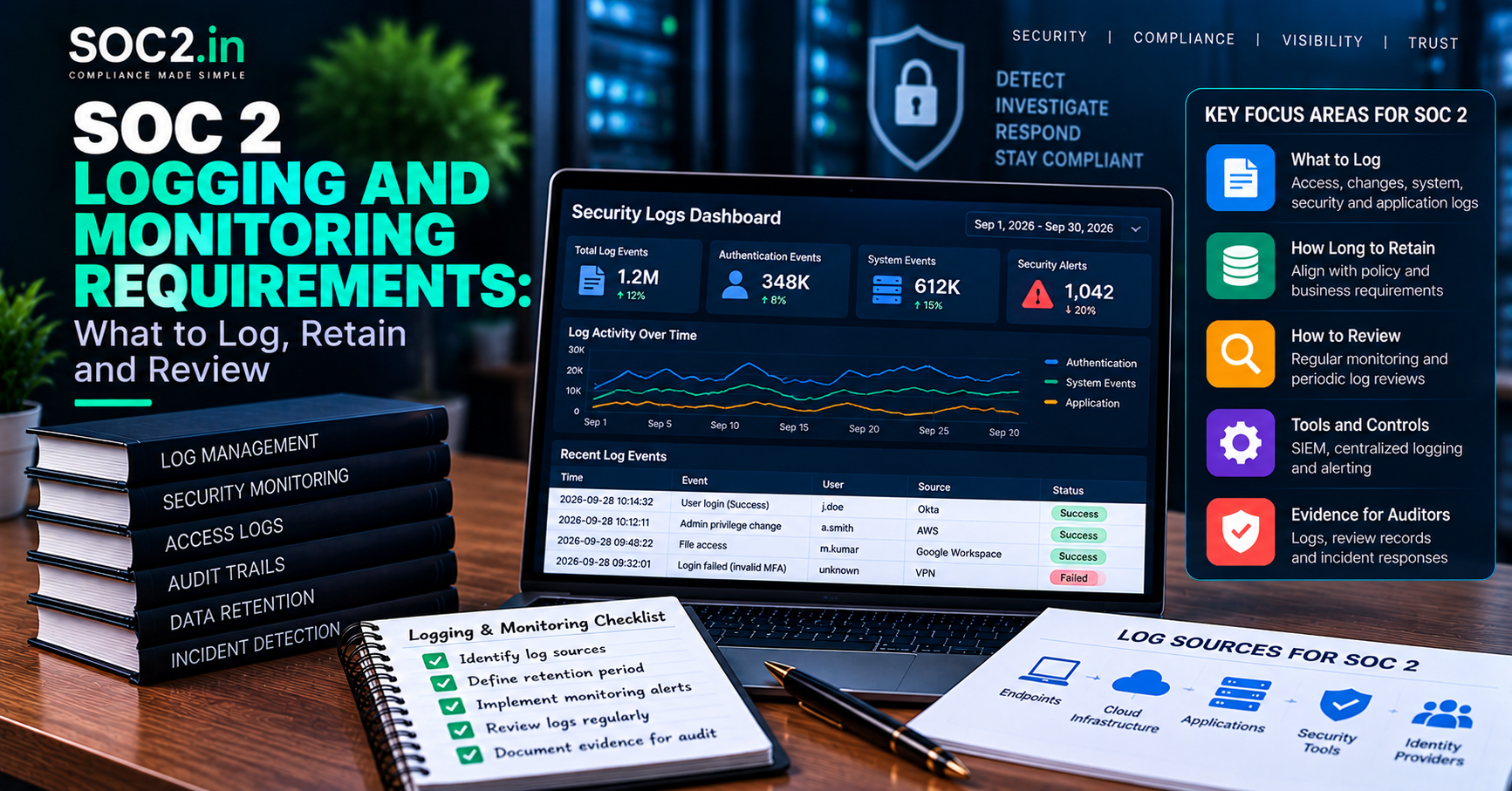
Logging & Monitoring
You must track:
- User activity
- Login attempts
- Configuration changes
Use:
- AWS CloudTrail
- Azure Monitor
- GCP Cloud Logging
Data Encryption
- Encrypt data at rest
- Encrypt data in transit
- Use managed keys or KMS
This is critical for confidentiality.
Network Security
- Configure firewalls properly
- Use VPC isolation
- Restrict public access
Never leave ports open unnecessarily.
Vulnerability Management
- Regular scans
- Patch updates
- Fix critical issues fast
Auditors will ask for proof.
Backup & Disaster Recovery
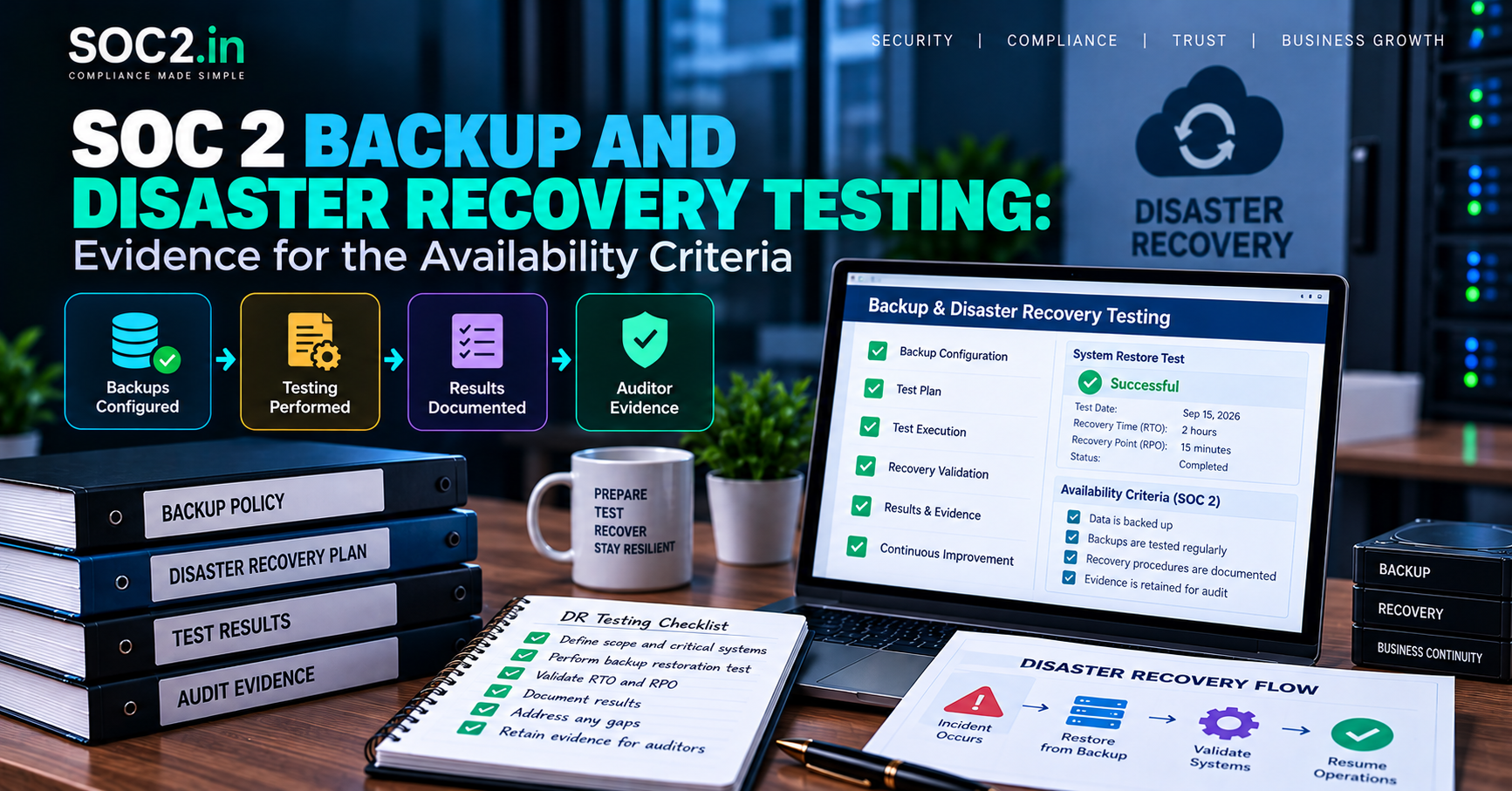
- Automated backups
- Test recovery regularly
- Define RTO and RPO
Availability is part of SOC 2.
AWS, Azure, GCP – Platform-Specific Tips
For Amazon Web Services:
- Use IAM roles instead of users
- Enable GuardDuty
- Monitor S3 access
For Microsoft Azure:
- Use Azure AD for identity
- Enable Security Center
- Monitor access logs
For Google Cloud Platform:
- Use IAM conditions
- Enable Security Command Center
- Monitor audit logs
Tools That Help with Cloud SOC 2 Compliance
Automation tools make life easier:
- Drata
- Vanta
- Sprinto
They help with:
- Evidence collection
- Continuous monitoring
- Compliance tracking
Common Mistakes in Cloud SOC 2
Avoid these:
- Ignoring cloud misconfigurations
- Not enabling logs
- Manual compliance tracking
- Overcomplicated infrastructure
- No ownership of controls
Expert Insights (Based on Real Projects)
From practical implementation experience:
The biggest risk is not lack of tools.
It’s lack of visibility.
Companies often think they’re secure until an audit proves otherwise.
The best approach:
- Keep architecture simple
- Automate monitoring
- Review access regularly
Final Checklist for Cloud SOC 2 Readiness
Before audit, ensure:
- MFA enabled everywhere
- Logs are active and stored
- Access is controlled
- Data is encrypted
- Backups are tested
- Vendors are reviewed
Conclusion
Cloud security is at the core of SOC 2 compliance.
If your AWS, Azure, or GCP setup is strong, half your compliance work is already done.
Focus on:
- Configuration
- Monitoring
- Evidence
Everything else builds on top of that.
Need Help with Cloud SOC 2?
If you’re preparing for SOC 2:
- Get your cloud reviewed
- Fix misconfigurations
- Automate compliance
Working with the right team can save months of effort and reduce audit risks.