Preparing for a SOC 2 audit can be challenging, especially for organizations going through the process for the first time.
Many companies assume that having security policies and technical safeguards is enough. In reality, SOC 2 requires organizations to demonstrate that relevant controls are properly designed, implemented, consistently operated, and supported by appropriate evidence.
The good news is that many SOC 2 audit problems are preventable.
In this guide, we explain the most common SOC 2 audit mistakes, why they happen, and what your organization can do to avoid them.
What Is a SOC 2 Audit?
SOC 2 is an examination framework developed by the American Institute of Certified Public Accountants (AICPA) to evaluate controls relevant to the Trust Services Criteria.
The criteria cover:
- Security
- Availability
- Processing Integrity
- Confidentiality
- Privacy
Security is commonly included in SOC 2 examinations, while the other criteria are included when relevant to the organization’s services and commitments.
SOC 2 reports can be issued as Type I or Type II examinations.
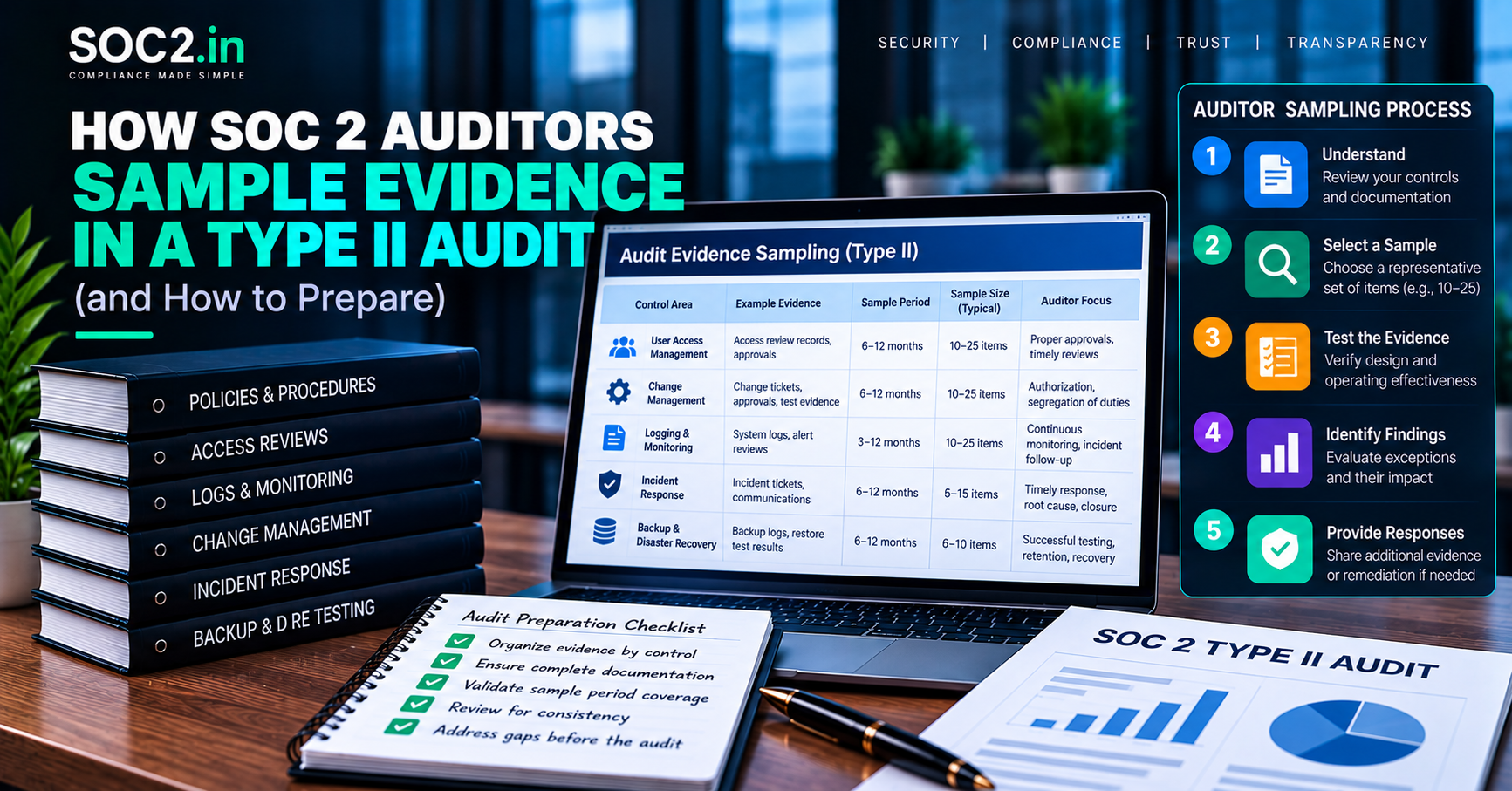
A Type I examination evaluates controls at a specific point in time. A Type II examination also evaluates whether relevant controls operated effectively over a defined period.
Why Do Companies Struggle With SOC 2 Audits?
SOC 2 problems often happen because organizations treat the audit as a documentation project rather than an ongoing control program.
Typical problems include:
- Starting preparation too late
- Poorly defined audit scope
- Outdated policies
- Missing evidence
- Weak access controls
- Incomplete risk assessments
- Poor vendor management
- Untested incident response
- Inconsistent control operation
- Lack of control ownership
The solution is to prepare early and make SOC 2 part of normal business operations.
15 Common SOC 2 Audit Mistakes
1. Starting SOC 2 Preparation Too Late
One of the biggest mistakes is waiting until a customer asks for a SOC 2 report before starting preparation.
By that point, you may discover that important controls are missing or that your team has not been collecting the evidence needed to demonstrate that controls operated.
How to Avoid It
Start with a SOC 2 readiness assessment.
Identify:
- Existing controls
- Control gaps
- Documentation gaps
- Evidence gaps
- Control owners
- Remediation priorities
The earlier you identify gaps, the more time you have to address them.
2. Choosing the Wrong SOC 2 Scope
Your SOC 2 scope defines the systems, services, people, processes, and infrastructure covered by the examination.
An overly broad scope can create unnecessary work. An overly narrow scope can leave important systems or processes outside the intended examination.
How to Avoid It
Clearly identify:
- Services in scope
- Products
- Applications
- Production systems
- Databases
- Cloud infrastructure
- Data flows
- Employees and teams
- Third-party providers
Your system description and control environment should accurately reflect the scope.
3. Treating SOC 2 as an IT-Only Project
SOC 2 is not just an IT or cybersecurity exercise.
Controls can involve:
- IT
- Security
- Engineering
- HR
- Legal
- Operations
- Compliance
- Executive management
For example, HR may own employee onboarding and termination processes, while engineering may own change management.
How to Avoid It
Assign a clear owner to every relevant control.
Create a simple structure:
Control → Owner → Frequency → Evidence → Reviewer
This makes accountability much clearer.
4. Creating Policies That Do Not Match Actual Processes
A common mistake is creating policies specifically for the audit without ensuring that employees actually follow them.
For example, your policy might state that user access is reviewed quarterly, but your organization may not actually perform those reviews.
That creates an evidence and control-operation problem.
How to Avoid It
Make sure these five elements are aligned:
Policy → Procedure → Control → Operation → Evidence
Your documentation should describe what your organization actually does.
5. Failing to Collect Audit Evidence
A control may exist, but auditors need appropriate evidence to evaluate its operation.
Examples of SOC 2 evidence include:
- Access review reports
- Change tickets
- Security monitoring records
- Employee training records
- Vulnerability reports
- Vendor assessments
- Incident records
- Backup reports
- Risk assessments
How to Avoid It
Create an evidence collection process before the audit starts.
For recurring controls, define:
- What evidence is required
- Who collects it
- When it is collected
- Where it is stored
- Who reviews it
For Type II examinations, this becomes especially important because evidence needs to demonstrate control operation over the examination period.
6. Weak Access Management
Access control is a major part of a strong security environment.
Common problems include:
- Excessive privileges
- Shared accounts
- Missing MFA
- Former employees retaining access
- Infrequent access reviews
- Uncontrolled administrative access
How to Avoid It
Implement appropriate:
- Multi-factor authentication
- Least-privilege access
- Role-based access
- User provisioning procedures
- User deprovisioning procedures
- Privileged access controls
- Periodic access reviews
Then maintain evidence showing that these controls actually operate.
7. Ignoring Employee Onboarding and Offboarding
Employee lifecycle controls are often overlooked.
When an employee joins, access needs to be approved and provisioned appropriately.
When an employee leaves, access needs to be removed promptly.
How to Avoid It
Create documented onboarding and offboarding procedures.
Track:
Hire → Approve Access → Provision → Review → Terminate → Remove Access
HR and IT should have clearly defined responsibilities.
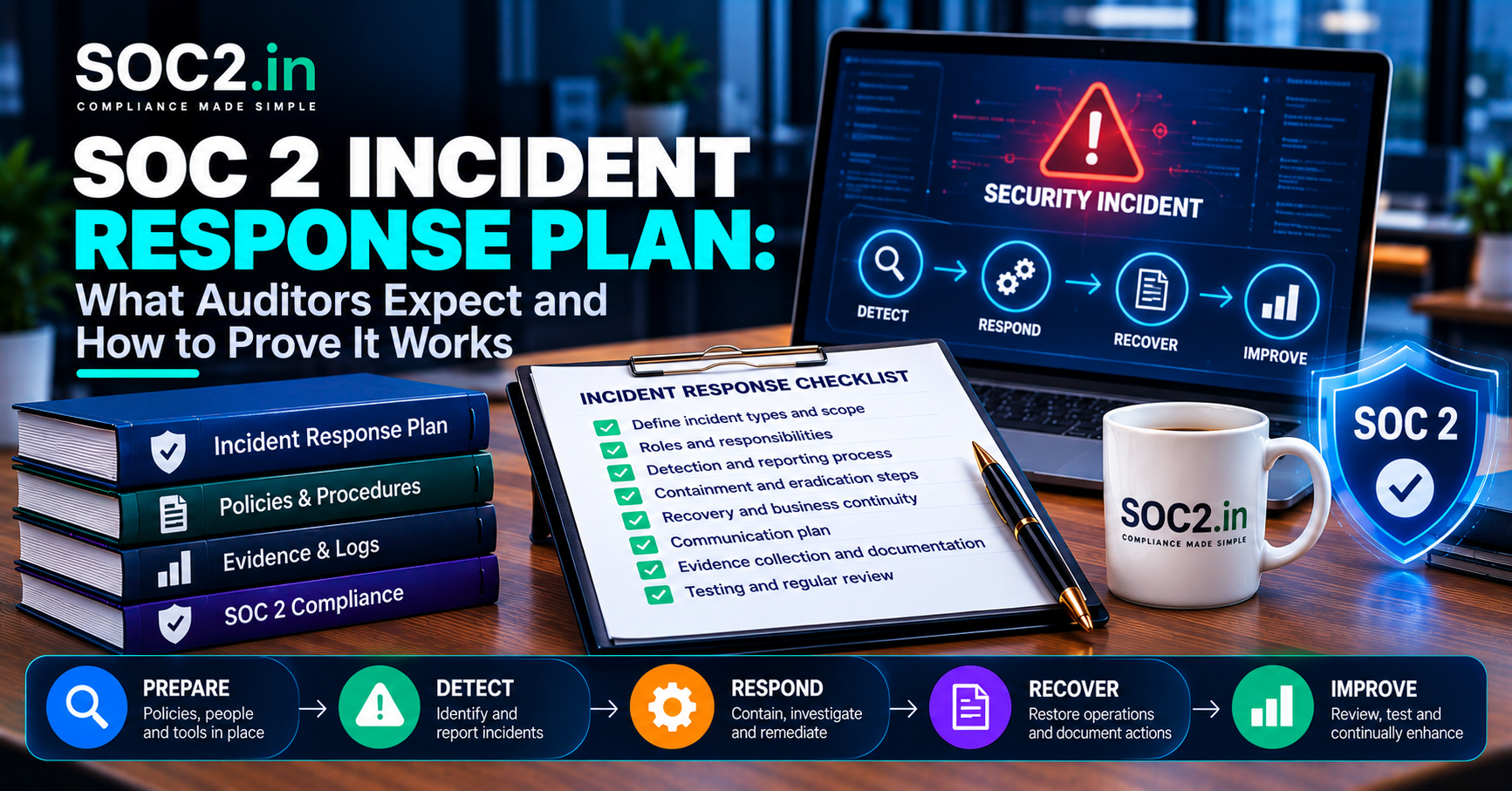
8. Not Testing Incident Response
Having an Incident Response Policy does not automatically demonstrate that your organization is prepared for a security incident.
Your team should understand what happens when an incident occurs.
How to Avoid It
Conduct appropriate incident response exercises.
Document:
- Scenario
- Participants
- Actions taken
- Communication process
- Findings
- Lessons learned
- Corrective actions
The objective is to demonstrate that your organization can execute its response process, not simply maintain a document.
9. Poor Vendor Risk Management
Most modern businesses rely on third parties.
Your organization may use:
- Cloud providers
- SaaS applications
- Payment processors
- Data processors
- Security platforms
- Consultants
- Infrastructure providers
These vendors can affect your security environment.
How to Avoid It
Maintain a vendor management program that includes:
- Vendor inventory
- Risk classification
- Security assessments
- Contractual security requirements
- SOC report reviews where appropriate
- Periodic vendor reviews
- Remediation tracking
Pay particular attention to vendors that support systems or services within your SOC 2 scope.
10. Incomplete Change Management
Technology companies can make hundreds of changes to applications and infrastructure.
Without appropriate controls, it becomes difficult to demonstrate that production changes are properly reviewed and authorized.
How to Avoid It
Use a consistent process:
Request → Review → Approval → Testing → Deployment → Evidence
Your existing tools, such as ticketing systems and source-control platforms, can often support this process.
The goal should be to make compliance part of the normal development workflow rather than creating unnecessary manual work.
11. Performing a Risk Assessment Only Once
A risk assessment should not be treated as a document that is created once and forgotten.
Your risk environment changes when you:
- Launch new products
- Add vendors
- Change infrastructure
- Hire employees
- Enter new markets
- Introduce new technologies
How to Avoid It
Maintain a current risk register.
Track:
| Risk | Impact | Likelihood | Owner | Treatment | Status |
|---|---|---|---|---|---|
| Unauthorized access | High | Medium | Security | MFA + access reviews | Active |
| Vendor risk | Medium | Medium | Compliance | Vendor assessment | Active |
| Data exposure | High | Low | Security | Encryption + monitoring | Managed |
Review the risk environment periodically and after significant changes.
12. Weak Security Monitoring
Having logs does not necessarily mean you have effective security monitoring.
You should understand:
- What is being logged
- What events are monitored
- Which alerts are important
- Who reviews alerts
- How incidents are escalated
- How long logs are retained
How to Avoid It
Document your monitoring process and retain evidence of relevant monitoring activities.
Your monitoring process should connect security events to investigation and response.
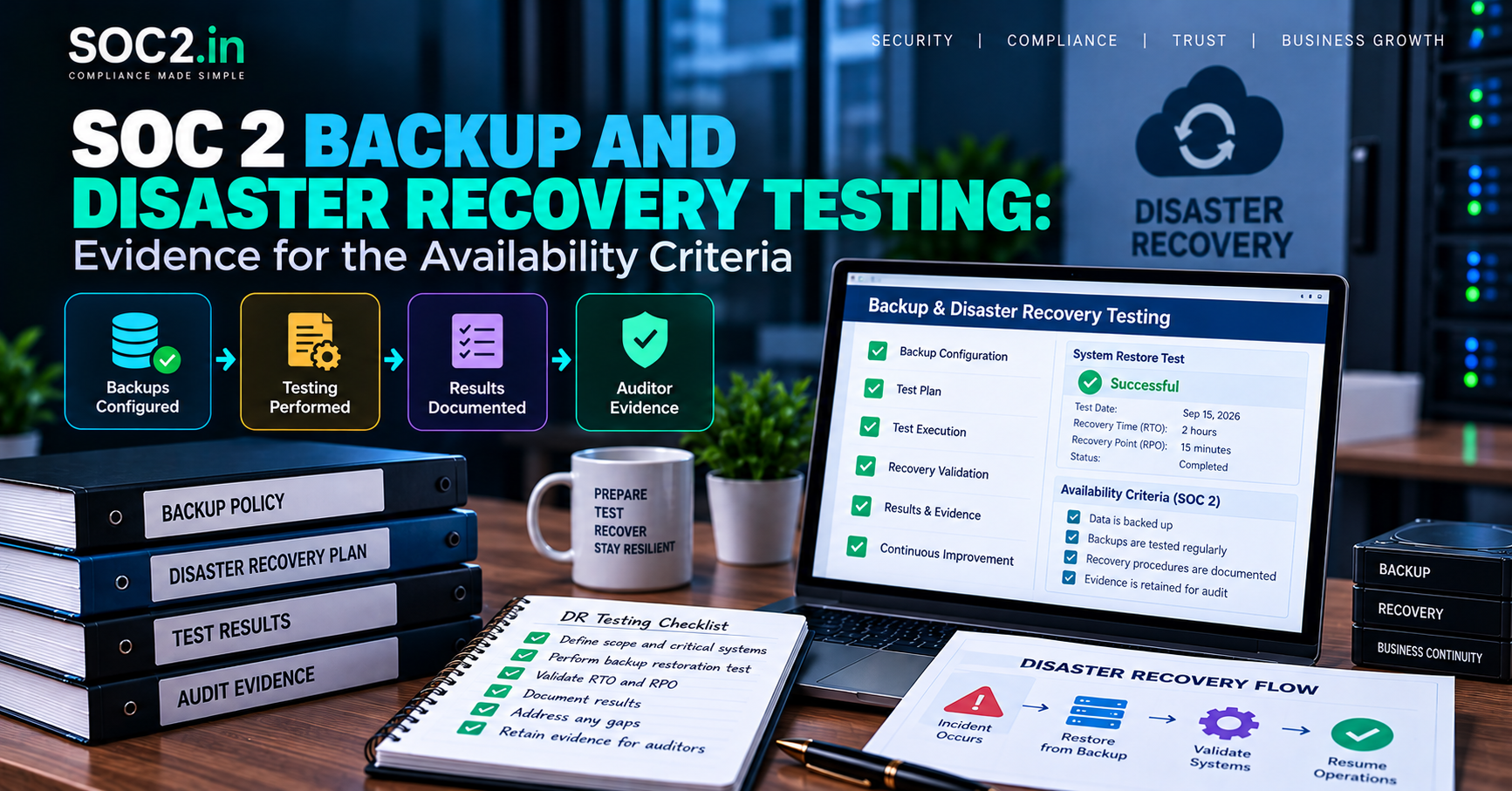
13. Ignoring Backup and Disaster Recovery
Organizations often say they have backups but cannot demonstrate that their recovery processes work as expected.
How to Avoid It
Document and test:
- Backup procedures
- Recovery procedures
- Recovery objectives
- Backup monitoring
- Disaster recovery plans
- Recovery testing
- Test results
- Corrective actions
If Availability is within your SOC 2 scope, pay particular attention to these controls.
14. Keeping Outdated Documentation
Your system description, policies, procedures, diagrams, and control documentation should reflect the current environment.
Imagine your documentation says your company uses one cloud architecture while your production environment has significantly changed.
That creates inconsistencies during the examination.
How to Avoid It
Review important documentation regularly and whenever there are significant changes to:
- Infrastructure
- Products
- Vendors
- Security controls
- Organizational responsibilities
- Data flows
15. Treating SOC 2 as a One-Time Project
This may be the most important mistake of all.
Some organizations work extremely hard to obtain their first SOC 2 report and then stop maintaining the control environment.
Security does not stop after the report is issued.
How to Avoid It
Build an ongoing compliance program around:
Monitor → Review → Collect Evidence → Test → Remediate → Improve
This is particularly important for organizations maintaining a SOC 2 Type II program.
SOC 2 Audit Mistakes Checklist
Before your SOC 2 examination, ask your team:
Scope
- Is the audit scope clearly defined?
- Are all relevant systems identified?
- Are third-party dependencies documented?
- Is the system description accurate?
Governance
- Are control owners assigned?
- Are security responsibilities documented?
- Are policies approved and current?
Security
- Is MFA implemented where appropriate?
- Are access reviews performed?
- Is privileged access controlled?
- Are security events monitored?
- Is vulnerability management operating?
Operations
- Is change management documented?
- Is incident response tested?
- Are backups monitored?
- Is disaster recovery tested?
Vendors
- Is there a current vendor inventory?
- Are critical vendors assessed?
- Are relevant vendor SOC reports reviewed?
Evidence
- Is evidence collected consistently?
- Is evidence mapped to controls?
- Are evidence owners assigned?
- Are exceptions documented?
Readiness
- Has a readiness assessment been completed?
- Have major gaps been remediated?
- Are employees aware of their responsibilities?
- Is the organization ready to respond to auditor requests?
How to Prepare for a SOC 2 Audit Without Last-Minute Stress
A simple approach is to divide preparation into five stages.
Step 1: Understand
Understand your services, systems, risks, controls, and SOC 2 scope.
Step 2: Assess
Perform a readiness assessment and identify gaps.
Step 3: Remediate
Fix control, process, documentation, and evidence gaps.
Step 4: Operate
Run the controls consistently and collect evidence.
Step 5: Audit
Provide the auditor with organized evidence and support the examination process.
This approach is much more effective than trying to prepare everything immediately before the audit.
SOC 2 Type I vs. Type II: Why Preparation Matters
Understanding the report type is important.
SOC 2 Type I focuses on whether relevant controls are suitably designed and implemented at a specified point in time.
SOC 2 Type II goes further by evaluating whether those controls operated effectively over a defined period.
That means Type II preparation requires a strong focus on recurring evidence.
For example:
If access reviews are supposed to happen quarterly, your organization needs to actually perform those reviews and retain evidence of them.
The same principle applies to other recurring controls.
What Happens If You Find a SOC 2 Gap?
Finding a gap during readiness does not mean the project has failed.
Instead, treat the gap as a remediation opportunity.
A practical process is:
Identify → Assess Risk → Assign Owner → Remediate → Test → Document → Close
For example, if you discover that terminated employees are not consistently removed from systems on time, determine why the process failed, assign ownership, correct the workflow, test it, and maintain evidence.
The goal of readiness is to find these issues before they create unnecessary problems during the formal examination.
Final Thoughts
The most common SOC 2 audit mistakes are rarely caused by a lack of expensive security technology.
They are often caused by inconsistent processes, unclear ownership, outdated documentation, missing evidence, and starting preparation too late.
The best way to avoid these mistakes is to treat SOC 2 as an ongoing security and compliance program rather than a one-time audit.
Start early. Define the right scope. Assign control owners. Make sure policies match reality. Collect evidence continuously. Test your controls. Track remediation.
When your organization operates this way, the SOC 2 audit becomes much more manageable, and the resulting controls can provide lasting value beyond the report itself.
Frequently Asked Questions About SOC 2 Audit Mistakes
What is the most common SOC 2 audit mistake?
Starting the SOC 2 process too late is one of the most common problems. Organizations may not have enough time to implement controls, fix gaps, or collect sufficient evidence.
Can missing evidence affect a SOC 2 audit?
Yes. A control may be documented and implemented, but appropriate evidence is important for demonstrating that the control operated as intended.
What is the biggest SOC 2 Type II mistake?
Failing to consistently operate controls and collect evidence throughout the examination period can create significant challenges during a Type II examination.
Are SOC 2 policies enough for an audit?
No. Policies are only one part of the control environment. Organizations also need appropriately designed and implemented controls and evidence supporting their operation.
How can a company prepare for a SOC 2 audit?
Start with a readiness assessment, define the scope, identify control gaps, assign owners, update documentation, implement controls, collect evidence, and remediate issues before the formal examination.
How often should SOC 2 controls be reviewed?
The frequency depends on the specific control. Some controls may operate continuously, while others may be monthly, quarterly, annually, or triggered by specific events. The organization should follow its defined control requirements consistently.
Can a company fix SOC 2 gaps before the audit?
Yes. Identifying and remediating gaps before the formal examination is one of the main purposes of SOC 2 readiness activities.