Documentation is one of the most important parts of preparing for a SOC 2 audit. Your organization needs more than security policies. You must be able to clearly explain your system, document relevant controls, demonstrate how those controls operate, and provide reliable evidence to support the auditor’s testing.
The AICPA’s SOC 2 framework evaluates controls related to Security, Availability, Processing Integrity, Confidentiality, and Privacy, depending on the criteria selected for the engagement. The AICPA also maintains specific description criteria for management’s description of the service organization’s system.
For growing SaaS companies, cloud providers, MSPs, fintech companies, healthcare technology organizations, and other service organizations, having a structured documentation program can make the audit process significantly more manageable.
This guide explains the major categories of documentation you should prepare for a SOC 2 audit.
What Is SOC 2 Audit Documentation?
SOC 2 documentation is the collection of policies, procedures, records, system descriptions, control documentation, and evidence that demonstrates how your organization manages security and other applicable Trust Services Criteria.
It generally falls into four broad categories:
- System and organizational documentation
- Policies and procedures
- Control and risk documentation
- Operational evidence
The exact documentation required varies according to your services, scope, selected Trust Services Criteria, control environment, and audit type.
1. SOC 2 System Description
One of the most important documents is the description of the service organization’s system.
The system description explains how your organization delivers its services and how the relevant systems and controls operate.
It may describe:
- Services provided to customers
- System boundaries
- Infrastructure
- Software
- People and organizational structure
- Data
- Processes
- Technologies
- Supporting services
- Third-party providers
- Security practices
- Relevant control activities
The AICPA’s SOC 2 Description Criteria are specifically designed to help prepare and evaluate management’s description of the service organization’s system.
A strong system description should accurately reflect the environment being examined. It should not describe an ideal future-state environment that does not match actual operations.
2. Management Assertion
Management’s assertion is another important component of the SOC 2 examination.
It generally addresses management’s responsibility regarding the presentation of the system description and the applicable controls.
The assertion should align with the scope and period of the engagement. AICPA illustrative materials show that management’s assertion accompanies the system description and is tailored to the services, systems, and period covered by the examination.
Your auditor will generally guide you through the final form and wording of the assertion.
3. Information Security Policies
Your organization should maintain documented security policies appropriate to its environment.
Common examples include:
- Information Security Policy
- Access Control Policy
- Password Policy
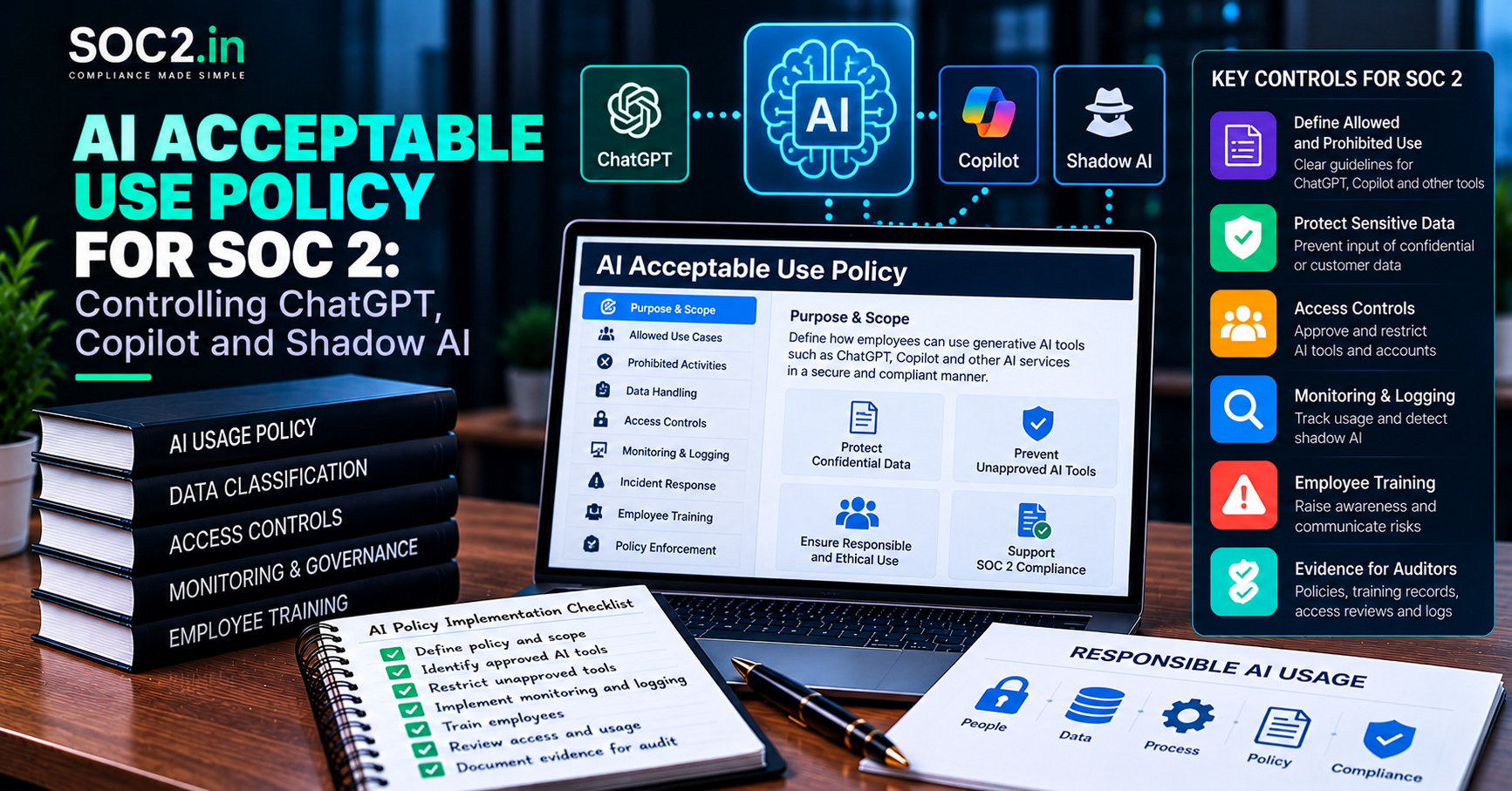
- Acceptable Use Policy
- Data Classification Policy
- Encryption Policy
- Security Awareness Policy
- Vulnerability Management Policy
- Asset Management Policy
- Remote Access Policy
Policies should be approved, communicated to employees, reviewed periodically, and updated when significant changes occur.
4. Access Control Documentation
Access management is a major area of SOC 2 preparation.
Documentation may include:
- User access procedures
- Access request forms
- Access approval records
- User provisioning procedures
- User deprovisioning procedures
- Privileged access procedures
- Periodic access review records
- Role definitions
- MFA configuration evidence
- Administrator access records
For example, if your policy requires quarterly access reviews, you should retain evidence showing that the reviews actually occurred.
5. Risk Assessment Documentation
Organizations should document how they identify and manage information security risks.
Typical documentation includes:
- Enterprise risk assessment
- Information security risk assessment
- Risk register
- Risk scoring methodology
- Risk treatment plans
- Identified vulnerabilities
- Risk acceptance records
- Risk remediation records
- Periodic risk review documentation
The objective is to demonstrate that security risks are identified, evaluated, assigned, and addressed systematically.
6. Asset Management Documentation
Maintain an inventory of relevant assets supporting the services in scope.
This can include:
- Servers
- Cloud resources
- Databases
- Applications
- Endpoints
- Network infrastructure
- SaaS applications
- Production environments
- Critical software components
Asset documentation helps establish what systems need to be protected and monitored.
7. Change Management Documentation
Organizations should document how changes to systems and infrastructure are requested, reviewed, approved, tested, and deployed.
Evidence may include:
- Change management policy
- Change requests
- Approval records
- Pull requests
- Deployment records
- Testing results
- Emergency change records
- Change logs
For software companies, engineering tools such as Git repositories and ticketing platforms can often provide much of this evidence.
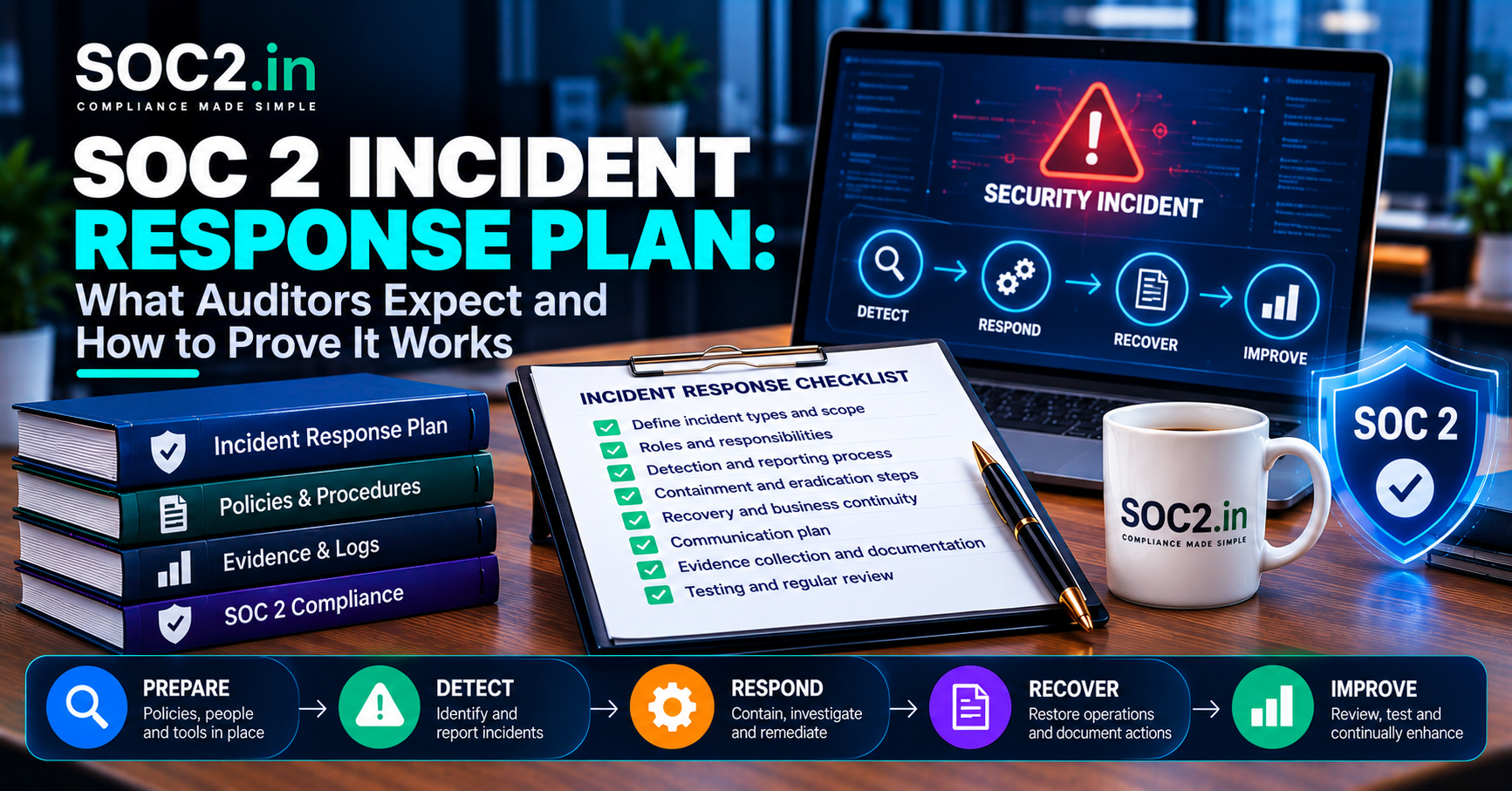
8. Incident Response Documentation
Your incident response program should be documented and supported by operational evidence.
Documentation may include:
- Incident Response Policy
- Incident Response Plan
- Incident severity definitions
- Escalation procedures
- Communication procedures
- Incident tickets
- Incident investigation records
- Post-incident reviews
- Corrective action records
- Tabletop exercise documentation
If no security incidents occurred during the period, you should still maintain evidence of relevant testing or exercises where applicable.
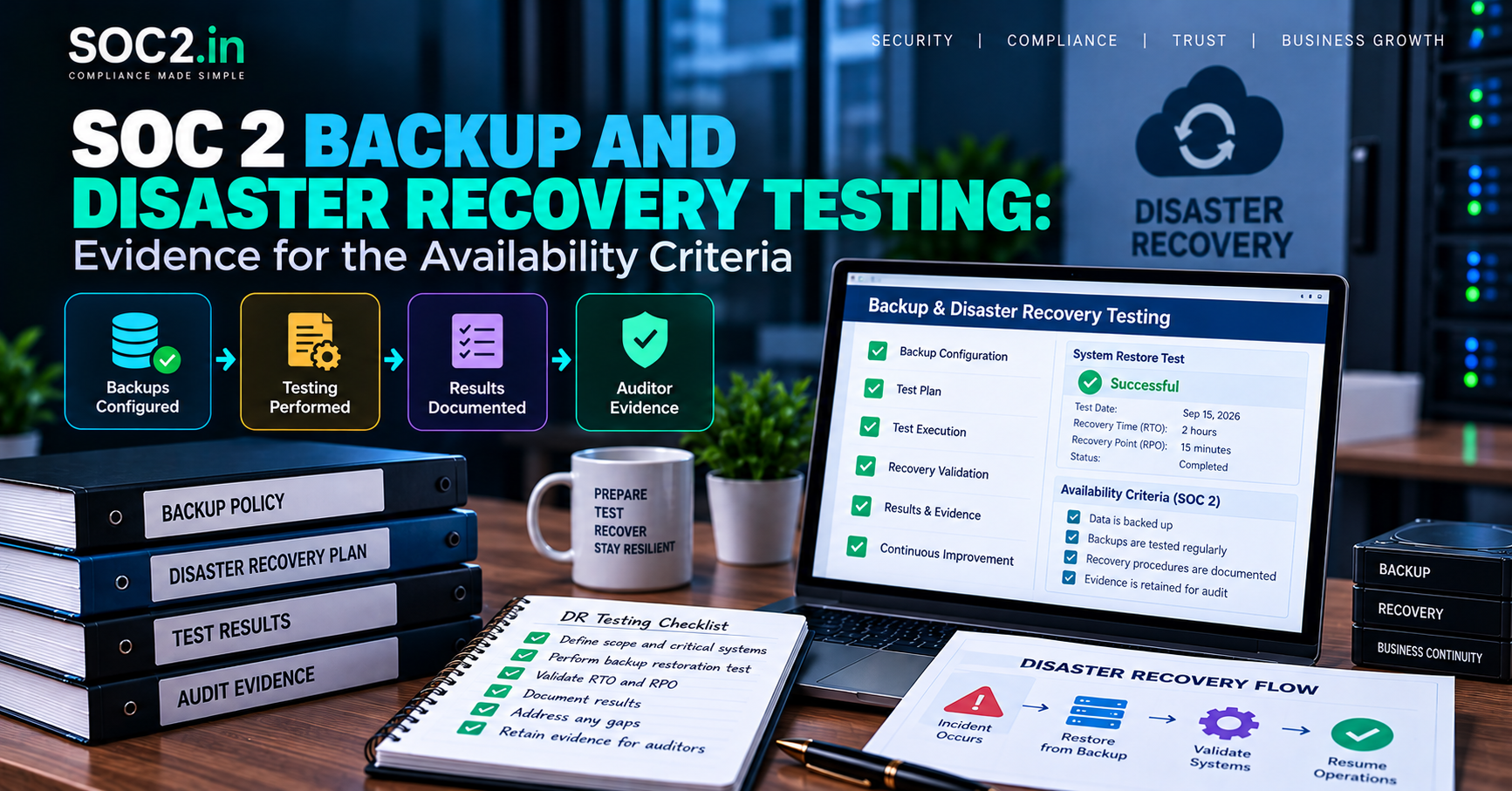
9. Business Continuity and Disaster Recovery Documentation
If availability is within your SOC 2 scope, business continuity and disaster recovery documentation can become particularly important.
Common documents include:
- Business Continuity Plan
- Disaster Recovery Plan
- Backup Policy
- Recovery procedures
- Recovery objectives
- Backup schedules
- Recovery testing records
- Disaster recovery test results
- Business impact assessments
The key is to demonstrate that documented plans are supported by actual operational practices and testing.
10. Vendor and Third-Party Documentation
Modern organizations depend heavily on third-party service providers.
Your documentation may include:
- Vendor inventory
- Vendor classification
- Vendor risk assessments
- Vendor security questionnaires
- Vendor contracts
- Security requirements
- Vendor SOC reports
- Vendor review records
- Remediation records
- Critical vendor monitoring
The AICPA’s SOC materials specifically recognize the role of subservice organizations and complementary controls when evaluating service organization systems.
11. Security Awareness Training Records
Employee security awareness should be documented.
Maintain records showing:
- Training content
- Training dates
- Employee completion
- New-hire training
- Periodic refresher training
- Phishing awareness activities where applicable
Training records provide evidence that your security awareness program is operating rather than existing only as a written policy.
12. Vulnerability Management Documentation
Security testing and vulnerability management can generate important audit evidence.
Examples include:
- Vulnerability scan reports
- Vulnerability remediation records
- Patch management records
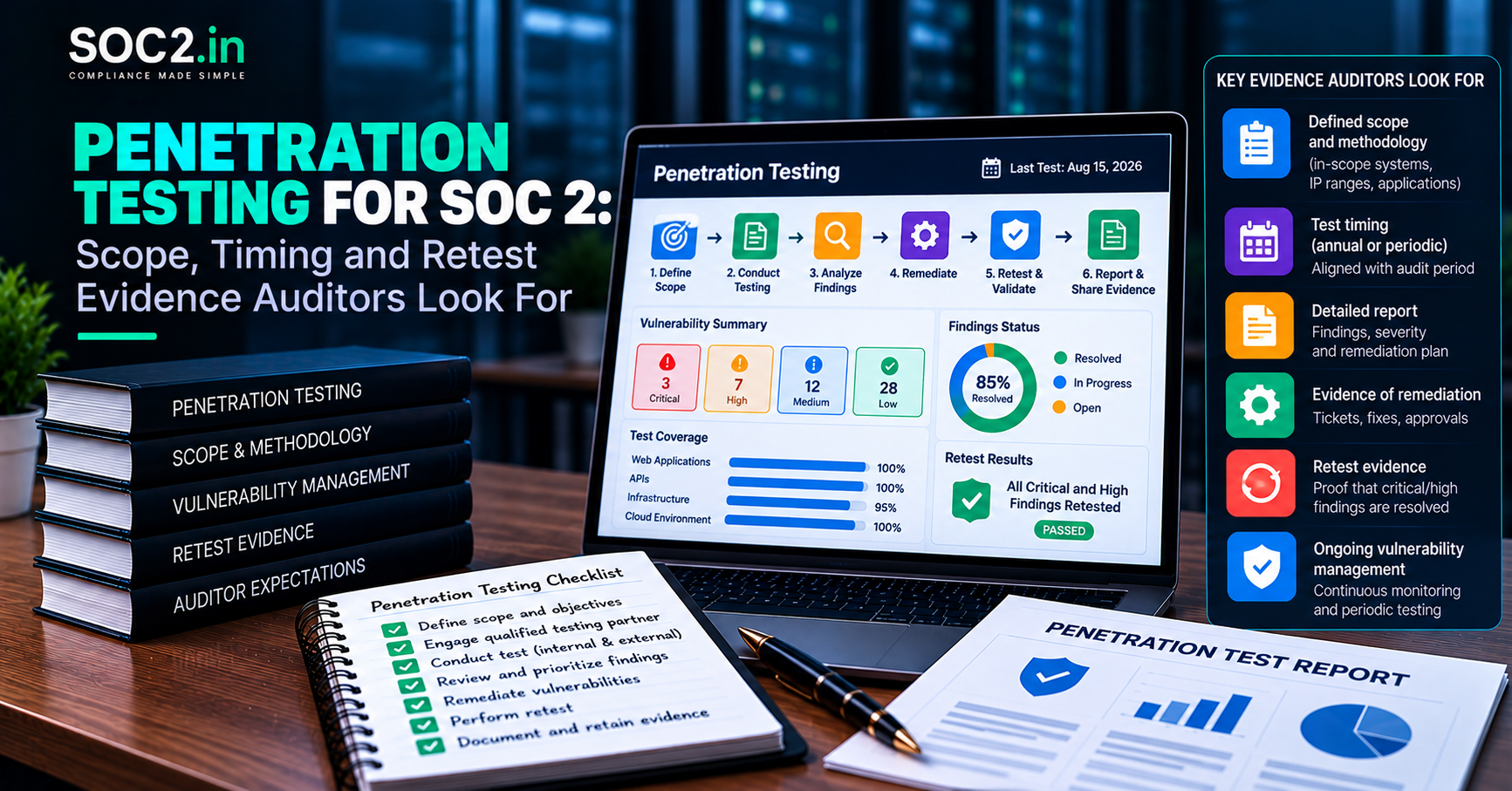
- Penetration testing reports
- Security assessment results
- Exception documentation
- Remediation tracking
If vulnerabilities are identified, document how they were evaluated and addressed.
13. Logging and Monitoring Documentation
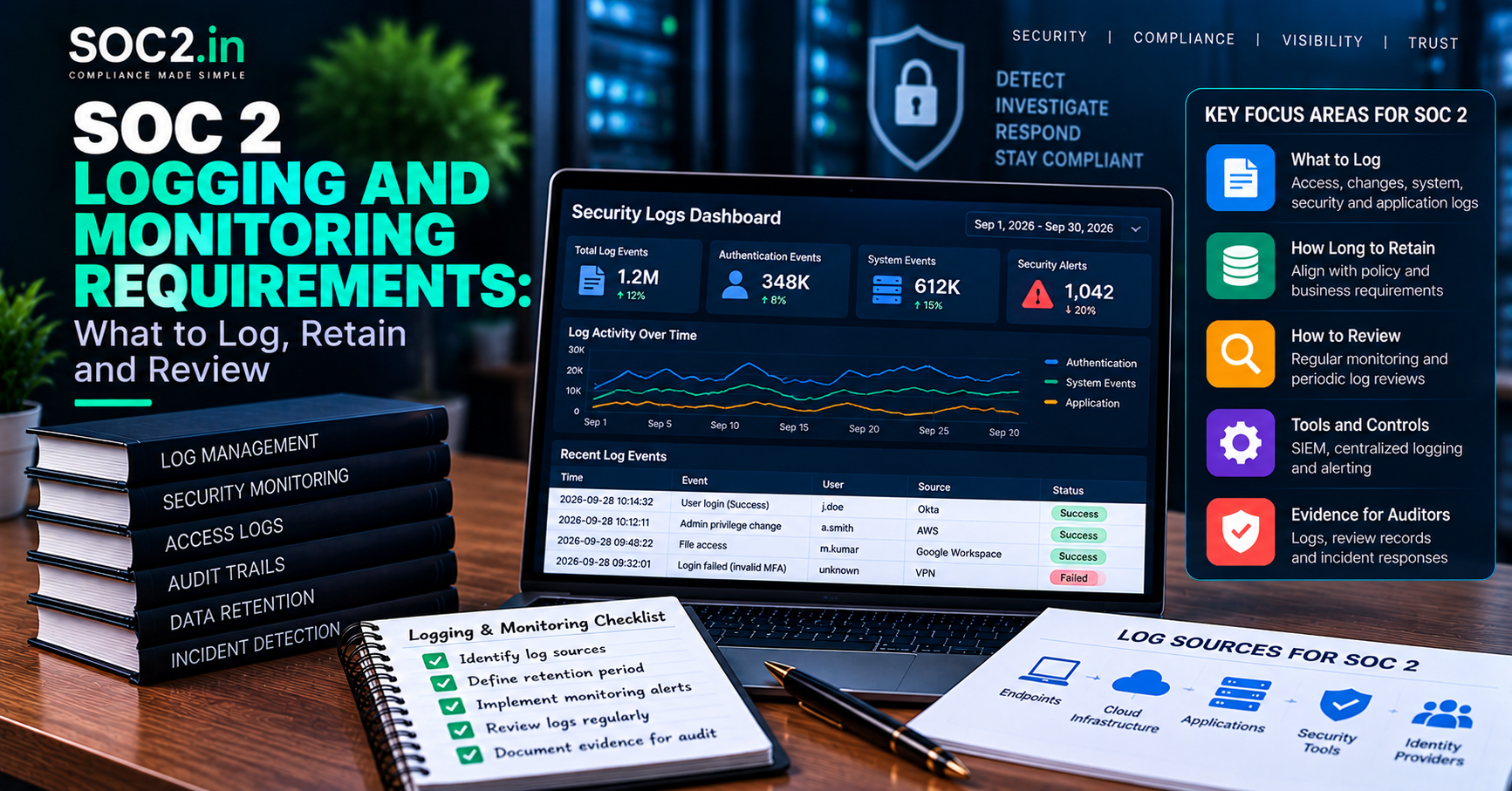
Your organization should document how critical systems are monitored.
Evidence can include:
- Security monitoring procedures
- Logging configurations
- Security alerts
- Log review records
- SIEM reports
- Monitoring dashboards
- Alert investigation records
- Log retention settings
Documentation should demonstrate not only that logs exist, but that appropriate monitoring activities are performed.
14. Data Protection Documentation
Organizations handling customer or confidential information should document how data is protected.
Relevant documentation may include:
- Data classification policy
- Data flow diagrams
- Encryption standards
- Data retention policy
- Data disposal procedures
- Backup procedures
- Encryption configuration
- Access restrictions
If Privacy or Confidentiality is included in your engagement, documentation around information handling becomes especially important.
15. Privacy Documentation
If the Privacy criterion is included in your SOC 2 examination, additional documentation may be relevant.
Examples include:
- Privacy policy
- Data inventory
- Personal information classification
- Data collection procedures
- Data retention procedures
- Data deletion procedures
- Data subject request procedures
- Consent documentation where applicable
- Privacy incident procedures
The documentation should align with the organization’s actual privacy commitments and practices.
16. Security Monitoring and Incident Evidence
Auditors may request evidence showing that controls operated during the examination period.
Examples include:
- Security alert records
- Log review evidence
- Incident tickets
- Monitoring reports
- Security event investigations
- Escalation records
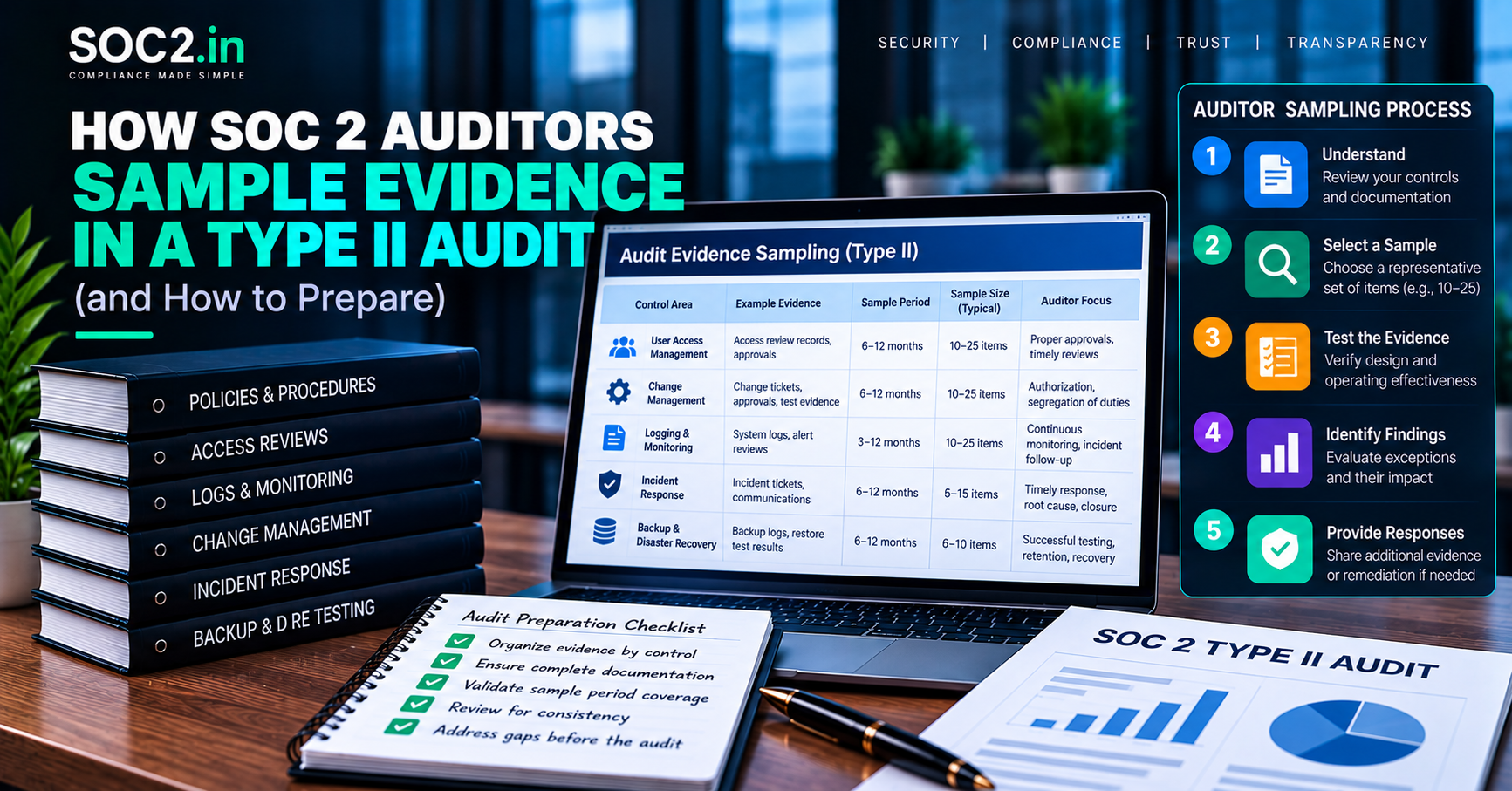
For a SOC 2 Type II examination, evidence demonstrating operation over the defined period becomes particularly important.
17. Employee and HR Documentation
Some SOC 2 controls involve the employee lifecycle.
Relevant documentation can include:
- Background screening records where applicable
- Employee onboarding records
- Security training records
- Confidentiality agreements
- Access provisioning records
- Termination checklists
- Access removal records
- Role change records
Sensitive employee information should be handled securely and shared with auditors according to appropriate privacy and confidentiality procedures.
18. Control Matrix and Evidence Mapping
A well-designed control matrix can make your audit much easier to manage.
For each control, track:
| Item | Example |
|---|---|
| Control ID | AC-01 |
| Risk | Unauthorized access |
| Control | Quarterly access review |
| Owner | IT Security |
| Frequency | Quarterly |
| Evidence | Access review report |
| Status | Complete |
| Exceptions | None |
This creates a direct connection between your risks, controls, owners, and evidence.
19. Audit Evidence Repository
Create a centralized and controlled location for audit evidence.
Your repository might contain folders for:
- Policies
- Risk assessments
- Access management
- Change management
- Incident response
- Vendor management
- Security monitoring
- Vulnerability management
- Employee training
- Business continuity
- Backup and recovery
- Audit-specific evidence
Evidence should be organized by control and period wherever possible.
This makes it easier to respond to auditor requests without repeatedly searching through multiple systems.
20. Documentation for SOC 2 Type II
Type II requires additional discipline because the auditor evaluates controls over a defined period.
You should maintain recurring evidence such as:
- Periodic access reviews
- Security monitoring records
- Change records
- Vulnerability assessments
- Training records
- Vendor reviews
- Risk reviews
- Backup testing
- Incident response exercises
Do not wait until the end of the examination period to collect evidence.
Build an evidence collection process into normal business operations.
What Documents Are Included in the Final SOC 2 Report?
It is important to distinguish internal audit preparation documentation from the documents that appear in the final SOC 2 report.
A SOC 2 report can include management’s assertion, the description of the system, and the service auditor’s report. AICPA’s illustrative SOC 2 materials specifically identify these components.
Your internal policies, tickets, logs, assessments, and other evidence support the examination, but they are not necessarily reproduced in their entirety in the final report.
SOC 2 Documentation Checklist
Before the audit begins, review whether you have:
- System description
- Management assertion
- Information security policy
- Access control policy
- Change management policy
- Incident response policy and plan
- Risk assessment
- Risk register
- Vendor inventory
- Vendor risk assessments
- Asset inventory
- Security awareness records
- Access review evidence
- Change management evidence
- Vulnerability assessment records
- Penetration testing documentation where applicable
- Security monitoring evidence
- Incident records
- Backup and recovery evidence
- Business continuity documentation
- Disaster recovery documentation
- Data protection documentation
- Privacy documentation where applicable
- Control matrix
- Control owner records
- Audit evidence repository
- Remediation records
Common SOC 2 Documentation Mistakes
1. Creating Policies Only for the Audit
Policies should describe real processes, not hypothetical procedures.
2. Failing to Maintain Evidence
A documented control without evidence of operation can create challenges during an examination.
3. Using Outdated Documentation
System descriptions, policies, diagrams, and procedures should reflect the current environment.
4. Keeping Evidence in Multiple Uncontrolled Locations
A centralized evidence management process makes audit preparation significantly easier.
5. Ignoring Changes to the Environment
Cloud infrastructure, vendors, applications, employees, and business processes can change rapidly. Documentation should evolve with them.
How to Keep SOC 2 Documentation Audit-Ready
SOC 2 documentation should not be created once and forgotten.
Adopt an ongoing process:
Document → Implement → Collect Evidence → Review → Update → Monitor
Review documentation regularly and update it when there are significant changes to:
- Systems
- Products
- Vendors
- Infrastructure
- Security controls
- Organizational responsibilities
- Data processing activities
The AICPA’s current Trust Services Criteria and Description Criteria provide the foundation for evaluating the applicable controls and the description of the system.
Conclusion
So, what documentation is required for an SOC 2 audit?
The answer is broader than a list of policies. A successful SOC 2 audit requires a combination of system documentation, management assertions, policies, procedures, risk records, control documentation, operational evidence, and supporting records.
The exact documentation depends on your audit scope, selected Trust Services Criteria, services, technology environment, and whether you are pursuing Type I or Type II.
The strongest organizations treat documentation as part of their everyday security and compliance operations. When policies accurately reflect reality and evidence is collected continuously, your organization is better prepared for the audit and better positioned to demonstrate security and build customer trust.
Frequently Asked Questions
What is the most important document for a SOC 2 audit?
The system description is one of the central documents because it explains the service organization’s system and the controls relevant to the examination. The AICPA maintains specific SOC 2 Description Criteria for preparing and evaluating this description.
Are SOC 2 policies enough to pass an audit?
No. Policies are only one part of the documentation. Auditors also need evidence that relevant controls were implemented and, for Type II, operated effectively during the examination period.
Do I need documentation for every SOC 2 control?
Controls within the examination scope should have appropriate documentation and evidence supporting their design and operation.
What documentation is required for SOC 2 Type II?
Type II requires evidence demonstrating that applicable controls operated effectively throughout the defined examination period. Recurring evidence such as access reviews, monitoring records, change records, and training records may therefore be important.
Should SOC 2 documentation be updated regularly?
Yes. Documentation should remain aligned with the organization’s actual systems, processes, risks, vendors, and controls.