This comprehensive guide explains how AWS security controls support SOC 2 compliance requirements. The article covers identity and access management, encryption, monitoring, logging, vulnerability management, network security, incident response, and AWS-native security services. Organizations running workloads on AWS can use these controls to strengthen their security posture, streamline audit readiness, and successfully meet SOC 2 requirements.
As businesses increasingly migrate applications, infrastructure, and sensitive customer data to the cloud, security and compliance have become top priorities. For SaaS providers, technology companies, FinTech organizations, healthcare platforms, and cloud-native businesses, achieving SOC 2 compliance is often a critical requirement for winning enterprise customers and building trust.
Organizations leveraging Amazon Web Services (AWS) gain access to a robust set of cloud security services and controls that can help meet SOC 2 compliance requirements. However, simply hosting applications on AWS does not automatically make an organization SOC 2 compliant. Companies must implement and manage appropriate AWS security controls aligned with the SOC 2 Trust Services Criteria.
This guide explores the most important AWS security controls for SOC 2 compliance and how organizations can use AWS services to strengthen their security posture while preparing for a successful SOC 2 audit.
Understanding SOC 2 Compliance
SOC 2 is a widely recognized compliance framework developed by the American Institute of Certified Public Accountants (AICPA). It evaluates an organization’s controls related to:
- Security
- Availability
- Processing Integrity
- Confidentiality
- Privacy
Among these, Security is mandatory for every SOC 2 audit.
To demonstrate compliance, organizations must implement administrative, technical, and operational controls that protect customer data and critical systems.
AWS Shared Responsibility Model and SOC 2
Before implementing AWS security controls, organizations must understand the AWS Shared Responsibility Model.
AWS is Responsible For:
- Physical data center security
- Hardware security
- Network infrastructure
- Global cloud infrastructure
Customers Are Responsible For:
- Identity and access management
- Application security
- Data protection
- Operating system configuration
- Security monitoring
- Compliance management
SOC 2 auditors primarily evaluate the controls managed by the customer within AWS environments.
AWS Identity and Access Management (IAM)
Identity and Access Management (IAM) is one of the most critical AWS security controls for SOC 2 compliance.
Best Practices
Implement Least Privilege Access
Users should receive only the permissions required to perform their job responsibilities.
Enable Multi-Factor Authentication (MFA)
All privileged and administrative accounts should require MFA.
Use Role-Based Access Control (RBAC)
Assign permissions through roles rather than individual users.
Regular Access Reviews
Conduct periodic reviews to remove unnecessary access privileges.
SOC 2 Benefits
- Reduces unauthorized access risks
- Supports logical access controls
- Demonstrates strong user management practices
AWS CloudTrail for Audit Logging
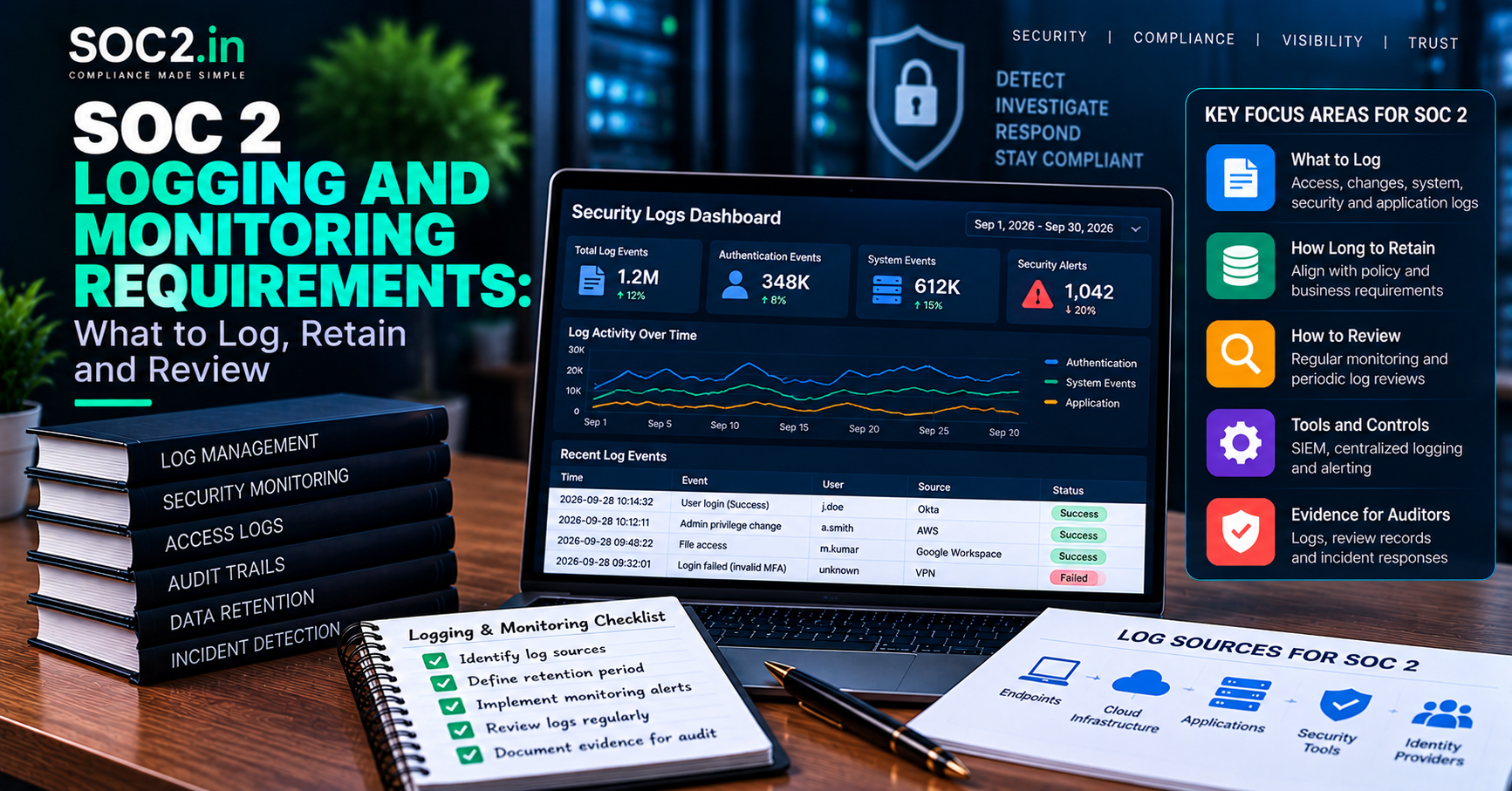
SOC 2 requires organizations to maintain detailed audit logs and monitor security events.
AWS CloudTrail records:
- User activity
- API calls
- Console actions
- Resource modifications
- Security-related events
Best Practices
- Enable CloudTrail across all AWS accounts
- Store logs securely
- Restrict log modification permissions
- Retain logs according to compliance requirements
SOC 2 Benefits
CloudTrail provides evidence required during SOC 2 audits and supports security monitoring controls.
AWS Config for Continuous Compliance Monitoring
AWS Config continuously evaluates and records AWS resource configurations.
Organizations can use AWS Config to:
- Detect configuration drift
- Monitor policy violations
- Track infrastructure changes
- Generate compliance reports
Example Controls
- Ensure S3 buckets are not publicly accessible
- Verify encryption is enabled
- Monitor security group configurations
SOC 2 Benefits
AWS Config supports continuous compliance monitoring and change management requirements.
Data Encryption with AWS KMS
Encryption is a fundamental requirement for protecting confidential data under SOC 2.
AWS Key Management Service (KMS) helps organizations manage encryption keys securely.
Encryption Best Practices
Encryption at Rest
Protect data stored in:
- Amazon S3
- Amazon RDS
- Amazon EBS
- Amazon DynamoDB
Encryption in Transit
Use TLS 1.2 or higher for all communications.
Key Rotation
Implement automatic encryption key rotation.
SOC 2 Benefits
Encryption helps meet confidentiality and data protection requirements while reducing exposure to data breaches.
AWS Security Hub for Centralized Security Management
AWS Security Hub consolidates security findings from multiple AWS services into a centralized dashboard.
It integrates with:
- AWS GuardDuty
- AWS Inspector
- AWS IAM Access Analyzer
- AWS Firewall Manager
Benefits
- Continuous security monitoring
- Compliance reporting
- Automated risk detection
- Security posture visibility
SOC 2 Benefits
Supports ongoing monitoring and risk management controls required for SOC 2 audits.
Threat Detection with AWS GuardDuty
AWS GuardDuty uses machine learning and threat intelligence to identify suspicious activities.
Examples include:
- Credential compromise
- Unauthorized API activity
- Malware communication
- Unusual account behavior
SOC 2 Benefits
Helps organizations identify and respond to security incidents quickly while strengthening incident response capabilities.
Vulnerability Management with AWS Inspector
SOC 2 requires organizations to identify and address vulnerabilities regularly.
AWS Inspector automates:
- Vulnerability scanning
- Risk prioritization
- Security assessments
- Remediation recommendations
Best Practices
- Schedule recurring scans
- Remediate critical findings immediately
- Document remediation activities
SOC 2 Benefits
Supports vulnerability management and continuous risk assessment requirements.
Network Security Controls in AWS
Network security is a core component of SOC 2 compliance.
Security Groups
Act as virtual firewalls that control inbound and outbound traffic.
Network ACLs
Provide an additional layer of subnet-level traffic control.
AWS Web Application Firewall (WAF)
Protects applications against:
- SQL Injection
- Cross-Site Scripting (XSS)
- Bot attacks
- Layer 7 attacks
AWS Shield
Provides protection against Distributed Denial of Service (DDoS) attacks.
SOC 2 Benefits
Strengthens perimeter security and reduces exposure to external threats.
Secrets Management and Credential Protection
Organizations often struggle with hardcoded credentials and unmanaged secrets.
AWS Secrets Manager enables secure storage and rotation of:
- API keys
- Database passwords
- Service credentials
- Tokens
SOC 2 Benefits
Supports secure credential management and access control requirements.
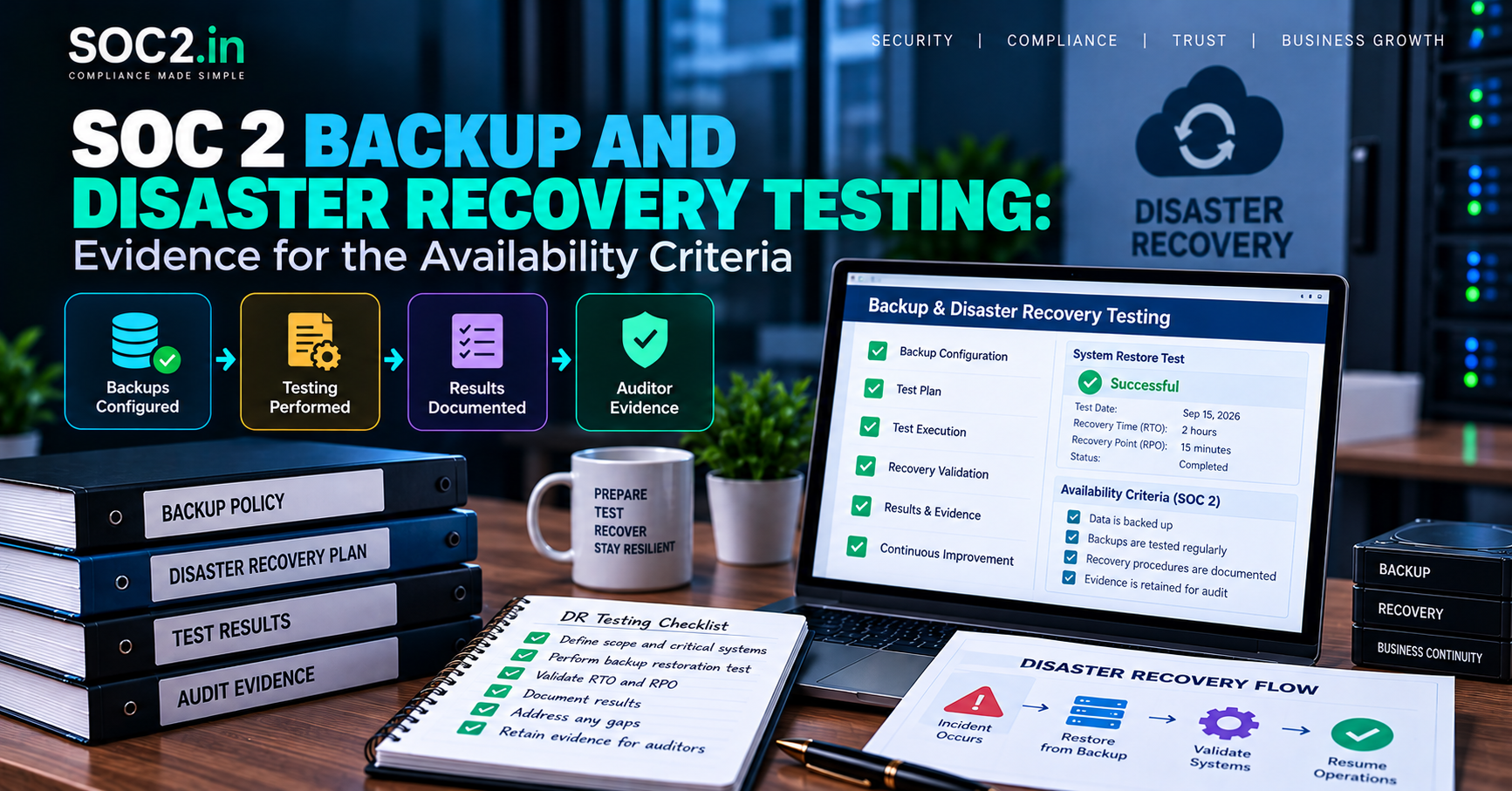
Backup and Disaster Recovery Controls
Availability is one of the SOC 2 Trust Services Criteria.
AWS provides various services for backup and recovery:
- AWS Backup
- Amazon S3 Versioning
- Amazon RDS Snapshots
- Cross-Region Replication
Best Practices
- Define Recovery Time Objectives (RTO)
- Define Recovery Point Objectives (RPO)
- Test recovery procedures regularly
SOC 2 Benefits
Supports business continuity and disaster recovery requirements.
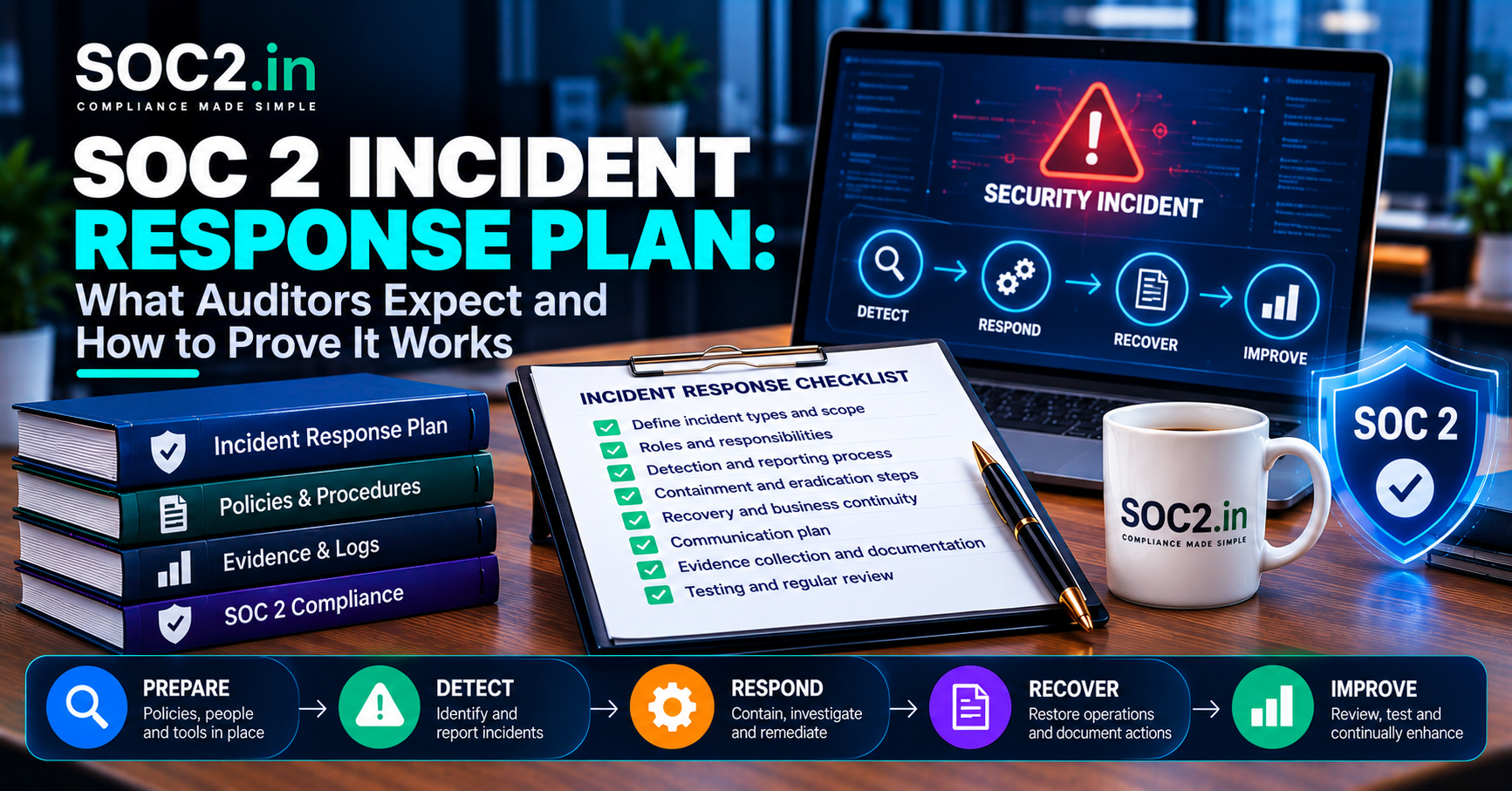
Security Monitoring and Incident Response
SOC 2 requires organizations to establish effective incident response procedures.
AWS Monitoring Tools
- Amazon CloudWatch
- AWS Security Hub
- AWS GuardDuty
- AWS CloudTrail
Incident Response Best Practices
- Establish response procedures
- Define escalation workflows
- Conduct tabletop exercises
- Document security incidents
SOC 2 Benefits
Improves detection, response, and remediation capabilities.
Common AWS Security Control Gaps Identified During SOC 2 Audits
Organizations frequently encounter the following issues:
- Excessive IAM permissions
- Missing MFA enforcement
- Unencrypted storage resources
- Publicly exposed S3 buckets
- Insufficient log retention
- Incomplete vulnerability management
- Lack of security monitoring
- Weak incident response processes
Addressing these gaps proactively can significantly improve audit outcomes.
AWS Security Control Checklist for SOC 2
Use this checklist to improve audit readiness:
✓ Enable Multi-Factor Authentication
✓ Enforce Least Privilege Access
✓ Configure AWS CloudTrail
✓ Implement AWS Config Rules
✓ Encrypt Data at Rest and In Transit
✓ Enable AWS GuardDuty
✓ Deploy AWS Security Hub
✓ Conduct Vulnerability Assessments
✓ Secure Secrets Using AWS Secrets Manager
✓ Implement Backup and Recovery Procedures
✓ Establish Incident Response Plans
✓ Perform Regular Access Reviews
✓ Monitor Security Events Continuously
Conclusion
AWS provides a powerful ecosystem of security services that can help organizations build and maintain SOC 2 compliant environments. By implementing strong identity and access management, encryption, logging, monitoring, vulnerability management, network security, and incident response controls, businesses can significantly improve their security posture and streamline the SOC 2 audit process.
However, technology alone is not enough. Successful SOC 2 compliance requires a combination of well-documented policies, operational procedures, employee awareness, continuous monitoring, and ongoing governance.
Organizations that effectively leverage AWS security controls while aligning them with SOC 2 requirements are better positioned to protect customer data, reduce risk, and earn the trust of enterprise customers.