This comprehensive guide explores the most effective Google Cloud security best practices for achieving SOC 2 compliance. Learn how organizations can use Google Cloud IAM, Security Command Center, Cloud Logging, encryption, vulnerability management, monitoring, incident response, and governance controls to build secure cloud environments and successfully prepare for SOC 2 audits.
As organizations increasingly adopt cloud-native technologies, maintaining strong security and compliance has become a business necessity. SaaS companies, technology providers, FinTech firms, healthcare platforms, and enterprises handling sensitive customer data often pursue SOC 2 compliance to demonstrate their commitment to security and trust.
Google Cloud Platform (GCP) offers a powerful suite of security, monitoring, governance, and compliance tools that help organizations align with SOC 2 requirements. However, simply hosting applications on Google Cloud does not automatically result in SOC 2 compliance. Organizations must implement appropriate security controls, continuously monitor their environments, and maintain proper documentation and governance practices.
This guide covers the most important Google Cloud security best practices for SOC 2 compliance and explains how organizations can leverage GCP services to improve security posture and audit readiness.
Understanding SOC 2 Compliance
SOC 2 evaluates controls based on five Trust Services Criteria:
- Security
- Availability
- Processing Integrity
- Confidentiality
- Privacy
Security is mandatory for every SOC 2 audit, while additional criteria are selected based on business needs.
Organizations must demonstrate that effective controls exist to protect customer data, manage risks, and maintain system integrity.
Understanding Google’s Shared Responsibility Model
Before implementing Google Cloud security controls, organizations must understand the Shared Responsibility Model.
Google Cloud Responsibilities
Google manages:
- Physical data centers
- Global infrastructure
- Hardware security
- Core networking
- Hypervisor security
Customer Responsibilities
Customers manage:
- Identity and access management
- Data security
- Application security
- Operating systems
- Security monitoring
- Compliance management
SOC 2 audits primarily focus on customer-managed security controls.
Implement Strong Identity and Access Management (IAM)
Identity and Access Management (IAM) is one of the most critical SOC 2 security controls.
Google Cloud IAM helps organizations control who can access resources and what actions they can perform.
Best Practices
Apply Least Privilege Access
Grant users only the permissions required for their job functions.
Use Role-Based Access Control
Assign predefined or custom roles based on responsibilities.
Enforce Multi-Factor Authentication (MFA)
Require MFA for administrators and privileged users.
Regular Access Reviews
Review and remove unnecessary permissions regularly.
SOC 2 Benefits
- Reduces unauthorized access
- Improves accountability
- Supports logical access control requirements
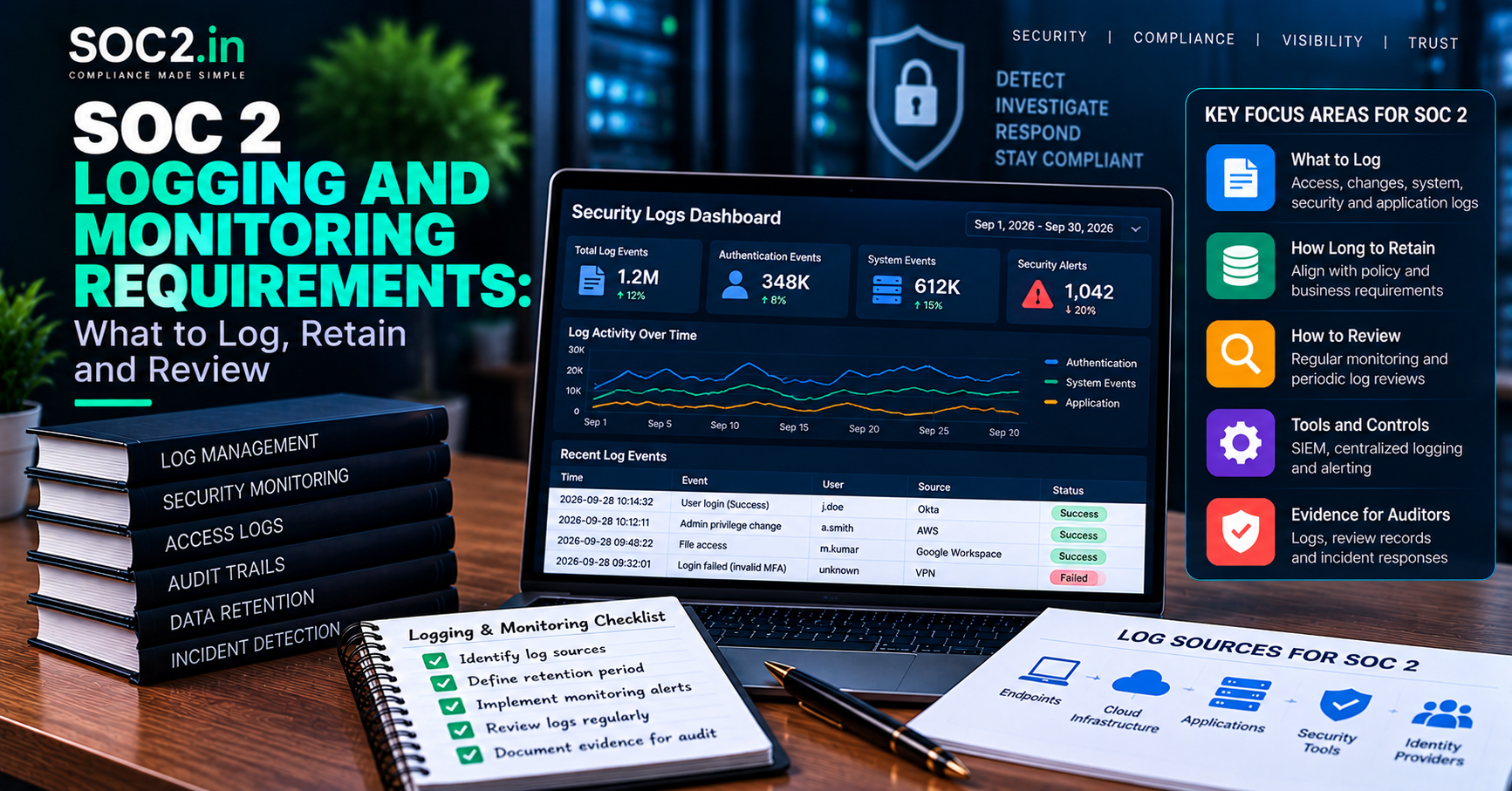
Enable Cloud Audit Logs
SOC 2 requires organizations to maintain detailed logs of system activity and security events.
Google Cloud Audit Logs automatically record:
- Administrative activities
- Data access events
- System events
- Policy changes
- User actions
Best Practices
- Enable all audit logging categories
- Protect log integrity
- Define retention policies
- Restrict log access
SOC 2 Benefits
Provides evidence for auditors and supports security monitoring requirements.
Use Security Command Center for Continuous Monitoring
Google Cloud Security Command Center provides centralized visibility into security risks across cloud environments.
Key Features
- Asset discovery
- Vulnerability detection
- Threat monitoring
- Security posture management
- Compliance reporting
SOC 2 Benefits
Supports continuous monitoring, risk management, and security governance.
Encrypt Data at Rest and In Transit
Data protection is a fundamental requirement for SOC 2 compliance.
Google Cloud encrypts customer data by default, but organizations should implement additional controls.
Best Practices
Data at Rest
Use:
- Cloud Storage Encryption
- Persistent Disk Encryption
- Cloud SQL Encryption
Data in Transit
- Enforce TLS 1.2 or higher
- Use secure API communication
- Protect external connections
Customer Managed Encryption Keys (CMEK)
Use Google Cloud KMS to manage encryption keys.
SOC 2 Benefits
Supports confidentiality and data protection controls.
Secure Secrets and Credentials
Hardcoded credentials are one of the most common security risks in cloud environments.
Google Secret Manager helps securely store:
- API keys
- Database credentials
- Application secrets
- Certificates
Best Practices
- Rotate credentials regularly
- Restrict secret access
- Audit secret usage
SOC 2 Benefits
Improves credential security and access management.
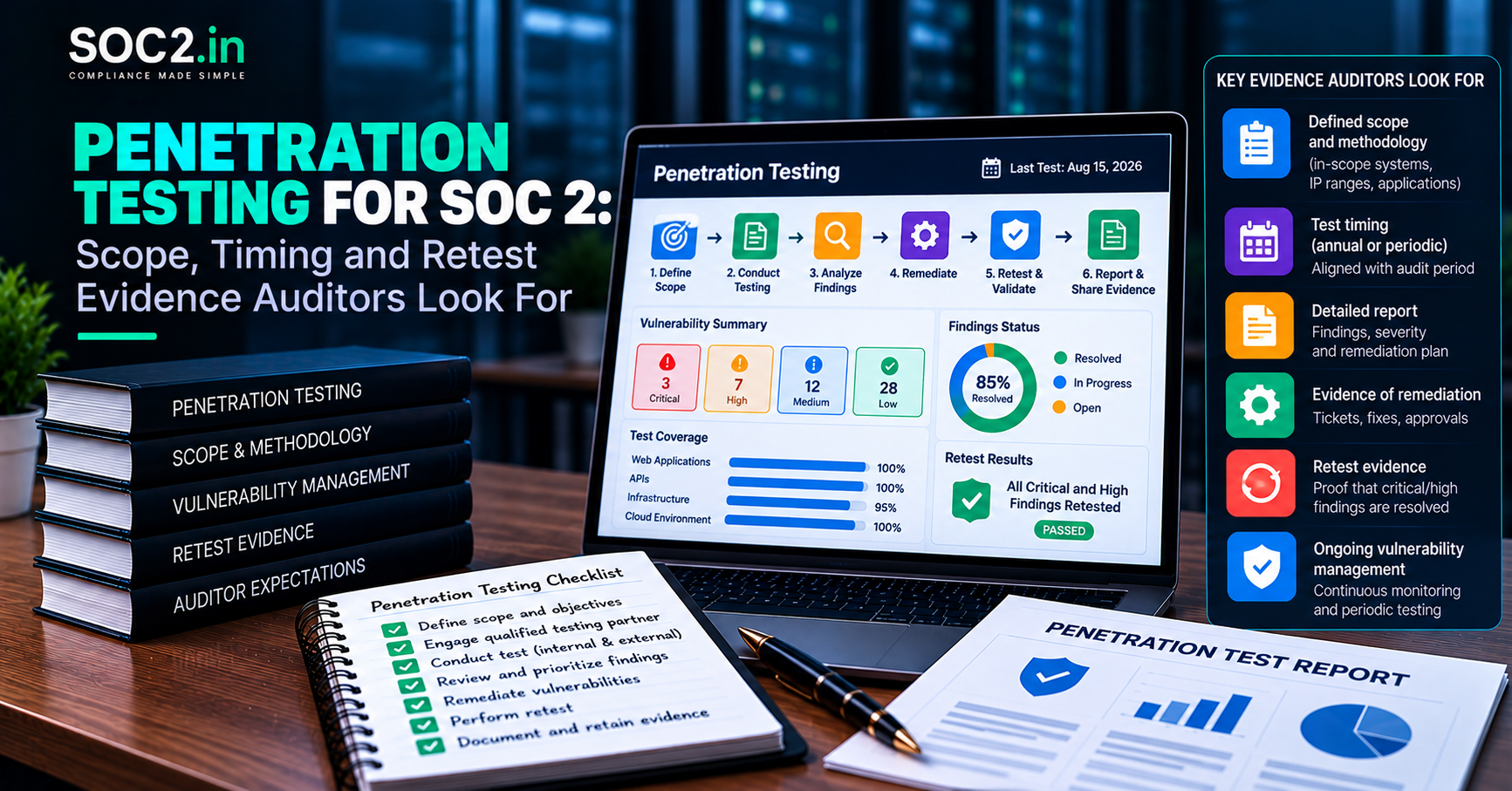
Implement Vulnerability Management
SOC 2 requires organizations to identify and remediate vulnerabilities proactively.
Google Cloud Security Tools
- Security Command Center
- Container Analysis
- Artifact Analysis
- Third-party vulnerability scanners
Best Practices
- Conduct regular vulnerability scans
- Prioritize critical findings
- Track remediation activities
- Document corrective actions
SOC 2 Benefits
Supports risk assessment and vulnerability management requirements.
Protect Cloud Workloads and Containers
Many organizations run applications on:
- Google Kubernetes Engine (GKE)
- Compute Engine
- Cloud Run
Security Best Practices
Secure Container Images
Scan images before deployment.
Implement Workload Identity
Reduce reliance on service account keys.
Restrict Privileged Containers
Minimize container privileges.
Enable Binary Authorization
Ensure only trusted images are deployed.
SOC 2 Benefits
Strengthens workload security and reduces attack surfaces.
Implement Network Security Controls
Network security plays a major role in SOC 2 compliance.
Virtual Private Cloud (VPC)
Segment workloads and restrict unnecessary communication.
Firewall Rules
Control inbound and outbound traffic.
Cloud Armor
Protect applications against:
- DDoS attacks
- Web exploits
- Bot traffic
Private Google Access
Secure communication between cloud resources.
SOC 2 Benefits
Enhances perimeter defense and protects critical systems.
Configure Monitoring and Alerting
Continuous monitoring is essential for SOC 2 audits.
Google Cloud Monitoring
Monitor:
- Resource utilization
- Security events
- Service availability
- Infrastructure health
Best Practices
- Configure real-time alerts
- Monitor critical assets
- Track security incidents
- Document monitoring procedures
SOC 2 Benefits
Supports security operations and incident detection.
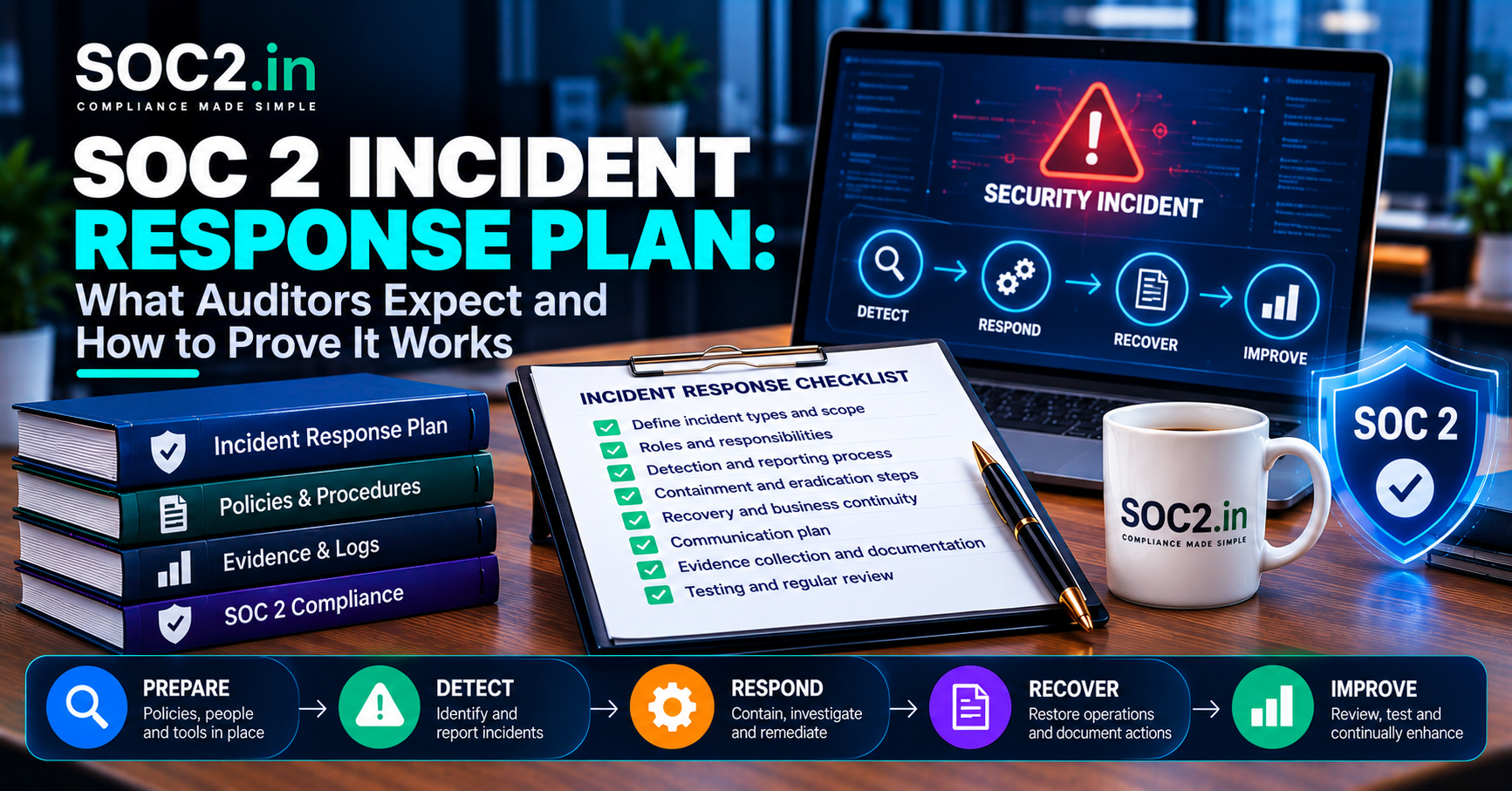
Strengthen Incident Response Capabilities
SOC 2 requires organizations to establish and maintain incident response processes.
Incident Response Lifecycle
- Preparation
- Detection
- Analysis
- Containment
- Eradication
- Recovery
- Lessons Learned
Google Cloud Security Services
- Security Command Center
- Cloud Logging
- Cloud Monitoring
- Google Chronicle
SOC 2 Benefits
Improves organizational readiness and response effectiveness.
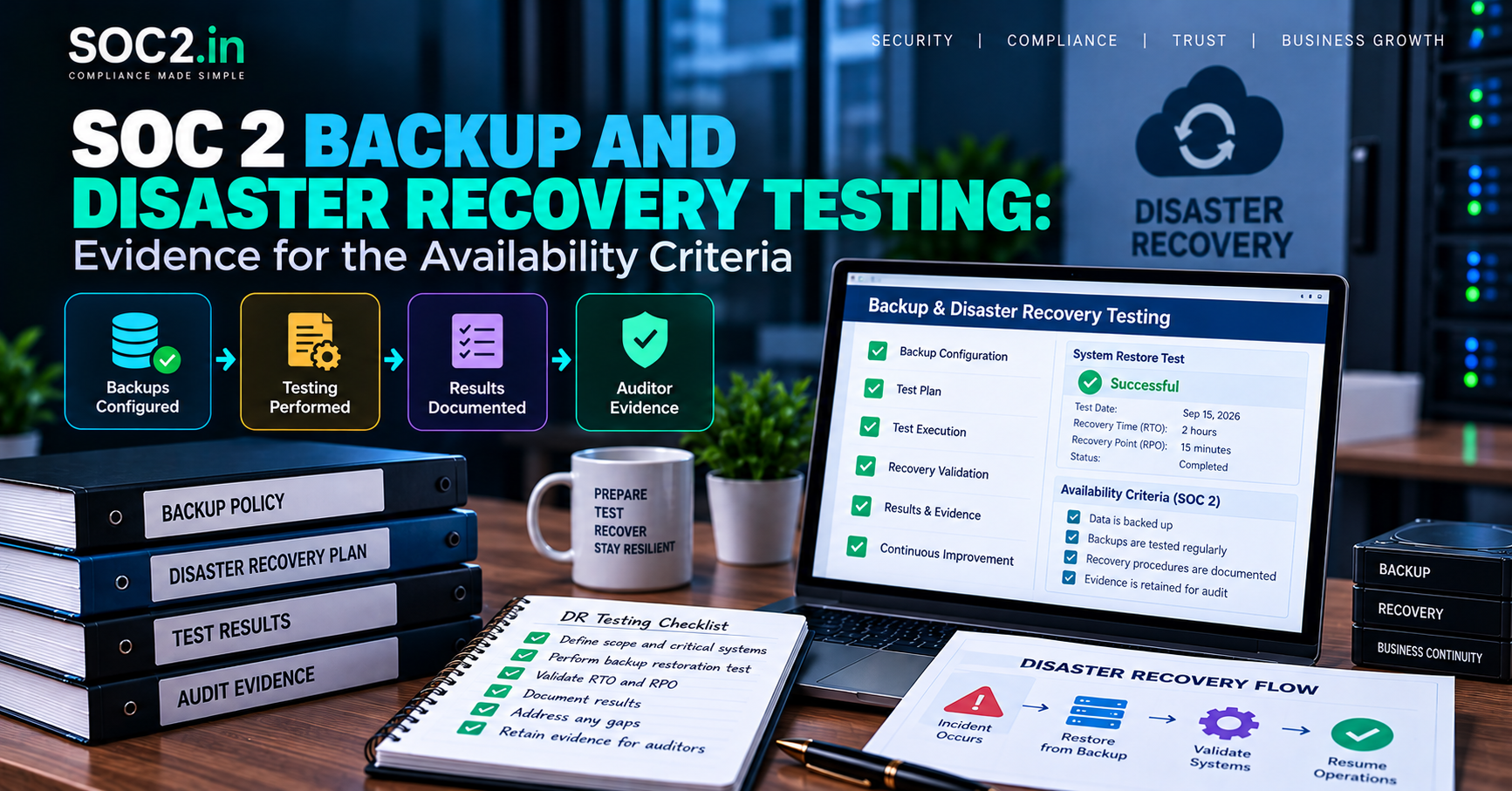
Backup and Disaster Recovery Best Practices
Availability is one of the SOC 2 Trust Services Criteria.
Backup Best Practices
- Enable automated backups
- Use multi-region storage
- Test recovery procedures
- Document disaster recovery plans
Recovery Objectives
Define:
- Recovery Time Objective (RTO)
- Recovery Point Objective (RPO)
SOC 2 Benefits
Supports availability and business continuity requirements.
Governance and Compliance Management
Strong governance is critical for maintaining long-term SOC 2 compliance.
Google Cloud Governance Tools
Organization Policies
Enforce security requirements across projects.
Resource Manager
Control project structures and permissions.
Policy Intelligence
Identify excessive permissions and security risks.
Best Practices
- Standardize security policies
- Conduct compliance reviews
- Monitor policy violations
- Maintain audit documentation
SOC 2 Benefits
Improves control effectiveness and compliance management.
Common Google Cloud Security Gaps Found During SOC 2 Audits
Organizations frequently encounter:
- Excessive IAM permissions
- Missing MFA enforcement
- Weak logging configurations
- Unencrypted sensitive data
- Poor network segmentation
- Lack of vulnerability management
- Inadequate incident response procedures
- Insufficient documentation
Addressing these issues proactively improves audit readiness and reduces risk.
Google Cloud Security Checklist for SOC 2 Compliance
Use this checklist to strengthen your compliance posture:
✓ Implement Least Privilege Access
✓ Enable Multi-Factor Authentication
✓ Configure Cloud Audit Logs
✓ Enable Security Command Center
✓ Encrypt Data at Rest and In Transit
✓ Use Customer Managed Encryption Keys
✓ Secure Secrets with Secret Manager
✓ Conduct Regular Vulnerability Assessments
✓ Configure Monitoring and Alerting
✓ Protect Workloads and Containers
✓ Implement Firewall Rules
✓ Deploy Cloud Armor
✓ Maintain Incident Response Procedures
✓ Test Backup and Recovery Plans
✓ Perform Periodic Access Reviews
Best Practices for Maintaining SOC 2 Compliance on Google Cloud
Automate Security Monitoring
Leverage Security Command Center and Cloud Monitoring.
Adopt Zero Trust Principles
Verify identities continuously and enforce least privilege.
Document Security Controls
Maintain policies, procedures, and compliance evidence.
Conduct Regular Security Reviews
Evaluate permissions, configurations, and vulnerabilities.
Continuously Improve Security Posture
Review incidents, update controls, and adapt to evolving threats.
Conclusion
Google Cloud provides a comprehensive set of security services and compliance capabilities that help organizations meet SOC 2 requirements. By implementing strong identity management, encryption, logging, monitoring, vulnerability management, incident response, and governance controls, businesses can build secure cloud environments and streamline SOC 2 audit preparation.
However, successful SOC 2 compliance requires more than technology alone. Organizations must combine Google Cloud security controls with documented policies, employee awareness, governance processes, and continuous monitoring to maintain a strong security posture.
Businesses that follow Google Cloud security best practices for SOC 2 compliance can improve customer trust, reduce risk, strengthen operational resilience, and accelerate enterprise growth.