As organizations embrace cloud computing, SaaS applications, and remote work, protecting customer data has become a business priority. Customers, investors, and enterprise buyers increasingly expect companies to demonstrate that they follow recognized security practices. This is where SOC 2 Compliance plays a crucial role.
SOC 2 is one of the world’s most trusted frameworks for validating an organization’s information security controls. Whether you’re a SaaS startup, cloud service provider, MSP, fintech company, healthcare technology provider, or IT services organization, achieving SOC 2 Compliance helps build trust, reduce risk, and unlock new business opportunities.
This guide explains everything you need to know about SOC 2. It covers the fundamentals, the audit process, and best practices.
What is SOC 2?
SOC 2 (System and Organization Controls 2) is an auditing framework developed by the American Institute of Certified Public Accountants (AICPA). It evaluates how organizations protect customer information through policies, processes, and technical controls.
Unlike general cybersecurity frameworks, SOC 2 focuses on how organizations securely manage customer data using the Trust Services Criteria (TSC).
The Five Trust Services Criteria
Every SOC 2 audit includes Security, while organizations may also include additional criteria depending on their services.
Security
Protects systems from unauthorized access through controls such as Multi-Factor Authentication (MFA), firewalls, endpoint protection, logging, and monitoring.
Availability
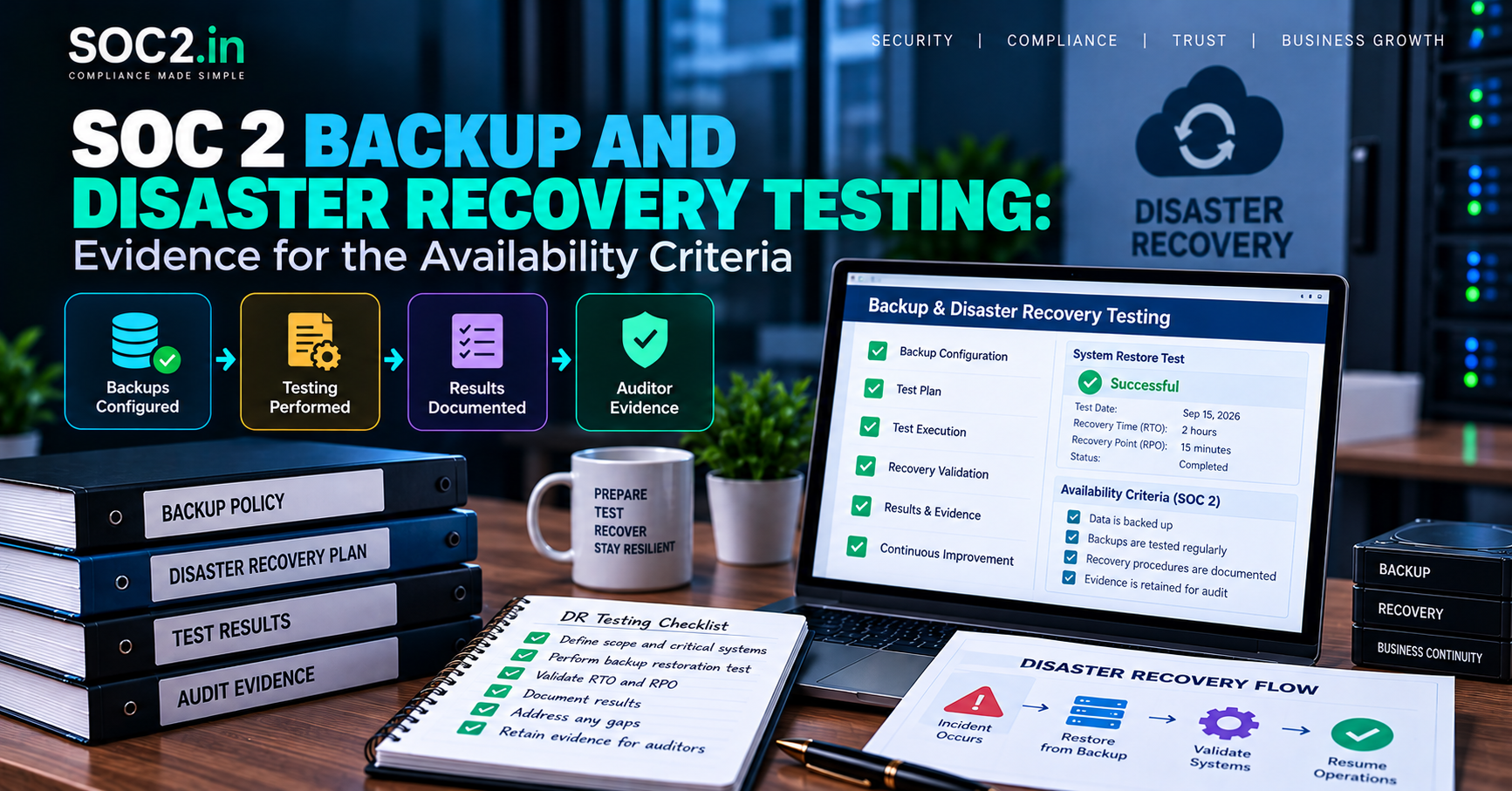
Ensures systems remain operational through backup strategies, disaster recovery planning, redundancy, and business continuity.
Processing Integrity
Confirms that systems process data accurately, completely, and in a timely manner.
Confidentiality
Protects confidential information using encryption, access controls, and secure data handling procedures.
Privacy
Ensures personal information is collected, processed, stored, and deleted according to privacy commitments and applicable regulations.
SOC 2 Type I vs SOC 2 Type II
SOC 2 Type I
Evaluates whether your controls are properly designed at a specific point in time.
Best for:
- Startups
- Early-stage SaaS companies
- Organizations beginning their compliance journey
SOC 2 Type II
Evaluates whether those controls operate effectively over an observation period, typically 3–12 months.
Best for:
- Enterprise-focused organizations
- Mature SaaS companies
- Cloud providers
- MSPs
Most enterprise customers prefer SOC 2 Type II because it provides stronger assurance.
Who Needs SOC 2?
SOC 2 is recommended for organizations that:
- SaaS Companies
- Cloud Service Providers
- Managed Service Providers (MSPs)
- Cybersecurity Companies
- FinTech Organizations
- Healthcare Technology Companies
- Data Centers
- IT Consulting Firms
- AI & Machine Learning Platforms
- Organizations handling customer or confidential data
Benefits of SOC 2 Compliance
Achieving SOC 2 offers both security and business advantages:
- Builds customer trust
- Accelerates enterprise sales
- Reduces vendor security questionnaires
- Improves cybersecurity maturity
- Strengthens governance
- Supports risk management
- Enhances brand reputation
- Creates a competitive advantage
- Opens new market opportunities
- Demonstrates operational excellence
The SOC 2 Compliance Process
A successful SOC 2 journey generally includes these steps:
1. Readiness Assessment
Evaluate existing controls and identify compliance gaps.
2. Gap Remediation
Implement missing security controls, policies, and procedures.
3. Control Implementation
Deploy access controls, encryption, logging, monitoring, and security awareness programs.
4. Evidence Collection
Gather documentation proving that controls operate effectively.
5. Independent Audit
A licensed CPA firm performs the SOC 2 assessment.
6. Final Report
Receive your SOC 2 Type I or Type II report.
Key Security Controls
Typical SOC 2 controls include:
- Multi-Factor Authentication (MFA)
- Role-Based Access Control (RBAC)
- Encryption
- Security Logging
- Vulnerability Management
- Patch Management
- Vendor Risk Management
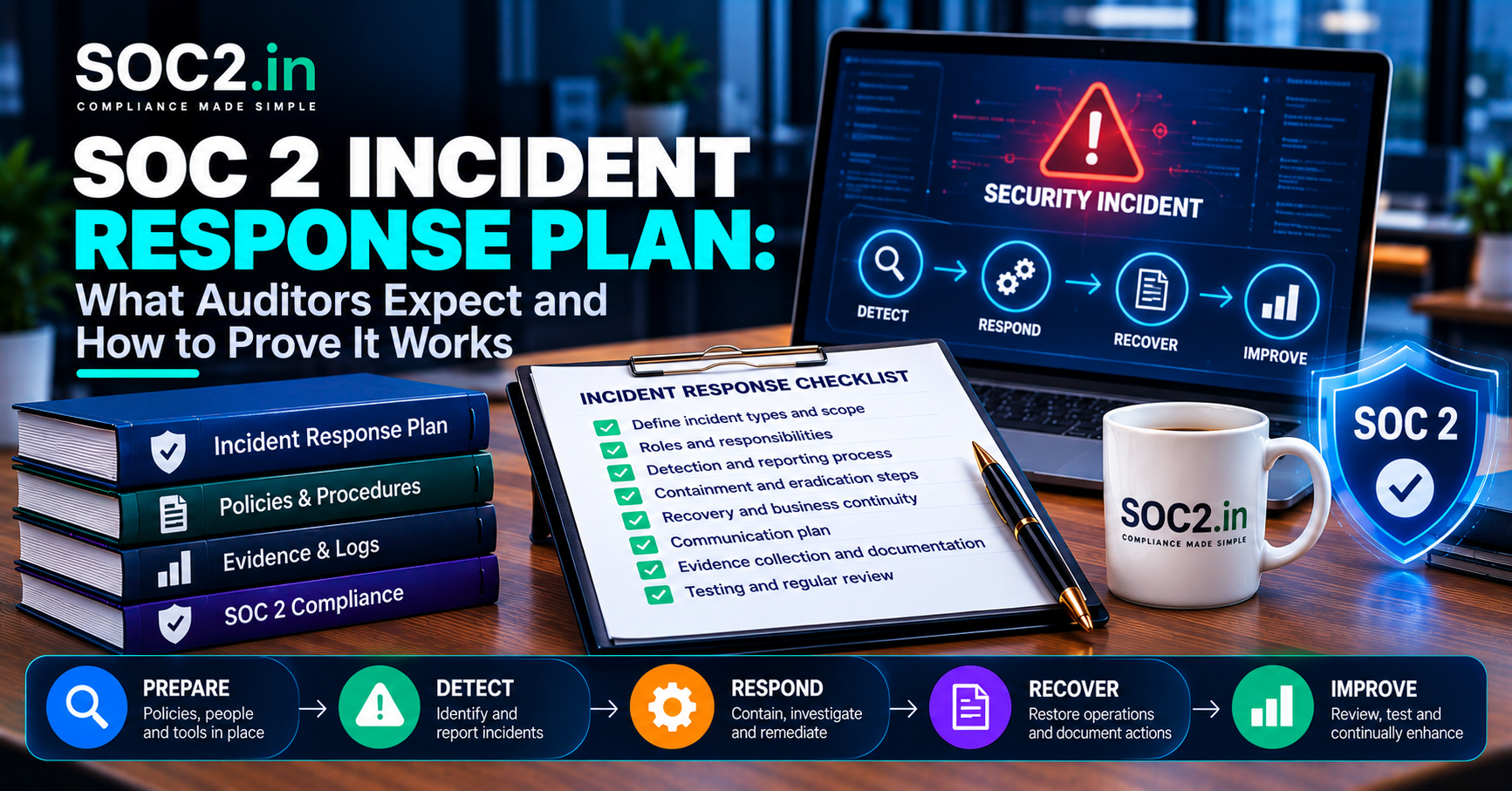
- Incident Response
- Backup & Disaster Recovery
- Security Awareness Training
- Continuous Monitoring
Common Challenges
Many organizations struggle with:
- Incomplete documentation
- Manual evidence collection
- Poor policy management
- Limited compliance expertise
- Weak access management
- Lack of continuous monitoring
Planning ahead significantly reduces audit delays.
Best Practices
To maintain continuous compliance:
- Conduct regular risk assessments.
- Review user access periodically.
- Perform vulnerability assessments.
- Test incident response plans.
- Update security policies annually.
- Continuously monitor security controls.
- Train employees regularly.
- Maintain audit evidence throughout the year.
How Long Does SOC 2 Take?
The timeline depends on your organization’s readiness.
| Phase | Typical Duration |
|---|---|
| Readiness Assessment | 2–4 Weeks |
| Gap Remediation | 4–8 Weeks |
| Control Implementation | 2–6 Weeks |
| Type I Audit | 2–4 Weeks |
| Type II Observation Period | 3–12 Months |
Organizations with mature security programs typically complete the process faster.
Why SOC 2 Matters Today
Enterprise customers increasingly expect vendors to demonstrate strong cybersecurity before sharing sensitive information.
A SOC 2 report provides independent assurance that your organization:
- Protects customer data
- Maintains effective security controls
- Continuously manages risk
- Operates with transparency
- Meets enterprise security expectations
For many organizations, SOC 2 has become a key differentiator in competitive markets.
Conclusion
SOC 2 compliance is more than an audit—it’s a strategic investment in your organization’s future. By implementing strong security controls, improving governance, and demonstrating accountability through an independent assessment, businesses can earn customer trust, reduce operational risks, and accelerate growth.
Whether you’re preparing for your first SOC 2 audit or planning a Type II assessment, building a culture of continuous compliance will help your organization stay secure, competitive, and ready for enterprise opportunities.
Frequently Asked Questions
Is SOC 2 mandatory?
No. SOC 2 is voluntary, but many enterprise customers require it before doing business with a vendor.
How long does SOC 2 compliance take?
Most organizations complete the process in 3 to 12 months, depending on readiness and the type of report pursued.
Which SOC 2 report should I choose?
SOC 2 Type I is ideal for organizations starting their compliance journey, while SOC 2 Type II provides stronger assurance by evaluating controls over time.
What is the biggest benefit of SOC 2?
SOC 2 helps organizations build customer trust, strengthen cybersecurity, simplify vendor assessments, and win enterprise business.