A SOC 2 Readiness Assessment is the foundation of a successful SOC 2 audit. Proper preparation helps organizations identify compliance gaps, strengthen security controls, organize documentation, and reduce audit risks. This guide provides a step-by-step approach to preparing for a SOC 2 Readiness Assessment and improving your chances of achieving SOC 2 compliance on the first attempt.
As cybersecurity and data privacy become increasingly important, enterprise customers expect vendors to demonstrate that they have strong security controls in place. For SaaS companies, cloud service providers, managed service providers (MSPs), FinTech organizations, healthcare technology companies, and other businesses handling sensitive customer data, SOC 2 compliance has become a critical requirement.
However, achieving SOC 2 compliance begins long before the official audit. One of the most important phases in the compliance journey is the SOC 2 Readiness Assessment.
A readiness assessment evaluates your organization’s current security posture, identifies compliance gaps, assesses risks, and determines whether your business is prepared for an independent SOC 2 audit. Organizations that invest time in preparing for this assessment often experience fewer audit findings, lower remediation costs, and a smoother certification process.
This guide outlines the essential steps to help you prepare effectively for a SOC 2 Readiness Assessment.
What Is a SOC 2 Readiness Assessment?
A SOC 2 Readiness Assessment is a pre-audit evaluation designed to compare your organization’s existing security controls against the SOC 2 Trust Services Criteria.
Unlike the official SOC 2 audit conducted by a licensed CPA firm, a readiness assessment is intended to identify weaknesses and provide recommendations before formal testing begins.
The assessment typically reviews:
- Information security policies
- Access management
- Risk management
- Vendor management
- Security monitoring
- Incident response
- Business continuity
- Documentation
- Evidence collection
The goal is to resolve compliance gaps before engaging the external auditor.
Why Preparation Matters
Many organizations underestimate the effort required to prepare for SOC 2.
Starting the readiness assessment without proper planning often leads to:
- Missing documentation
- Weak security controls
- Incomplete evidence
- Delayed audit timelines
- Increased consulting costs
- Additional remediation work
Preparing in advance enables your organization to address issues proactively rather than reacting during the audit.
Step 1: Understand Your Audit Scope
Before reviewing controls, define what will be included in the SOC 2 audit.
Determine:
- Products and services in scope
- Cloud environments (AWS, Azure, Google Cloud)
- Business applications
- Data centers
- Employees with access to customer data
- Third-party vendors
- Critical business processes
A clearly defined scope helps focus your readiness assessment and prevents unnecessary complexity.
Step 2: Understand the SOC 2 Trust Services Criteria
Every readiness assessment should be aligned with the SOC 2 Trust Services Criteria.
The five criteria are:
Security (Mandatory)
Protect systems from unauthorized access.
Availability
Ensure systems remain operational and accessible.
Processing Integrity
Maintain accurate and complete data processing.
Confidentiality
Protect confidential business and customer information.
Privacy
Manage personal information according to defined privacy commitments.
Most organizations begin with the mandatory Security criterion and add others based on customer requirements.
Step 3: Conduct a Gap Analysis
A gap analysis compares your current security program against SOC 2 requirements.
Evaluate areas such as:
- Information security policies
- Access controls
- Password management
- Multi-Factor Authentication
- Encryption
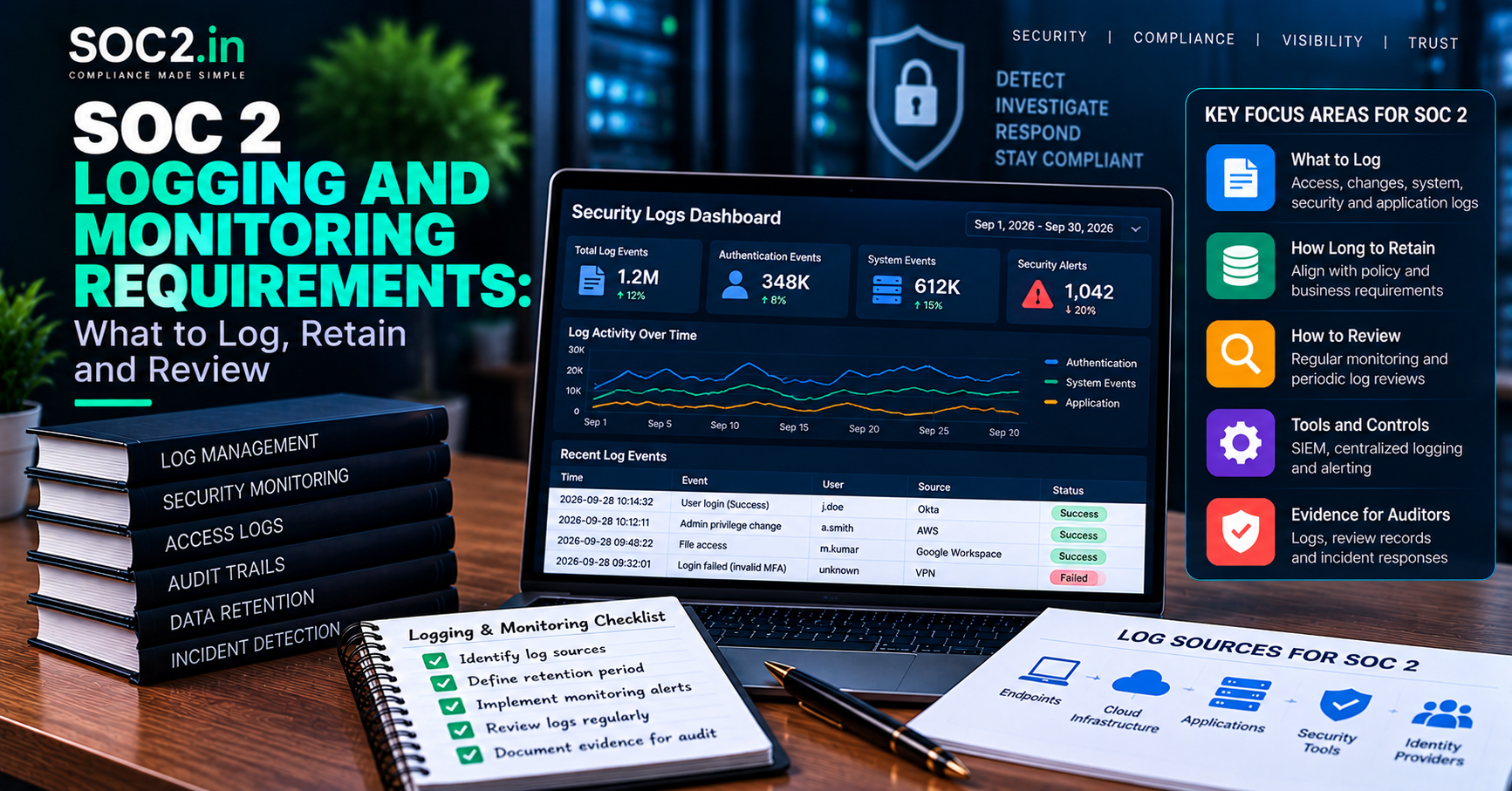
- Logging and monitoring
- Backup procedures
- Vendor management
- Change management
- Security awareness training
Document every identified gap along with the actions required to resolve it.
Step 4: Perform a Risk Assessment
Risk management is one of the core elements of SOC 2 compliance.
Identify risks related to:
Technology
- Unpatched systems
- Cloud misconfigurations
- Weak authentication
- Legacy applications
Operational Processes
- Human error
- Poor change management
- Lack of documentation
Third-Party Vendors
- Vendor access
- Data sharing
- Security weaknesses
Prioritize risks based on their likelihood and potential impact, then assign remediation owners and timelines.
Step 5: Review and Update Security Policies
Policies provide the foundation for your security program.
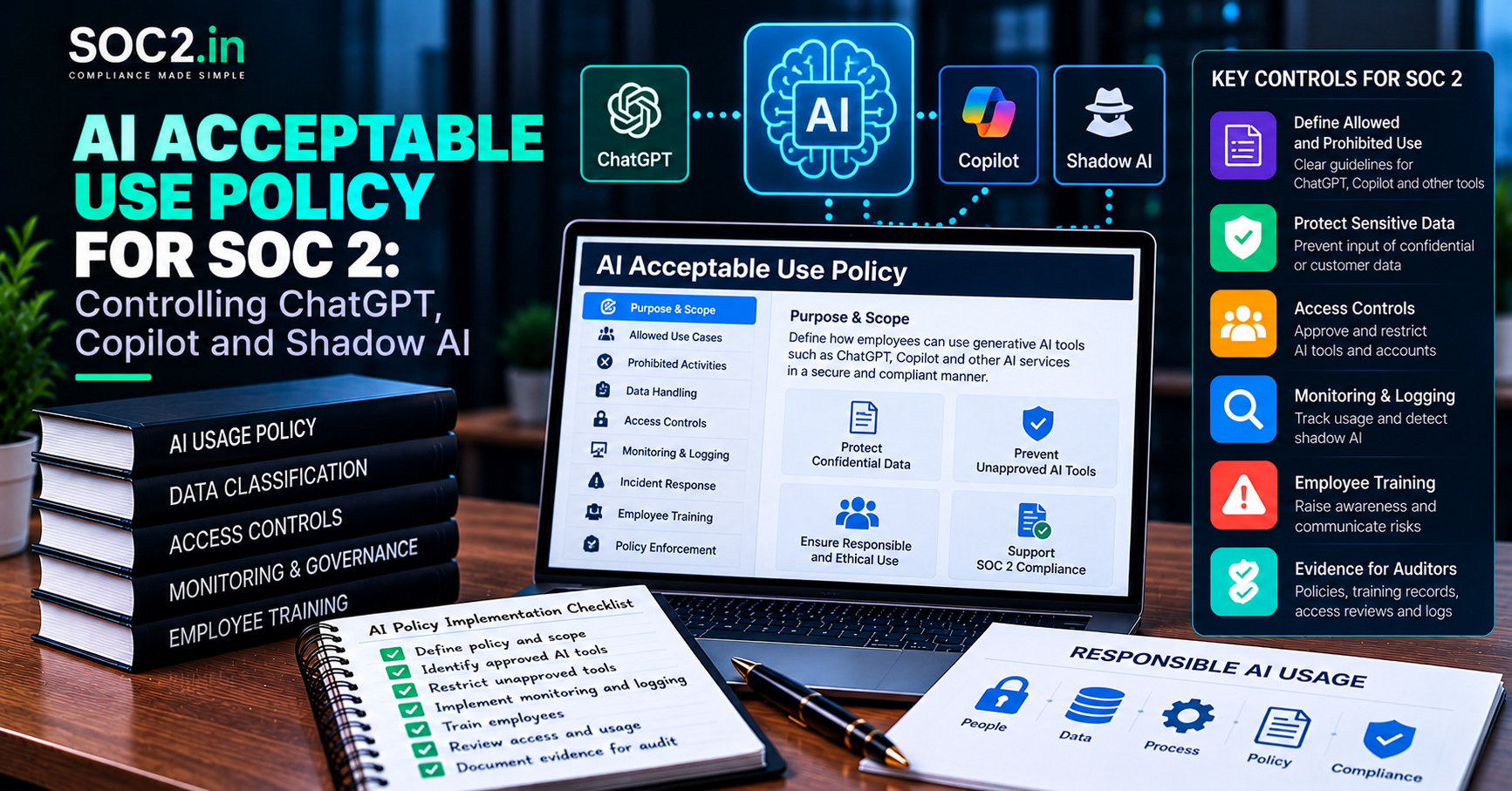
Ensure you have documented and approved policies for:
- Information Security
- Access Control
- Acceptable Use
- Password Management
- Data Classification
- Incident Response
- Vendor Management
- Business Continuity
- Disaster Recovery
- Change Management
Policies should reflect your actual operational practices rather than generic templates.
Step 6: Strengthen Identity and Access Management
Strong access controls are essential for SOC 2 compliance.
Verify that you have implemented:
- Multi-Factor Authentication (MFA)
- Role-Based Access Control (RBAC)
- Least Privilege Access
- Administrative account restrictions
- Periodic access reviews
- Timely user provisioning and deprovisioning
Access management is one of the most frequently reviewed areas during a SOC 2 audit.
Step 7: Organize Documentation and Evidence
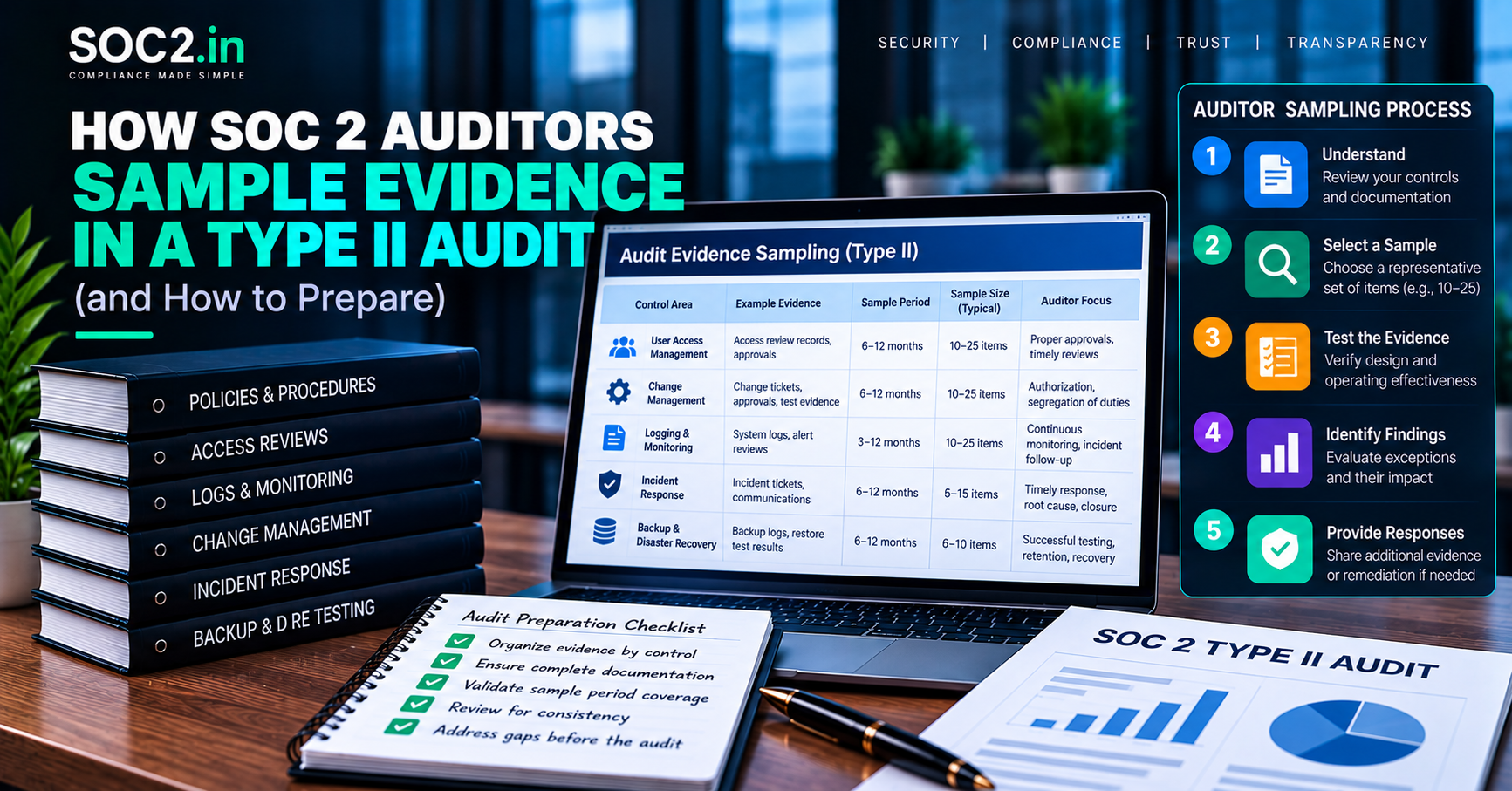
Evidence collection is often one of the most time-consuming aspects of a SOC 2 audit.
Prepare documentation such as:
- Security policies
- Risk assessments
- Access review reports
- Vulnerability scan results
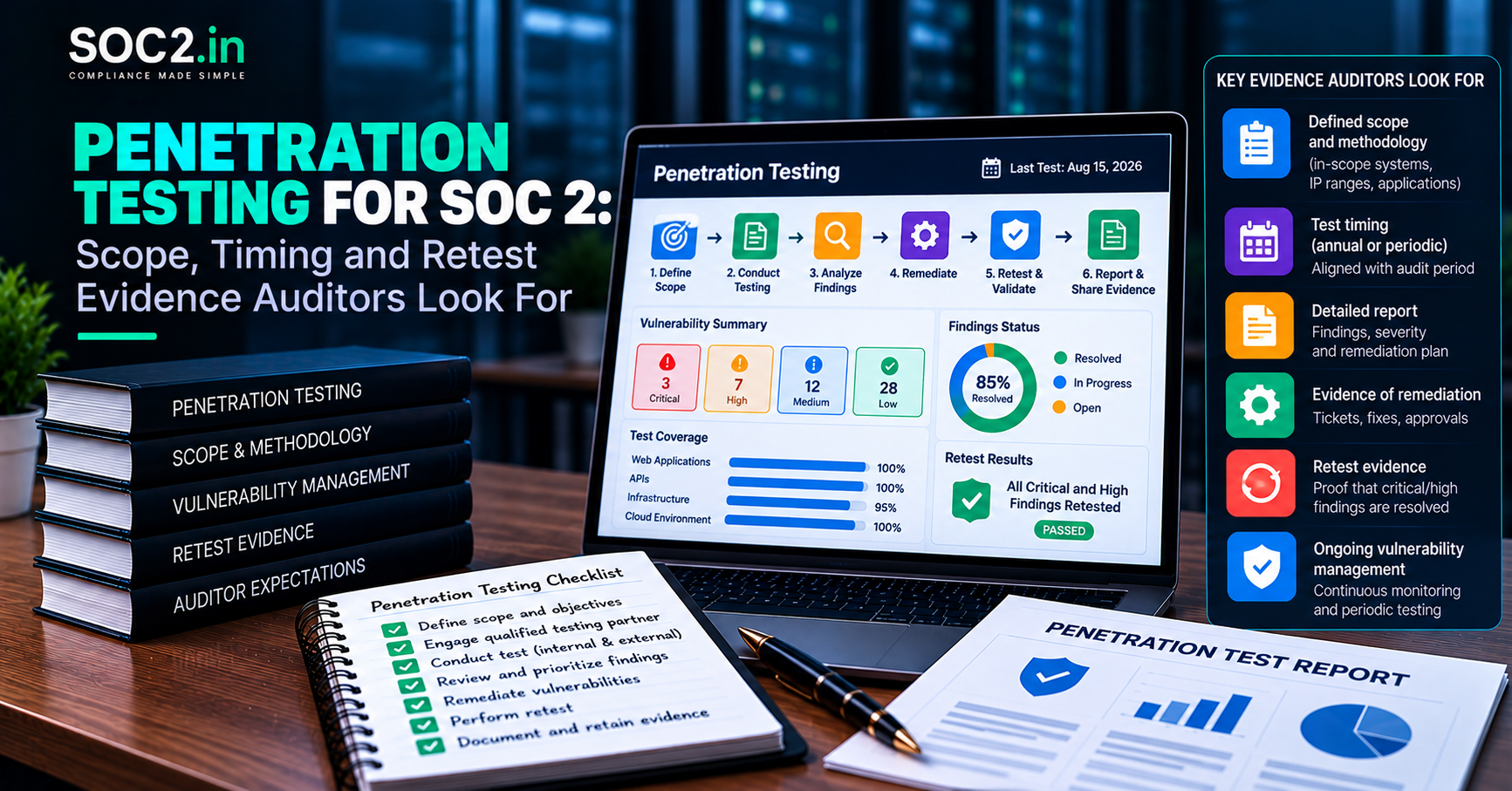
- Penetration test reports
- Employee training records
- Incident response logs
- Backup testing reports
- Vendor assessments
Maintaining a centralized evidence repository simplifies the audit process.
Step 8: Validate Technical Security Controls
Review your technical environment to ensure security controls are functioning correctly.
Examples include:
- Endpoint protection
- Firewall configurations
- Encryption
- Security monitoring
- Vulnerability management
- Backup systems
- Cloud security settings
Address any technical weaknesses before the readiness assessment.
Step 9: Train Employees
Technology alone cannot achieve SOC 2 compliance.
Employees should receive training on:
- Phishing awareness
- Password security
- Data handling
- Incident reporting
- Remote work security
- Social engineering
Maintain records of training completion as audit evidence.
Step 10: Evaluate Audit Readiness
Before engaging an auditor, perform an internal readiness review.
Verify that:
- Controls are implemented.
- Policies are documented.
- Evidence is complete.
- Risks are managed.
- Monitoring is operational.
- Employees understand their responsibilities.
This final review helps ensure your organization is prepared for a successful audit.
Common Preparation Mistakes
Organizations often struggle because they:
- Wait too long to prepare.
- Ignore documentation.
- Use outdated policies.
- Delay vulnerability remediation.
- Skip employee training.
- Collect evidence at the last minute.
Avoiding these mistakes improves both compliance and security maturity.
Best Practices for a Successful Readiness Assessment
Follow these recommendations:
- Start preparation early.
- Involve leadership and key stakeholders.
- Conduct regular risk assessments.
- Automate evidence collection where possible.
- Review policies annually.
- Monitor security controls continuously.
- Perform internal compliance reviews.
- Keep documentation up to date.
SOC 2 readiness is an ongoing process rather than a one-time project.
Benefits of Proper Preparation
Organizations that prepare effectively for a SOC 2 Readiness Assessment often experience:
- Faster audits
- Lower remediation costs
- Improved security posture
- Better customer confidence
- Increased operational efficiency
- Reduced business risk
- Higher likelihood of passing the audit on the first attempt
Preparation also creates a stronger foundation for long-term compliance.
Conclusion
Preparing for a SOC 2 Readiness Assessment is one of the most important steps in your compliance journey. By defining your audit scope, understanding the Trust Services Criteria, conducting a gap analysis, assessing risks, strengthening security controls, organizing documentation, and training employees, your organization can approach the SOC 2 audit with confidence.
A well-prepared organization not only reduces audit risks but also strengthens its overall cybersecurity program, improves operational resilience, and demonstrates a long-term commitment to protecting customer data. Investing time in readiness today can save significant time, effort, and cost during the official audit while helping you build lasting trust with customers and stakeholders.
Frequently Asked Questions
1. When should I start preparing for a SOC 2 Readiness Assessment?
Ideally, begin several months before your planned audit so you have enough time to address identified gaps.
2. What documents should I have ready?
Security policies, risk assessments, access reviews, incident response records, training logs, vulnerability reports, vendor assessments, and evidence of control operation.
3. Can a startup prepare for a SOC 2 Readiness Assessment?
Yes. Early preparation helps startups build scalable security practices and meet enterprise customer requirements.
4. Is a readiness assessment mandatory?
No, but it is strongly recommended because it reduces audit risk and improves the likelihood of a successful SOC 2 examination.
5. How long does preparation usually take?
Depending on the organization’s size and maturity, preparation can take anywhere from a few weeks to several months.