Preparing for SOC 2 Readiness can be challenging, especially for growing SaaS companies, cloud providers, MSPs, and technology organizations. However, the biggest mistake is treating SOC 2 as something that starts when the auditor arrives.
Successful SOC 2 engagements start early with a clear scope, documented policies, and effective controls.
Additionally, assigned control owners and reliable audit evidence also support SOC 2 Readiness.
A SOC 2 readiness assessment is designed to identify gaps before the formal audit. It evaluates whether controls are properly designed, documented, operating, and supported by evidence.
This SOC 2 readiness checklist provides a practical roadmap for organizations preparing for their first SOC 2 examination or strengthening an existing compliance program.
What Is SOC 2 Readiness?
SOC 2 readiness is the process of determining whether your organization is prepared for an independent SOC 2 examination.
The assessment generally looks at:
- Systems and services within scope
- Applicable Trust Services Criteria
- Security policies and procedures
- Internal controls
- Risk management
- Access management
- Vendor management
- Incident response
- Monitoring and logging
- Audit evidence
The AICPA Trust Services Criteria cover Security, Availability, Processing Integrity, Confidentiality, and Privacy. Security is the core criterion, while organizations may include the other criteria based on their services and commitments.
SOC 2 Readiness Checklist
1. Define Your SOC 2 Scope
Before implementing controls, clearly determine what the audit will cover.
- Identify the products and services included in the audit.
- Identify applications and infrastructure supporting those services.
- Document relevant cloud environments.
- Identify databases and data repositories.
- Map important data flows.
- Identify locations and business functions involved.
- Identify relevant third-party and sub-service organizations.
- Document systems that are intentionally outside the scope.
- Define the applicable Trust Services Criteria.
A clearly defined scope prevents unnecessary work and helps ensure that the controls and evidence you build actually support the audit.
2. Select the Appropriate Trust Services Criteria
The SOC 2 framework includes five Trust Services Criteria:
Security
Protect systems and information against unauthorized access, disclosure, damage, or disruption.
Availability
Address whether systems are available for operation and use as committed or agreed.
Processing Integrity
Address whether system processing is complete, valid, accurate, timely, and authorized.
Confidentiality
Protect information designated as confidential according to organizational commitments.
Privacy
Address the collection, use, retention, disclosure, and disposal of personal information.
The AICPA identifies these five categories as the Trust Services Criteria used to evaluate controls over systems and information.
3. Assign Control Owners
Every important control should have a responsible owner.
- Assign an owner to each control.
- Define the owner’s responsibilities.
- Establish review frequencies.
- Document backup owners where appropriate.
- Ensure owners understand the evidence they must maintain.
- Track control status regularly.
A control without a clear owner can easily become inconsistent or undocumented.
4. Perform a SOC 2 Gap Assessment
Conduct a structured comparison between your current environment and the controls required for your selected scope and criteria.
Review:
- Existing security controls
- Policies and procedures
- Access management
- Risk management
- Incident response
- Change management
- Vendor management
- Business continuity
- Security monitoring
- Evidence availability
The output should be a prioritized remediation plan showing what is missing, what needs improvement, who owns it, and when it should be completed.
5. Establish Security Policies
Your policies should accurately reflect how your organization actually operates.
Common policies include:
- Information Security Policy
- Access Control Policy
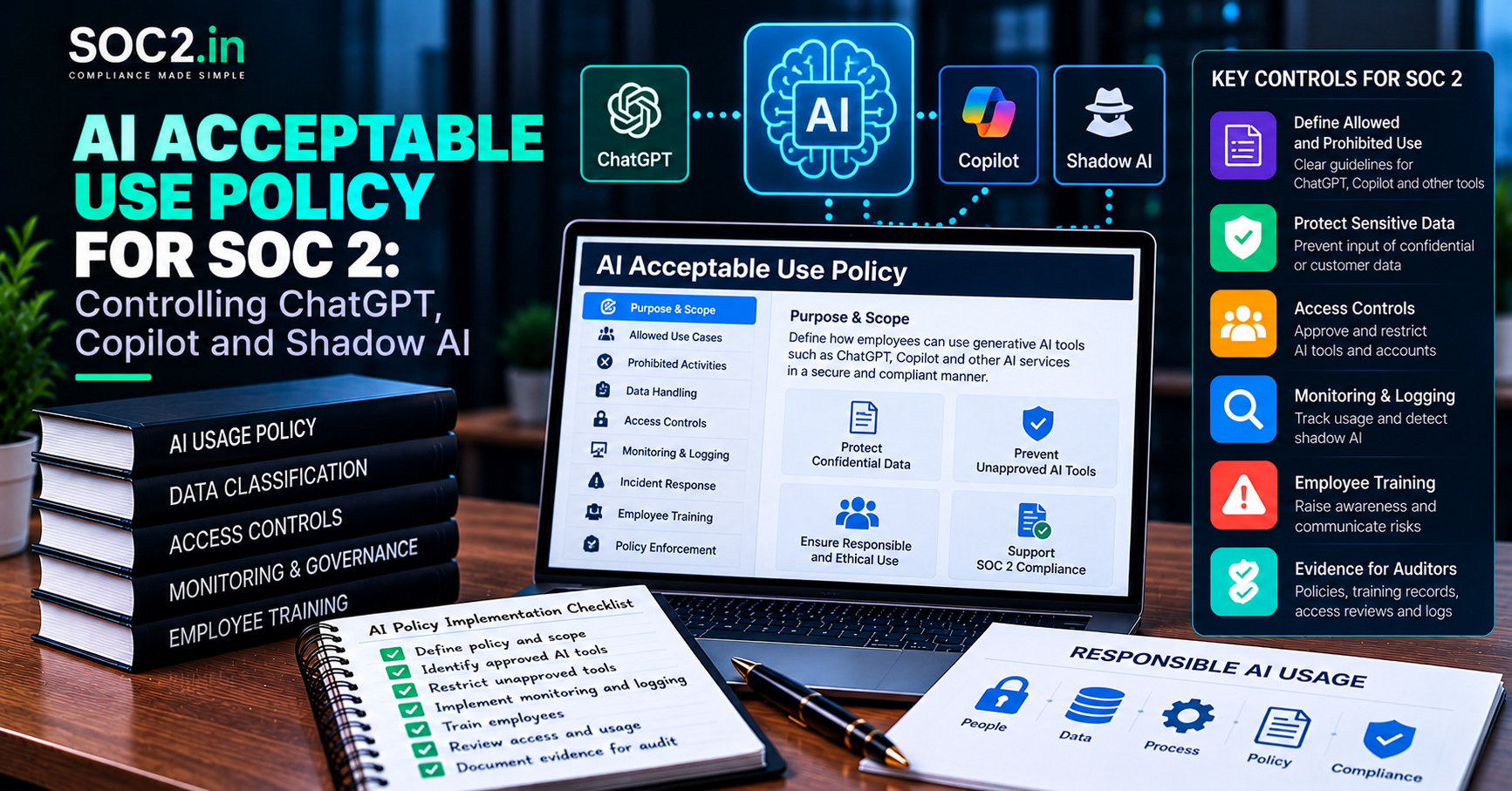
- Acceptable Use Policy
- Data Classification Policy
- Change Management Policy
- Incident Response Policy
- Vendor Management Policy
- Risk Management Policy
- Business Continuity Policy
- Disaster Recovery Policy
- Security Awareness Policy
- Data Retention and Disposal Policy
Policies should be approved, communicated to employees, reviewed periodically, and updated when significant changes occur.
6. Strengthen Identity and Access Management
Access controls are a major part of SOC 2 readiness.
- Implement Multi-Factor Authentication (MFA).
- Apply least-privilege access.
- Use Role-Based Access Control (RBAC).
- Establish user provisioning procedures.
- Establish employee termination procedures.
- Remove unnecessary accounts promptly.
- Review privileged access regularly.
- Conduct periodic user access reviews.
- Maintain evidence of access approvals and reviews.
The objective is not simply to have an access-control policy. You need evidence showing that access controls operate consistently.
7. Secure Your Infrastructure
Review your production infrastructure and supporting systems.
- Enable encryption in transit.
- Enable encryption at rest where appropriate.
- Maintain secure cloud configurations.
- Implement endpoint protection.
- Apply security patches.
- Conduct vulnerability assessments.
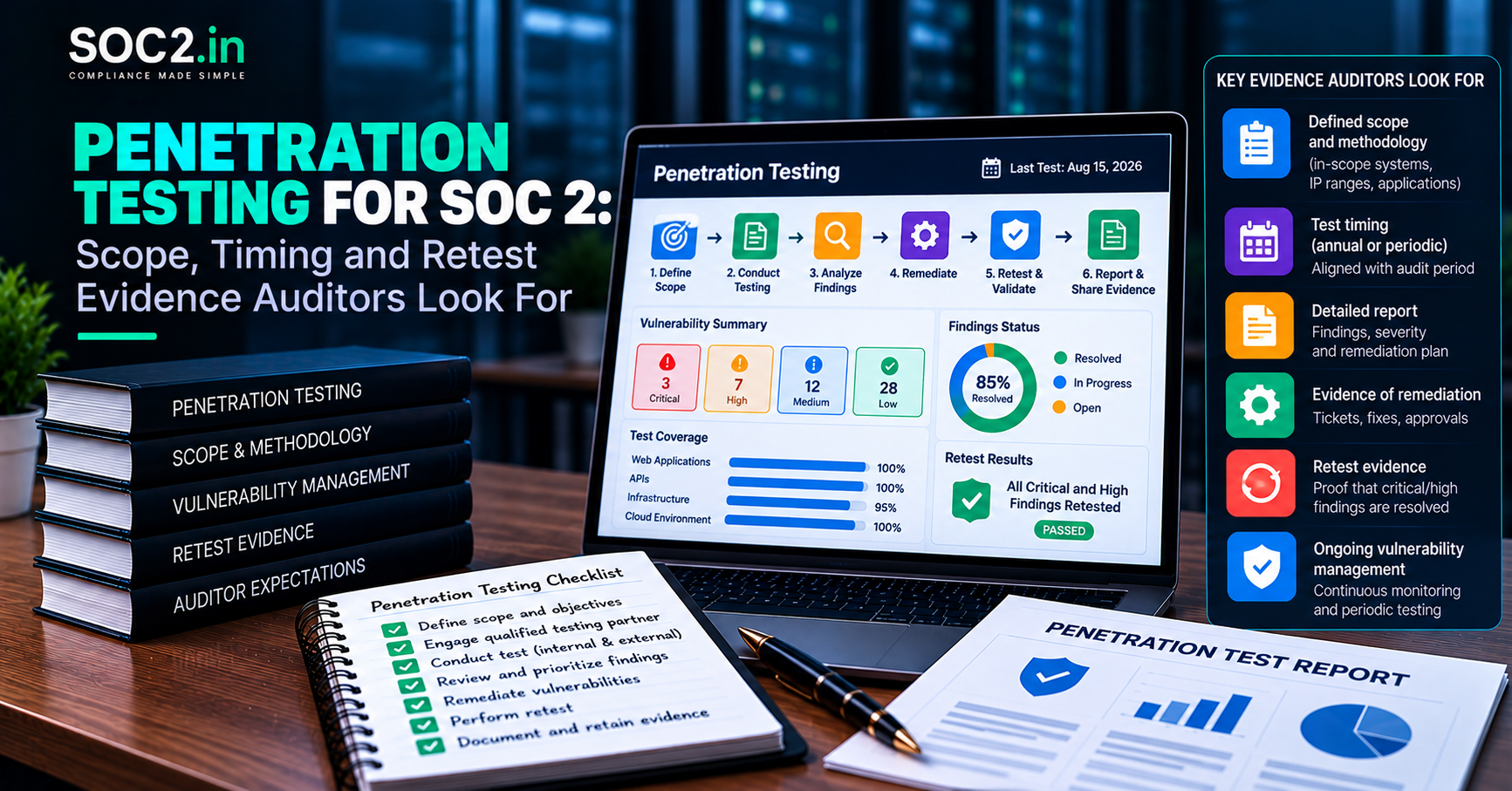
- Perform penetration testing where appropriate.
- Secure production environments.
- Separate development and production environments where appropriate.
- Restrict administrative access.
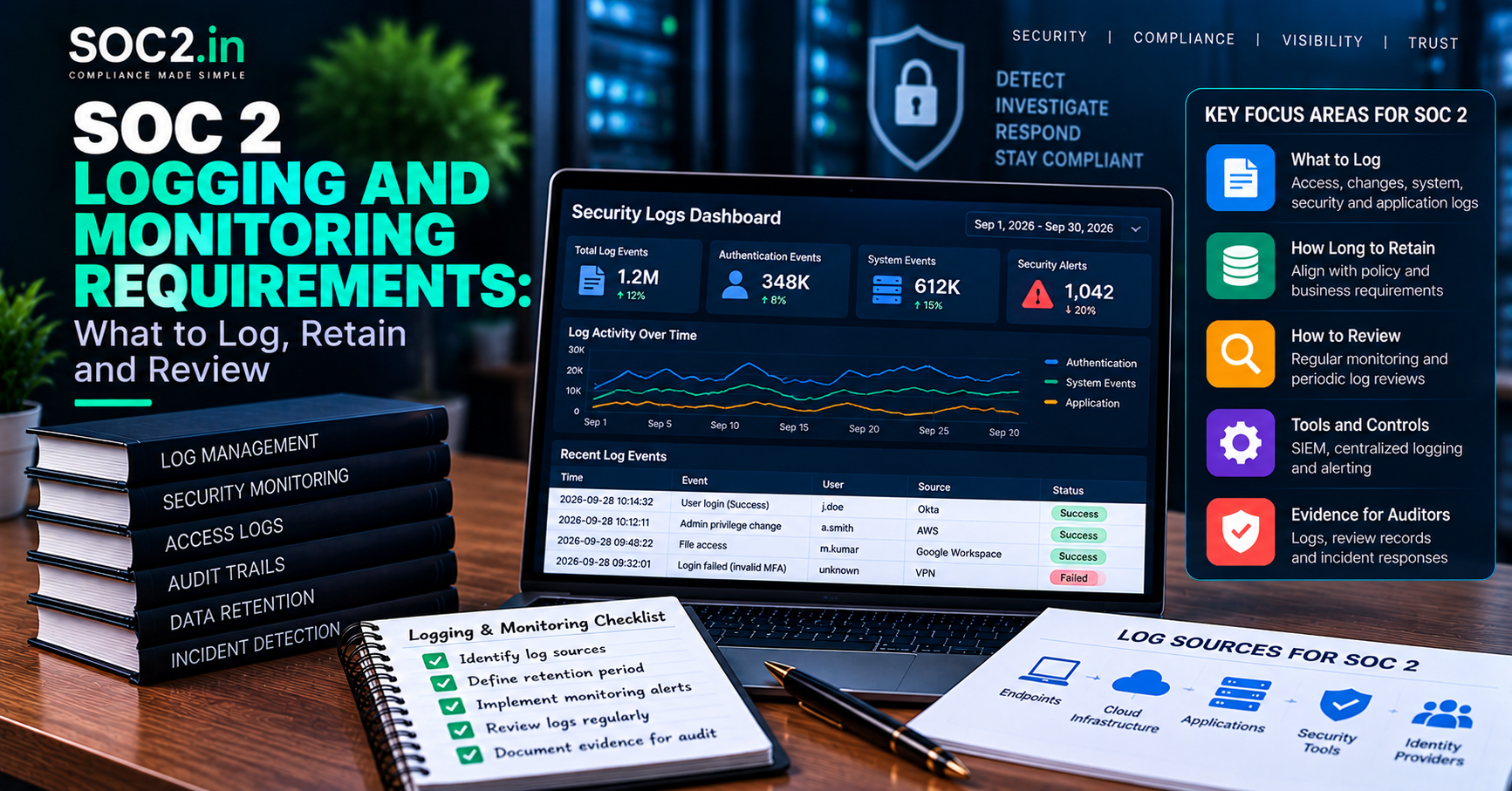
8. Implement Logging and Monitoring
Your organization should be able to identify and investigate suspicious activity.
- Enable logging for critical systems.
- Monitor privileged activity.
- Monitor authentication events.
- Establish alerting procedures.
- Define log retention requirements.
- Review security alerts.
- Document monitoring responsibilities.
- Maintain evidence of monitoring activities.
Monitoring is also important for detecting security incidents and producing reliable evidence during an audit.
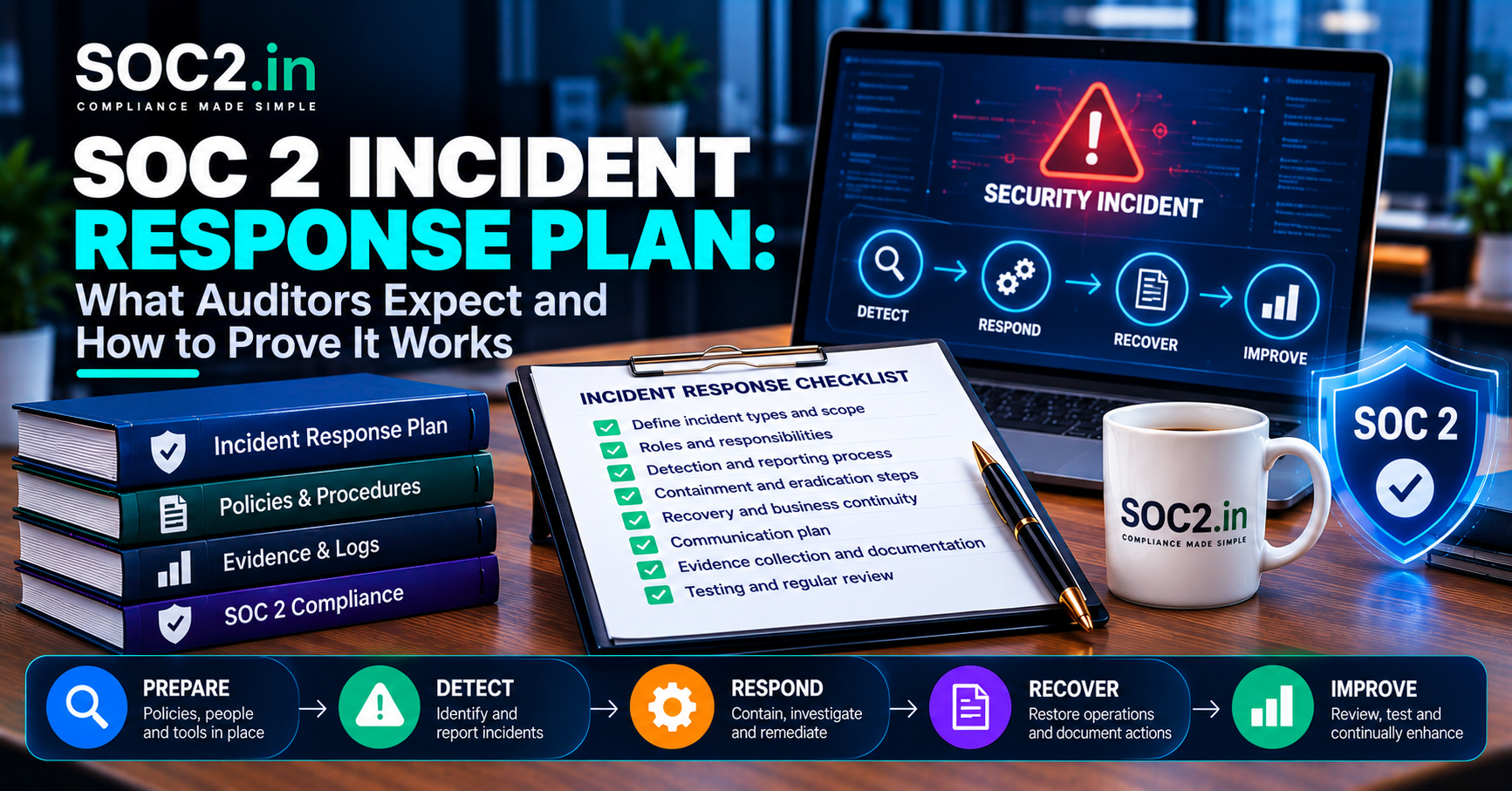
9. Build an Incident Response Program
A documented incident response process should define how your organization responds to security events.
- Create an incident response plan.
- Define incident severity levels.
- Establish escalation procedures.
- Assign incident response roles.
- Define communication requirements.
- Document containment and recovery procedures.
- Test the incident response plan.
- Document incidents and corrective actions.
- Conduct post-incident reviews.
A plan sitting in a document is not enough. Your organization should demonstrate that the process is understood and tested.
10. Establish Change Management
Changes to production systems should be controlled and documented.
- Define change approval procedures.
- Document change requests.
- Test changes where appropriate.
- Obtain required approvals.
- Maintain deployment records.
- Monitor emergency changes.
- Document unsuccessful changes and remediation.
This becomes especially important for organizations with frequent software releases and automated deployment pipelines.
11. Manage Third-Party Risk
Modern organizations depend on cloud providers, SaaS platforms, contractors, and other vendors.
- Maintain a vendor inventory.
- Classify vendors by risk.
- Conduct vendor security assessments.
- Review relevant vendor SOC reports.
- Document vendor approvals.
- Include appropriate security requirements in contracts.
- Monitor critical vendors periodically.
- Track vendor issues and remediation.
Third-party risk management is increasingly important because organizations often depend on service providers to deliver critical parts of their services.
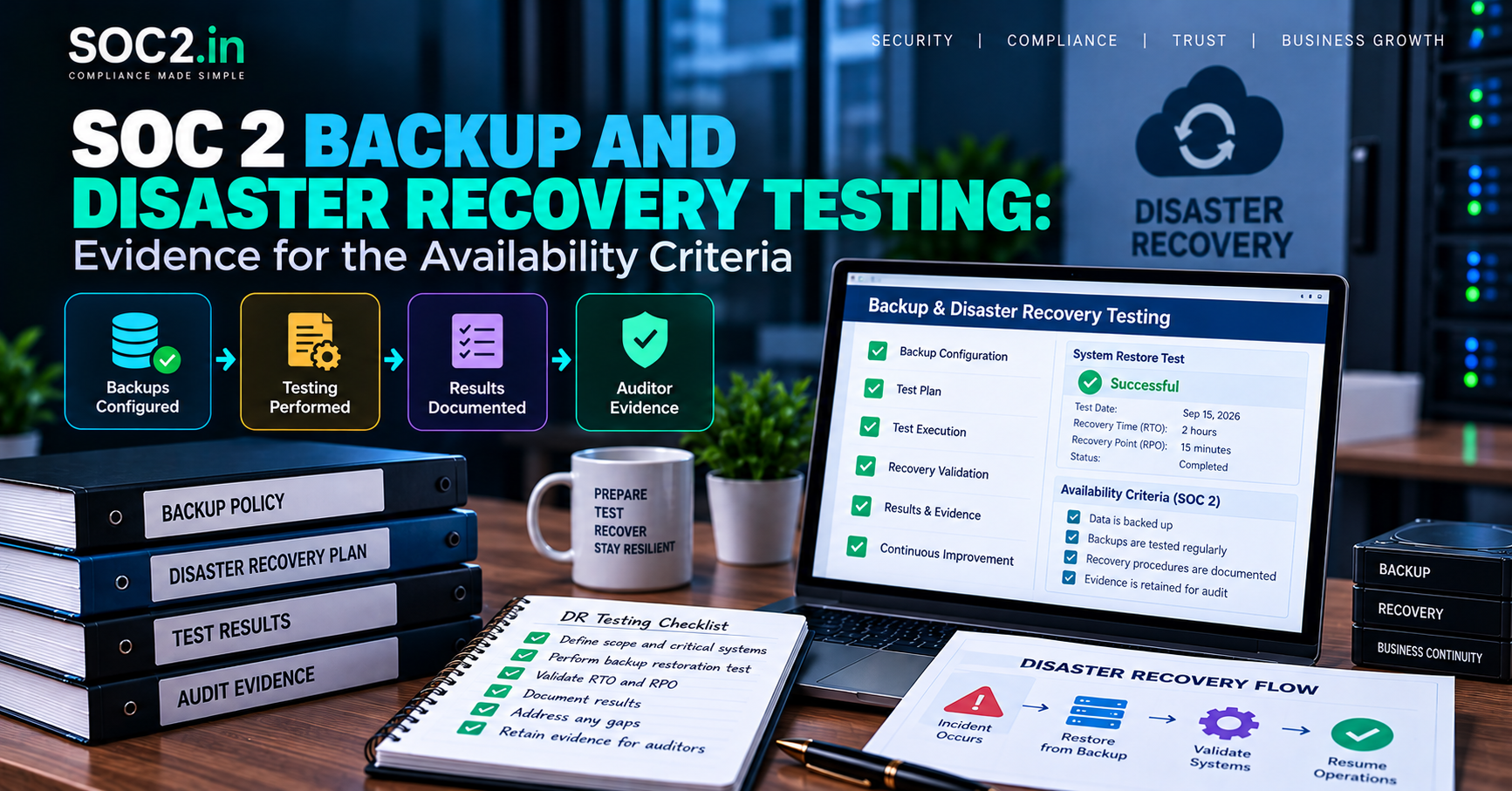
12. Prepare Business Continuity and Disaster Recovery
If availability is within your SOC 2 scope, or if continuity is important to your service commitments, review:
- Business Continuity Plan
- Disaster Recovery Plan
- Backup procedures
- Recovery objectives
- Backup monitoring
- Recovery testing
- System redundancy
- Disaster recovery evidence
Do not simply create a plan. Test it and document the results.
13. Establish Security Awareness Training
Employees are an important part of your security control environment.
- Provide security awareness training.
- Train new employees during onboarding.
- Conduct periodic refresher training.
- Cover phishing and social engineering.
- Train employees on data handling.
- Explain incident reporting procedures.
- Maintain training completion records.
14. Build an Audit Evidence Program
One of the most common readiness problems is not necessarily missing controls, but missing evidence showing that controls actually operated.
For every control, ask:
Does the control exist?
Is it documented?
Is it operating?
Can we prove it with evidence?
Evidence can include:
- Access review records
- Security logs
- Training records
- Vulnerability scan reports
- Penetration testing reports
- Change tickets
- Incident records
- Backup reports
- Risk assessments
- Vendor reviews
- Policy approvals
Current SOC 2 readiness guidance consistently emphasizes the importance of maintaining an evidence trail rather than trying to reconstruct evidence immediately before an audit.
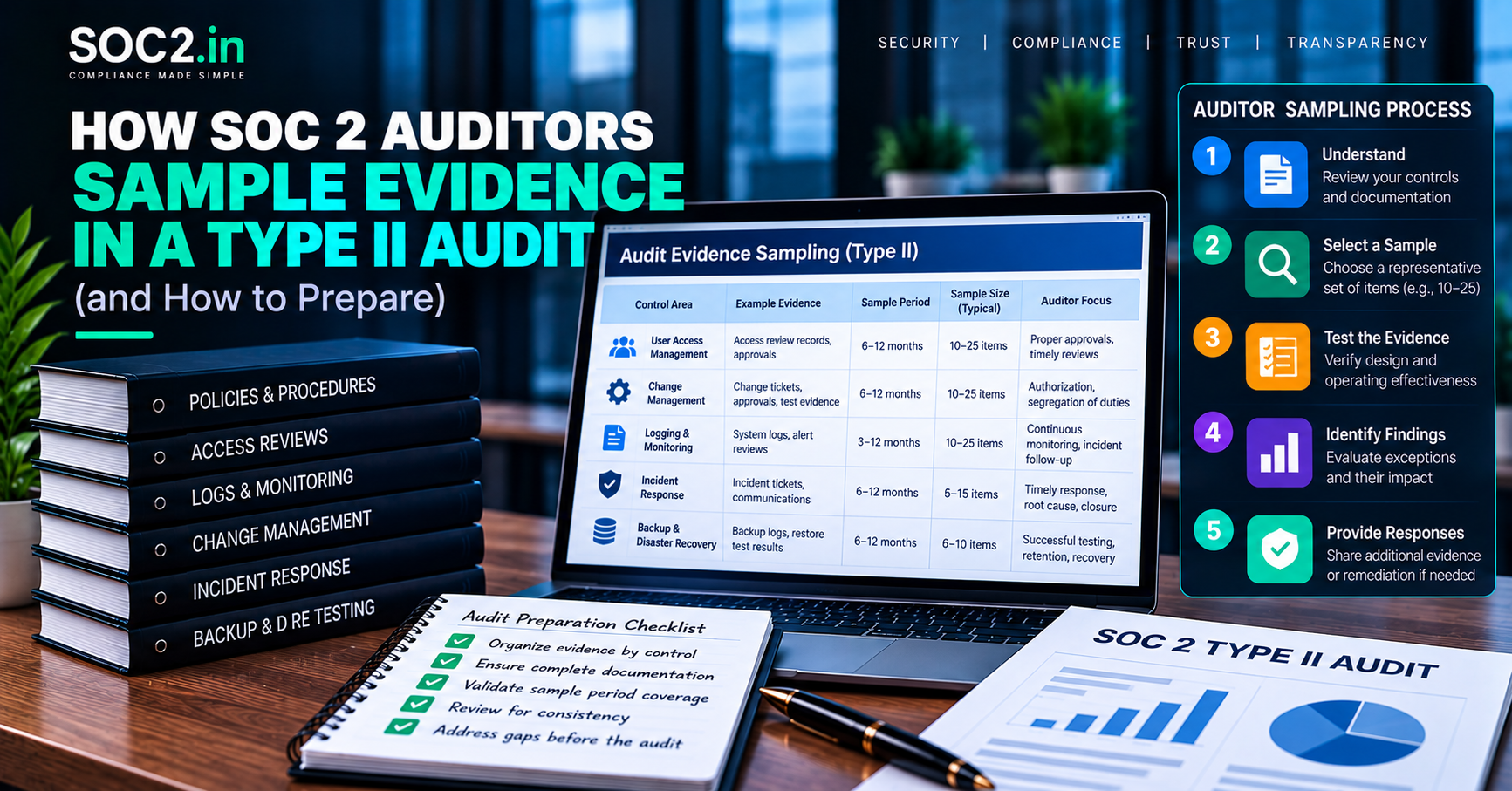
15. Prepare for SOC 2 Type II
If you are pursuing a SOC 2 Type II examination, readiness must go beyond implementing controls.
You need to demonstrate that controls operate effectively over the examination period.
Therefore:
- Start evidence collection before the examination period.
- Maintain evidence throughout the period.
- Track control performance.
- Document exceptions.
- Remediate control failures.
- Maintain evidence of recurring reviews.
- Monitor changes to the control environment.
This is why organizations should avoid waiting until the end of the audit period to begin collecting evidence.
16. Conduct an Internal Readiness Review
Before the independent auditor begins, conduct your own review.
Ask:
- Are all controls implemented?
- Are policies approved?
- Are controls operating consistently?
- Is evidence complete?
- Are control owners assigned?
- Are there unresolved exceptions?
- Are vendors reviewed?
- Are access reviews complete?
- Has incident response been tested?
- Are backup and recovery procedures tested?
A mock audit or internal review can identify weaknesses before they become audit findings.
17. Select Your SOC 2 Auditor
When you’re ready for the formal examination:
- Identify qualified CPA firms.
- Compare relevant SOC 2 experience.
- Review industry expertise.
- Confirm examination scope.
- Discuss timeline and deliverables.
- Understand evidence expectations.
- Clarify communication procedures.
- Confirm fees and engagement terms.
The AICPA provides resources explaining SOC engagements and the role of independent assurance over service organizations.
Final SOC 2 Readiness Checklist
Before starting your audit, you should be able to answer Yes to most of these questions:
- Is the audit scope clearly defined?
- Are the applicable Trust Services Criteria selected?
- Are control owners assigned?
- Has a gap assessment been completed?
- Are required security policies documented and approved?
- Are access controls operating effectively?
- Is MFA implemented where appropriate?
- Are systems monitored and logged?
- Is vulnerability management established?
- Is incident response documented and tested?
- Is change management operating?
- Are vendors assessed and monitored?
- Are business continuity and disaster recovery processes established?
- Are employees receiving security awareness training?
- Is audit evidence being collected consistently?
- Are control exceptions tracked and remediated?
- Are Type II controls operating throughout the examination period?
- Has an internal readiness review been completed?
- Is the organization ready to work with an independent CPA firm?
Common SOC 2 Readiness Mistakes
Avoid these common mistakes:
Treating SOC 2 as an IT Project
SOC 2 involves security, HR, legal, finance, operations, engineering, leadership, and other business functions.
Writing Policies That Don’t Match Reality
Your documentation should describe actual processes. Creating policies simply to satisfy an auditor can create inconsistencies.
Waiting to Collect Evidence
Evidence should be collected as controls operate, not reconstructed at the last minute.
Ignoring Third-Party Risk
Cloud and SaaS vendors can be critical parts of your service environment and should be appropriately assessed.
Failing to Assign Control Owners
Every recurring control should have clear accountability.
How Long Does SOC 2 Readiness Take?
The timeline varies significantly based on organizational maturity, scope, infrastructure, and the number of gaps identified.
A company with mature security controls may become audit-ready relatively quickly, while an organization building its security program from the ground up may require several months.
For Type II, remember that readiness is only the beginning. The organization must demonstrate effective operation of controls throughout the defined examination period.
Conclusion
The SOC 2 readiness process is about more than creating policies and checking security settings. Your organization needs a complete control environment supported by responsible owners, documented processes, effective technology, and reliable evidence.
Use this SOC 2 Readiness Checklist as a practical starting point for evaluating your organization’s current position.
The strongest approach is to treat SOC 2 as an ongoing security and governance program rather than a one-time audit project. When controls operate consistently and evidence is collected throughout the year, your organization is better positioned for a smoother audit and stronger long-term security.
Frequently Asked Questions
What is a SOC 2 readiness assessment?
A SOC 2 readiness assessment evaluates an organization’s controls, policies, processes, and evidence before the formal SOC 2 examination. It helps identify gaps that should be addressed before the auditor begins testing.
What should be included in a SOC 2 readiness checklist?
A readiness checklist should cover scope, Trust Services Criteria, policies, access controls, risk management, monitoring, incident response, change management, vendor management, business continuity, employee training, and audit evidence.
How long does SOC 2 readiness take?
There is no single timeline. It depends on the organization’s existing security maturity, audit scope, systems, resources, and remediation requirements.
Is SOC 2 readiness the same as the SOC 2 audit?
No. Readiness is preparation for the independent examination. It identifies and addresses gaps before the formal audit.
What is the most important part of SOC 2 readiness?
There is no single control that guarantees readiness. However, organizations should pay particular attention to whether controls are properly designed, consistently operated, owned by responsible personnel, and supported by reliable evidence.