Why This Matters More Than Ever
HealthTech companies are sitting on some of the most sensitive and time-critical data in the world. Patient records, diagnostics, real-time monitoring systems. When ransomware hits, it’s not just a data issue, it can directly impact patient care.
Now connect that with SOC 2.
The “Availability” criteria in SOC 2 focuses on one thing:
Are your systems accessible and operational when they’re needed?
Ransomware attacks are designed to break exactly that.
Understanding SOC 2 Availability (Simple Breakdown)
SOC 2 Availability is about ensuring:
- Systems are up and running without disruption
- Downtime is minimized
- Recovery is fast and predictable
Key areas include:
- Disaster recovery planning
- Backup and restoration
- Infrastructure monitoring
- Incident response
In HealthTech, this is not optional. It’s mission critical.
How Ransomware Attacks Break Availability
Ransomware doesn’t just encrypt files. It shuts down operations.
Common Impact Scenarios:
1. System Lockouts
Attackers encrypt EHR systems or cloud platforms
Doctors and staff lose access instantly
2. Service Downtime
Critical applications go offline
Patient services are delayed or halted
3. Data Integrity Risks
Even if restored, data may be corrupted
Trust and compliance issues follow
4. Extended Recovery Time
No proper backup strategy
Recovery takes days instead of hours
Why HealthTech Is a Prime Target
- High-value data (medical + financial)
- Urgency forces quick ransom payments
- Often under-invested in cybersecurity
- Complex systems (IoT devices, cloud apps, APIs)
Attackers know downtime equals pressure.
Building a SOC 2-Aligned Ransomware Defense
Here’s where SOC 2 Availability becomes your blueprint.
1. Backup Strategy That Actually Works
Not just backups. Smart backups.
- Daily automated backups
- Immutable storage (cannot be altered)
- Offline backups (air-gapped)
- Regular restore testing
If you can’t restore quickly, your backup is useless.
2. Disaster Recovery (DR) Planning
Define:
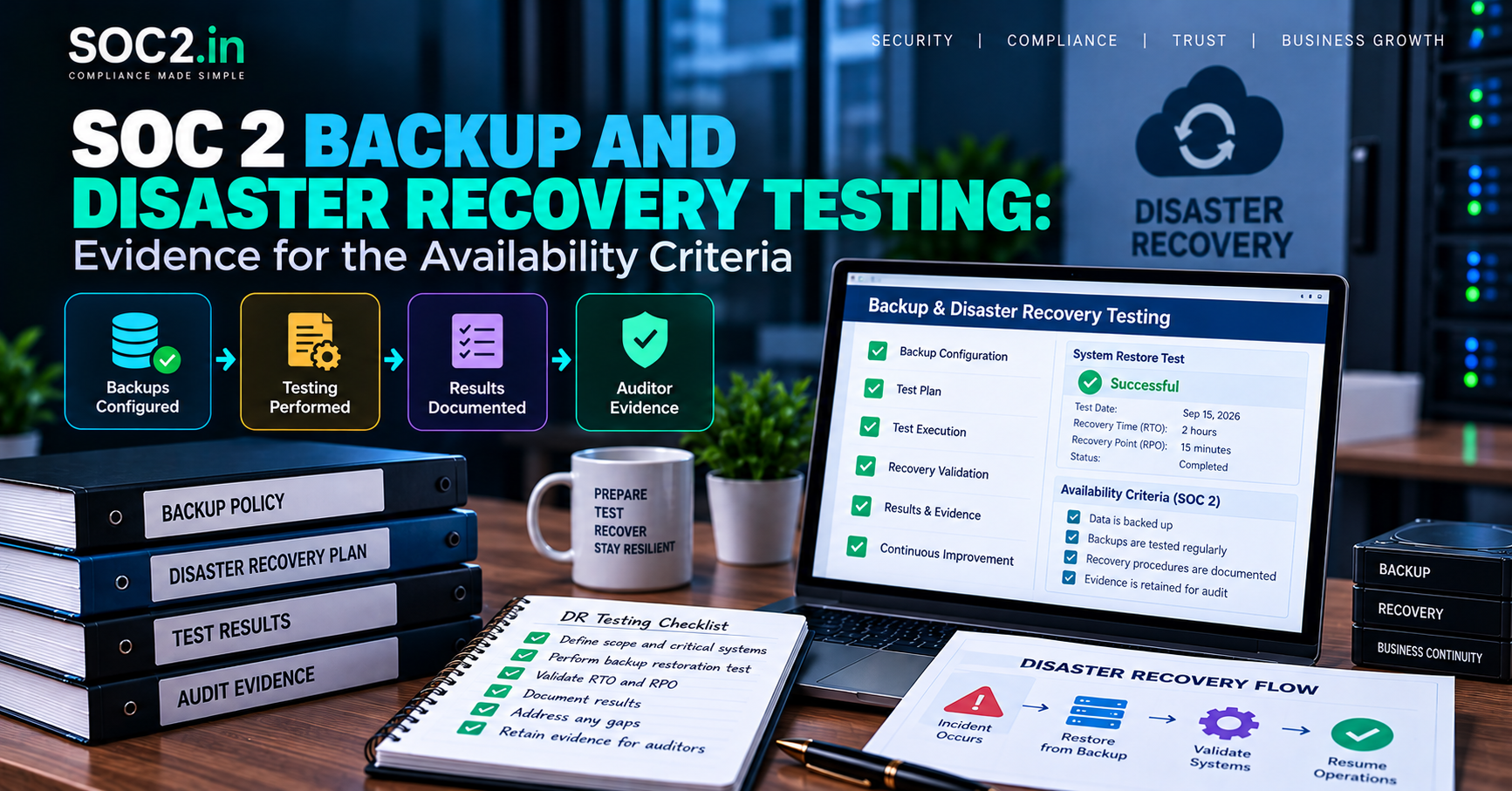
- RTO (Recovery Time Objective)
- RPO (Recovery Point Objective)
Example:
- RTO: 2 hours
- RPO: 15 minutes
Have documented and tested DR procedures.
3. High Availability Infrastructure
- Multi-region cloud deployment
- Load balancing
- Failover systems
If one system fails, another takes over instantly.
4. Real-Time Monitoring & Alerts
- Detect unusual activity early
- Monitor file changes, access patterns
- Use SIEM tools
Early detection reduces damage.
5. Access Control & Zero Trust
Most ransomware starts with compromised credentials.
- MFA everywhere
- Least privilege access
- Regular access reviews
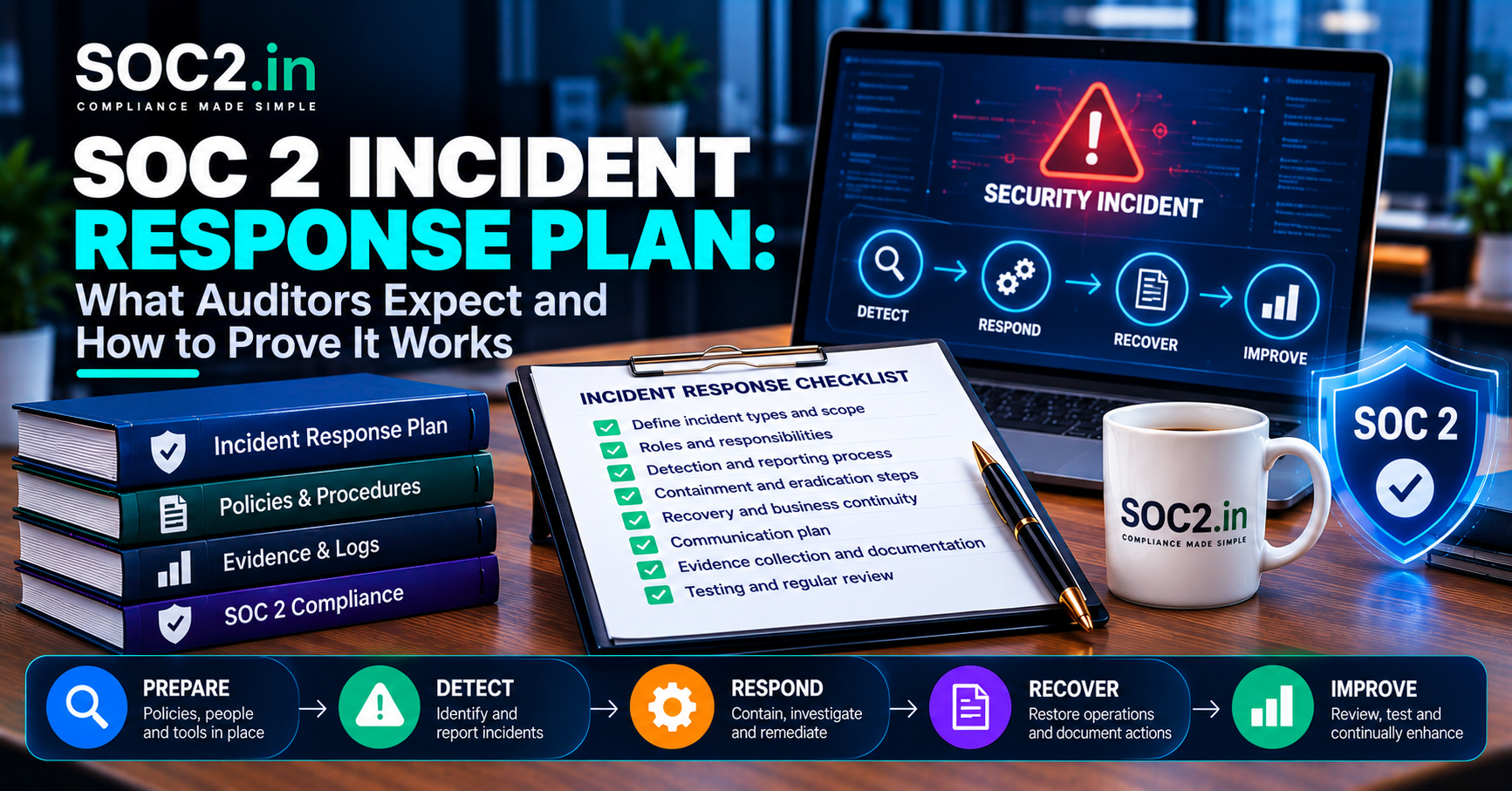
6. Incident Response Plan
When ransomware hits:
- Who responds?
- What systems are isolated?
- How do you communicate internally?
Run tabletop exercises.
Mapping to SOC 2 Availability Controls
Here’s how your ransomware defense aligns with SOC 2:
| Control Area | Ransomware Protection |
|---|---|
| Backup & Recovery | Fast data restoration |
| Monitoring | Early threat detection |
| Incident Response | Quick containment |
| Infrastructure | Reduced downtime |
| Risk Management | Preparedness |
Common Mistakes HealthTech Companies Make
- Backups exist but are never tested
- DR plans are just documents, not practiced
- Over-reliance on cloud provider security
- No segmentation between systems
- Ignoring insider threats
These gaps are exactly what ransomware exploits.
Real-World Mindset Shift
SOC 2 is not just about passing an audit.
It’s about answering this question:
“If ransomware hits today, can we recover without chaos?”
If the answer is no, availability is already compromised.
Final Thoughts
Ransomware is no longer a possibility. It’s an expectation.
For HealthTech companies, the stakes are higher than most industries. Lives, not just data, depend on system availability.
SOC 2’s Availability criteria gives you a clear framework to build resilience. But it only works if implemented practically, not just documented.
Quick Action Checklist
- Test your backups this week
- Define your RTO and RPO
- Run a ransomware simulation
- Review access controls
- Build or refine your incident response plan