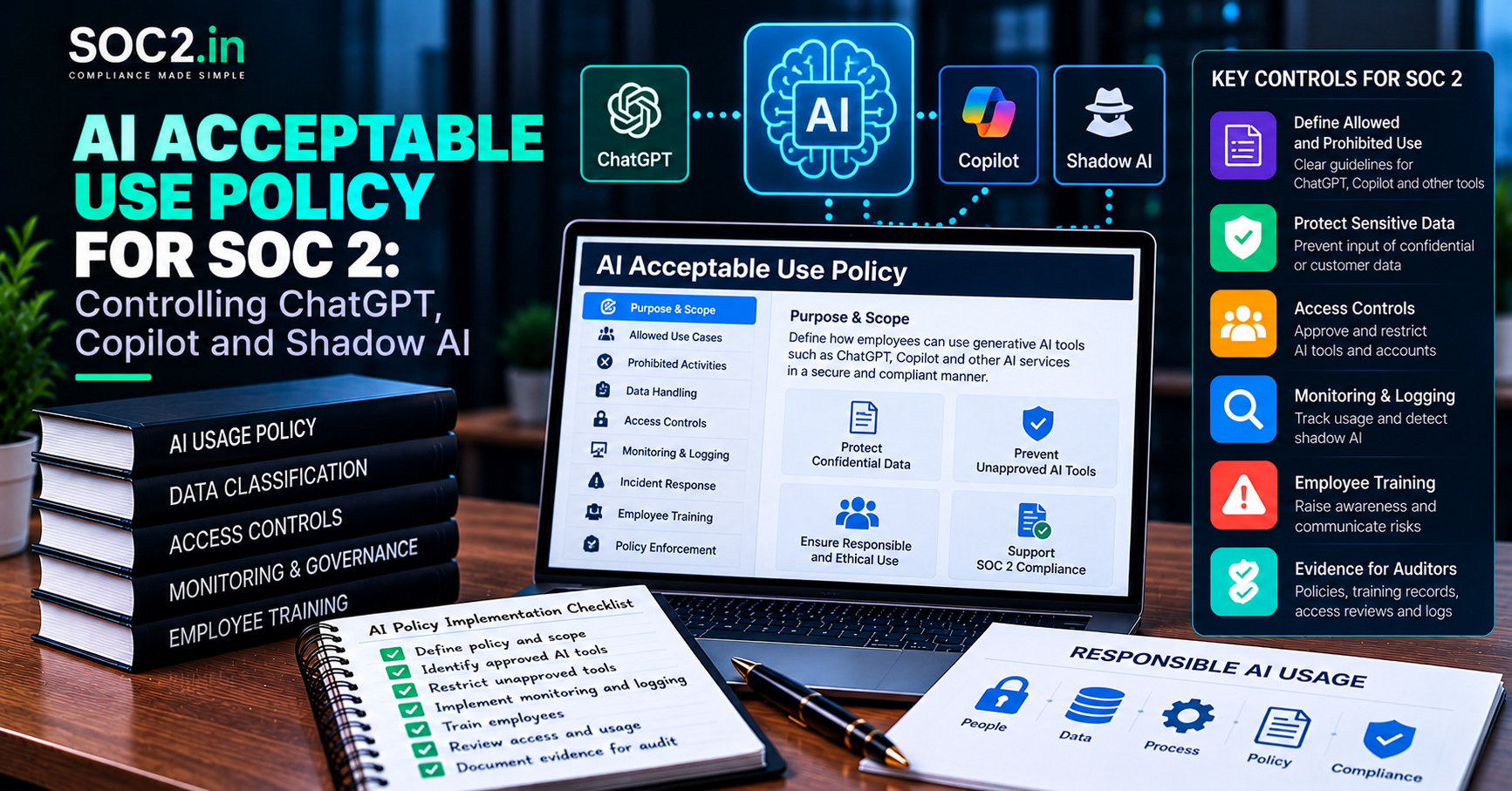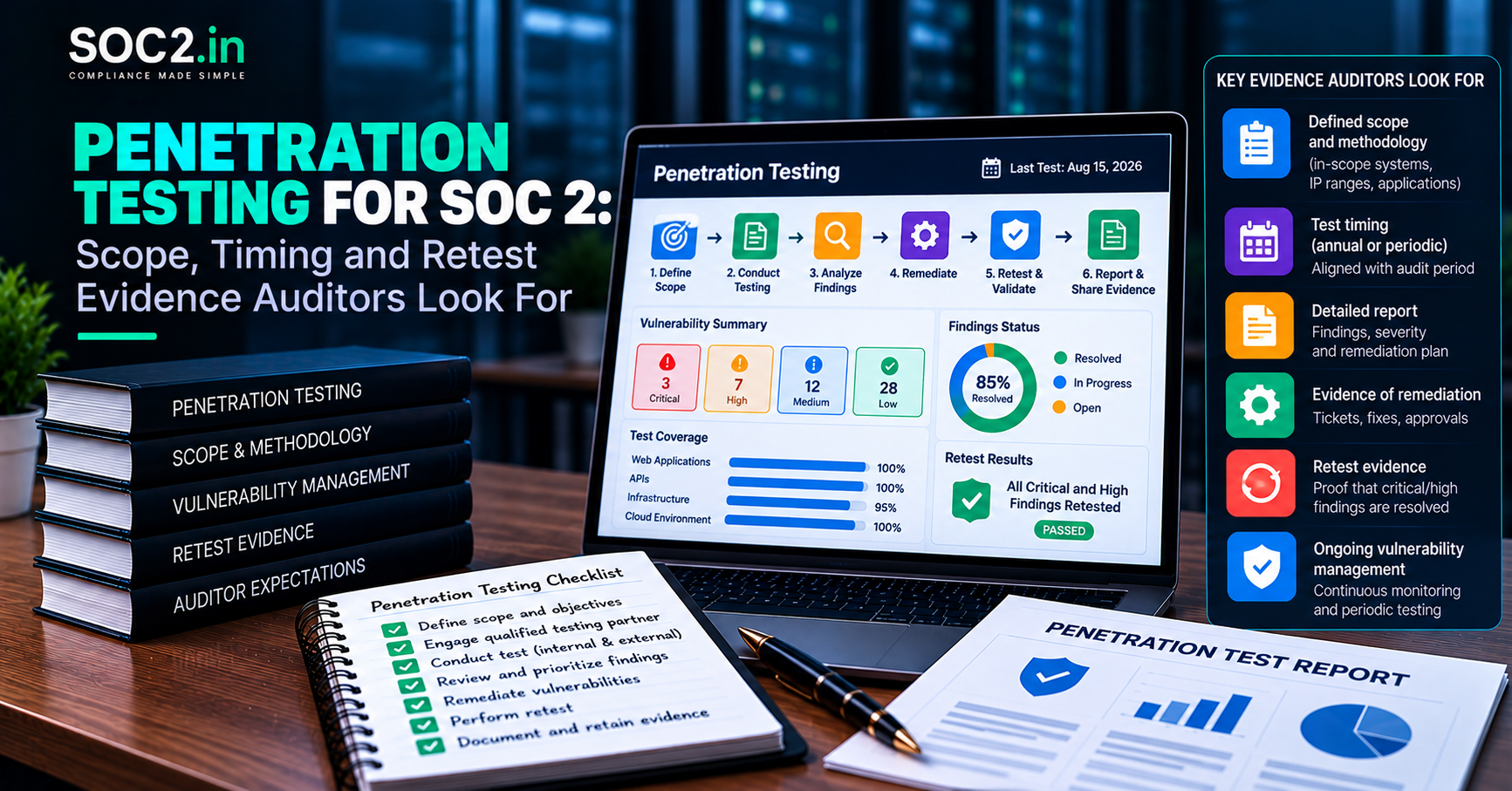
A SOC 2 audit rarely fails because an organization does not have security tools.
Most failures happen because controls exist, but they do not work the way auditors expect.
These disconnects are known as SOC 2 audit gaps and they are one of the most common reasons audits stall, receive qualified opinions, or trigger costly remediation cycles.
If you want to pass a SOC 2 audit smoothly and avoid last-minute surprises, it is critical to understand how auditors actually identify control weaknesses and where gaps usually appear.
This guide explains what SOC 2 audit gaps really are, how auditors uncover them, and how organizations can close them before they become formal findings.
What Are SOC 2 Audit Gaps?
In a SOC 2 audit, a gap is the difference between:
- what your organization claims to do in policies, procedures, and control descriptions
- what actually happens in day-to-day operations, systems, and user behavior
Auditors evaluate controls against the SOC 2 Trust Services Criteria, primarily Security, and optionally Availability, Confidentiality, Processing Integrity, and Privacy.
When a control does not meet the design or operational expectations of those criteria, an audit gap is identified.
It is important to understand that a gap does not automatically mean your environment is insecure.
In practice, gaps usually exist because:
- controls are informal or undocumented
- evidence is missing, weak, or inconsistent
- responsibilities and ownership are unclear
- controls do not operate consistently throughout the audit period
Why SOC 2 Audit Gaps Matter More Than You Think
SOC 2 audit gaps do not only slow down audits. They directly affect trust, revenue, and operations.
Impact on customer trust
A qualified or adverse SOC 2 opinion creates immediate concern for customers and partners.
Buyers rely on SOC 2 reports to validate your security posture, and unresolved gaps often trigger deeper security reviews or loss of confidence.
Higher costs and longer audits
When gaps appear, auditors increase sampling, request more evidence, and perform additional testing.
This extends audit timelines and significantly increases both audit fees and internal workload.
Sales and operational disruption
Many deals depend on a clean SOC 2 report.
When gaps appear late in the audit cycle, sales processes slow down or stop altogether. At the same time, engineering and security teams are pulled into reactive remediation work instead of focusing on product and operational priorities.
How SOC 2 Auditors Identify Control Gaps
SOC 2 auditors do not rely on automated scans or assumptions.
They follow a structured and evidence-driven process that evaluates control design, control implementation, and operating effectiveness.
Reviewing control design
Auditors first assess whether your controls are designed clearly and can realistically meet the Trust Services Criteria.
They look for:
- clear control objectives
- defined responsibilities and ownership
- measurable and testable activities
Design gaps usually appear when policies are:
- overly generic
- copied from templates
- loosely mapped to SOC 2 requirements
A common example is a control that states, “Access is restricted to authorized users”, but does not define:
- how access is approved
- how access is reviewed
- how access is revoked
When controls lack operational detail or accountability, auditors classify them as design weaknesses even if the intention is correct.
Evaluating control implementation
Once design is reviewed, auditors verify that controls are implemented exactly as documented.
They compare written policies with:
- system configurations
- security tools
- real operational workflows
Implementation gaps frequently surface when:
- multi-factor authentication is required by policy but not enforced everywhere
- logging is enabled but not retained or reviewed
- vendor risk processes exist but are applied inconsistently
Even small mismatches between documentation and reality can result in audit findings.
Testing control operating effectiveness
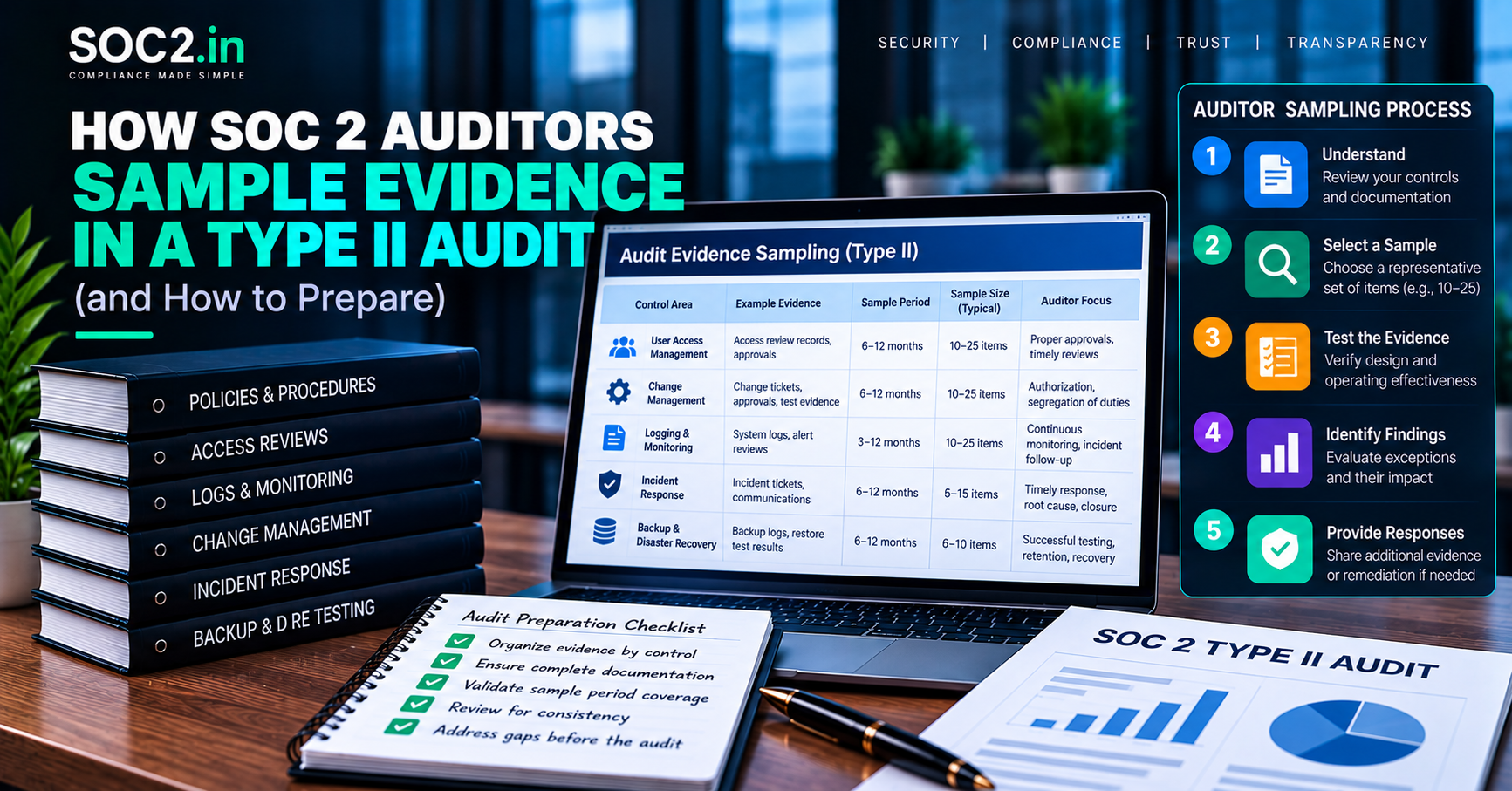
In SOC 2 Type II audits, auditors focus heavily on whether controls operate consistently throughout the audit period.
They test:
- recurring activities
- historical samples
- evidence from different points in time
Common operating gaps include:
- access reviews performed sporadically instead of on a defined schedule
- incident response plans that exist but are never tested
- security awareness training completed by most, but not all, employees
Even a single missed execution can be documented as an audit gap.
Evidence: Where Most SOC 2 Audit Gaps Are Found
Evidence is the foundation of every SOC 2 audit and the most common source of gaps.
For evidence to be acceptable, it must be:
- objective
- time-stamped
- independently verifiable
Many gaps arise when evidence fails to meet these standards.
Typical examples include:
- screenshots without timestamps
- policies without approval or review dates
- logs that only cover part of the audit period
Gaps also appear when evidence is inconsistent:
- different systems show conflicting configurations
- teams follow different manual processes
- evidence is collected informally and cannot be repeated
Another frequent issue is evidence that does not actually support the control being tested.
Providing a policy when auditors expect operational proof, or submitting planned actions instead of completed actions, leads to evidence rejection.
Auditors evaluate evidence strictly.
If it does not directly support the specific control under review, it will not be accepted.
High-Risk Areas Where SOC 2 Audit Gaps Commonly Appear
Some control areas consistently create more audit issues than others.
Access control and user management
Gaps often occur when:
- terminated users retain access
- access reviews are undocumented or irregular
- shared accounts exist without justification
Change management
Common gaps include:
- emergency changes without retroactive approval
- missing change tickets
- developers having unrestricted production access
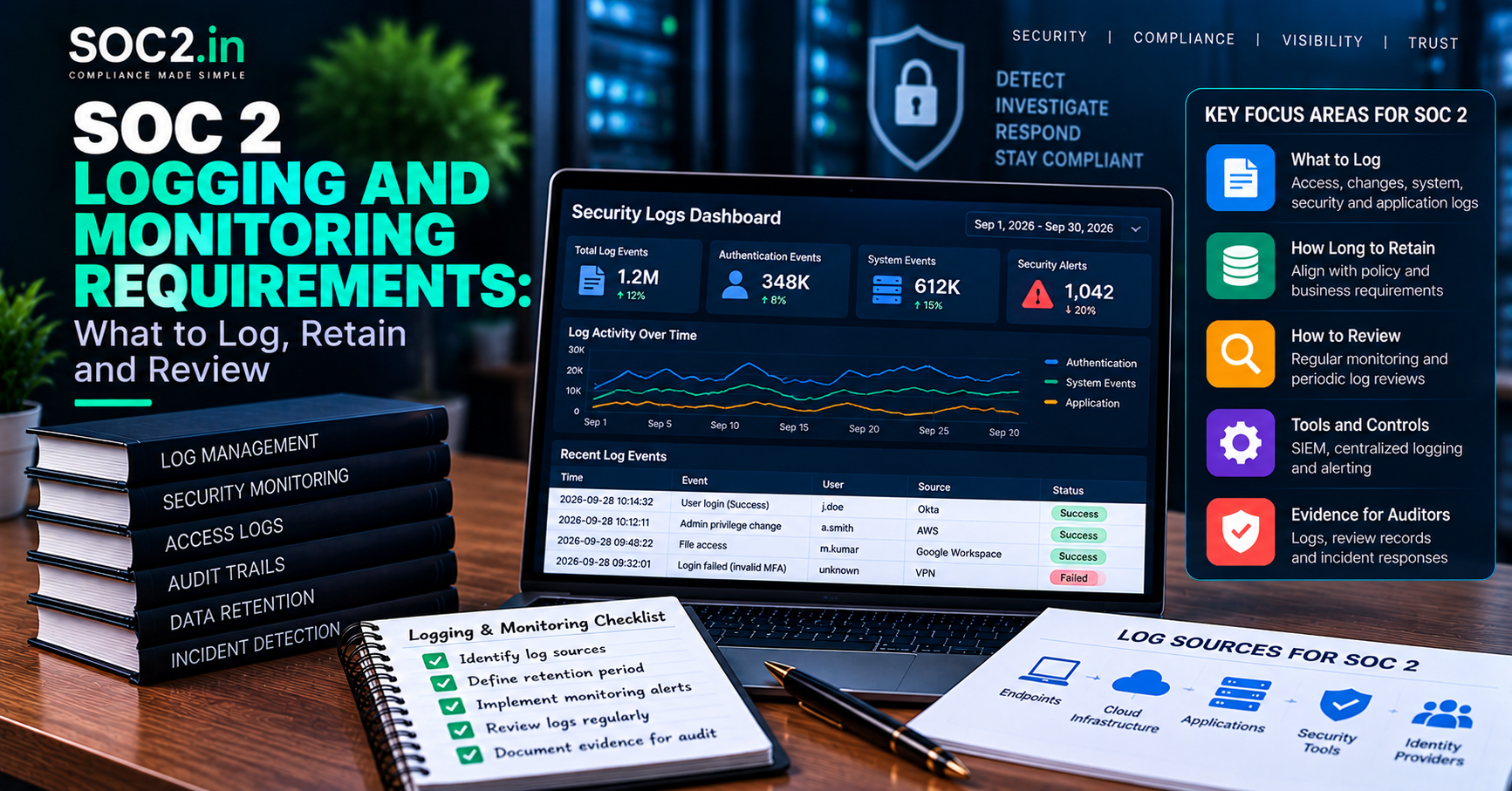
Logging and monitoring
Auditors expect centralized logging, defined retention, and evidence of regular review.
Gaps appear when logs exist but are never reviewed or when alert ownership is unclear.
Vendor risk management
Typical issues include:
- incomplete vendor inventories
- outdated risk assessments
- no defined vendor offboarding process
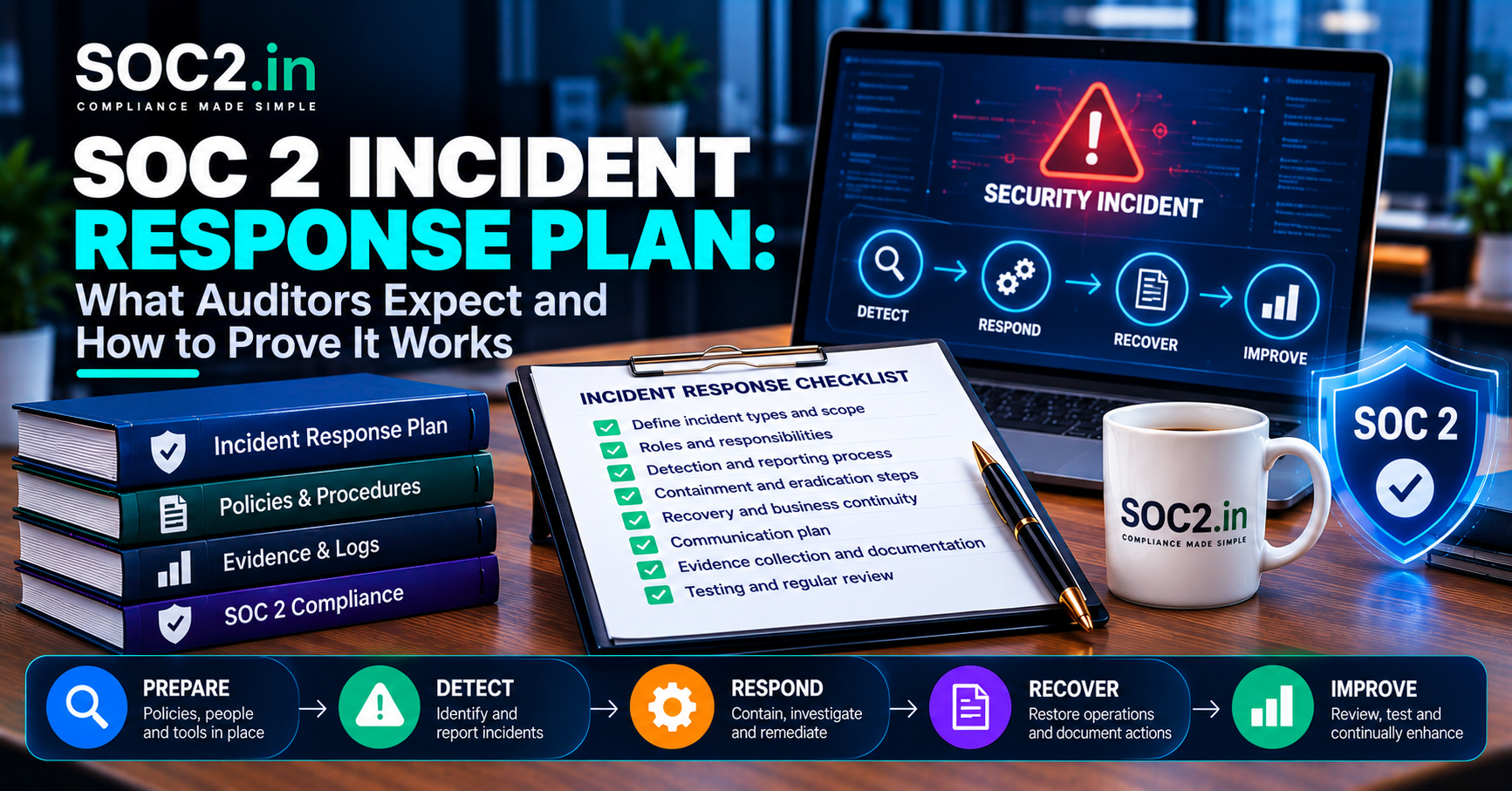
Incident response
Auditors expect proof that incident response capabilities are tested.
Gaps appear when:
- incidents are not documented
- tabletop exercises are skipped
- response roles and responsibilities are unclear
A lack of incidents alone is not sufficient. Preparedness must be demonstrated.
How Auditors Document and Classify SOC 2 Audit Gaps
Not all gaps carry the same severity.
Auditors generally classify findings as:
- Control deficiency: the control is missing or poorly designed
- Significant deficiency: the control exists but is unreliable
- Material weakness: the failure undermines the Trust Services Criteria objectives
Severity is based on impact, frequency, likelihood of exploitation, and the existence of compensating controls.
Why Companies Miss SOC 2 Audit Gaps Before the Audit
Many organizations believe they are audit-ready but still miss gaps.
Common reasons include:
- relying on policies instead of operational proof
- treating SOC 2 as a documentation exercise
- underestimating auditor sampling techniques
- manual evidence collection errors
- lack of clear control ownership
SOC 2 audits reward discipline and consistency, not good intentions.
How to Proactively Identify SOC 2 Audit Gaps
The most effective way to avoid audit findings is to identify gaps internally before auditors do.
Perform a SOC 2 gap assessment
A structured gap assessment maps each control to the Trust Services Criteria and evaluates:
- control design
- control operation
- evidence quality
This mirrors auditor methodology and surfaces weaknesses early.
Test controls the way auditors test them
Ask simple but critical questions:
- can we prove this control worked for the entire audit period?
- is the evidence objective and repeatable?
- would an external auditor accept this evidence without clarification?
Internal sampling often reveals problems before formal testing begins.
Centralize evidence and ownership
Disorganized evidence creates hidden risk.
Central repositories, consistent naming conventions, and automated evidence collection dramatically reduce audit friction.
Every control should also have a clearly assigned owner responsible for both execution and evidence.
Use automation to reduce human error
Manual processes introduce variability.
Automation helps enforce control execution, capture continuous evidence, and detect configuration drift.
While automation does not remove accountability, it significantly reduces the likelihood of recurring audit gaps.
Closing SOC 2 Audit Gaps: What Auditors Expect
When auditors identify a gap, they are not looking for a quick patch.
They expect:
- a clear root cause analysis
- a defined remediation plan with owners and timelines
- evidence that corrective actions reduce the likelihood of recurrence
Auditors want to see that updated controls operate consistently over time and are supported by reliable, repeatable processes.
Effective remediation usually involves:
- strengthening core workflows
- refining tool configurations to enforce controls
- improving staff training and awareness
- redesigning controls to better match real operational behavior
When remediation addresses both execution and accountability, audit gaps rarely return in future assessments.
Conclusion
SOC 2 audit gaps are not signs of failure.
They are indicators of misalignment between intent and execution.
Auditors identify control weaknesses through structured testing, strict evidence validation, and consistency checks across the audit period.
Organizations that treat SOC 2 as an ongoing operational discipline, rather than a one-time compliance exercise, are far more likely to pass cleanly, reduce audit stress, and build lasting customer trust.