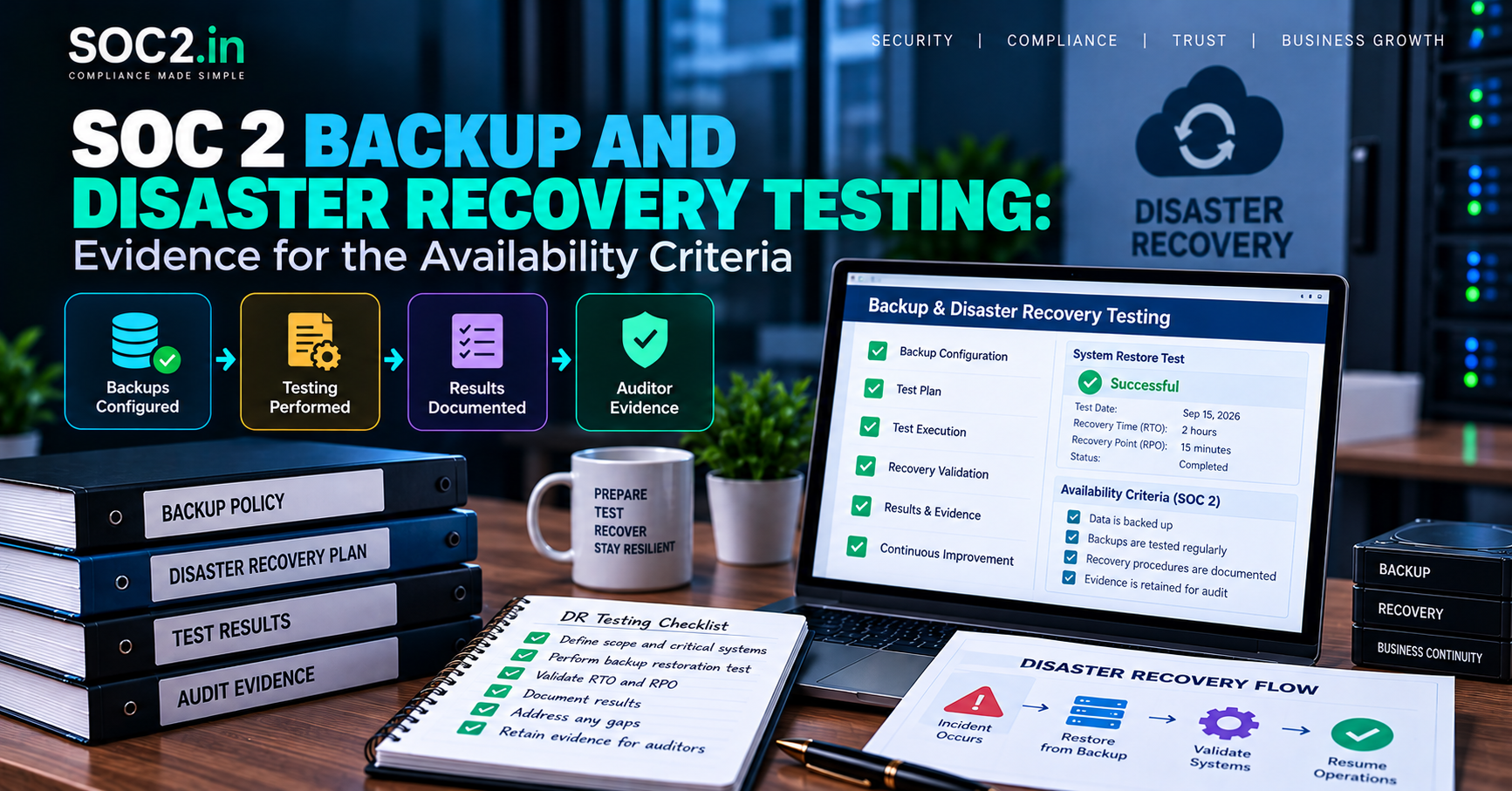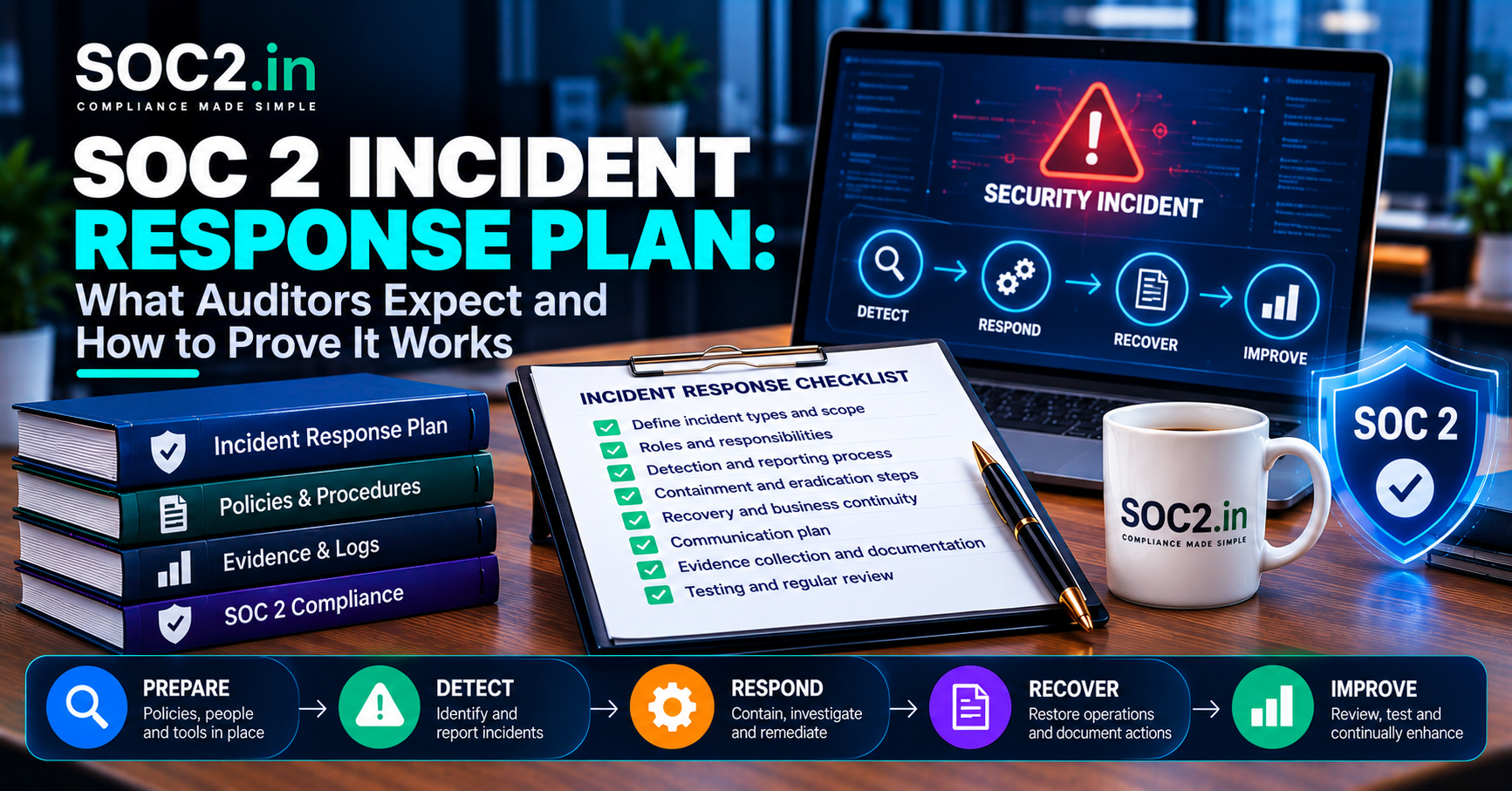
As organizations increasingly rely on cloud platforms and SaaS applications, customers expect strong assurances that their data is handled securely. One of the most recognized frameworks for demonstrating this commitment is SOC 2 certification.
Many technology companies pursue SOC 2 certification to prove that their systems and internal processes meet strict security and privacy standards. But beyond the certification itself, the audit process reveals valuable insights about how companies manage risk, maintain compliance, and continuously improve their security practices.
In this article, we explore what SOC 2 certification means, how the audit process works, and key lessons learned from a recent SOC 2 renewal.
What Is SOC 2 Certification?
SOC 2 (Service Organization Control 2) is a cybersecurity compliance framework developed by the American Institute of Certified Public Accountants (AICPA). It evaluates how organizations manage customer data and protect it from unauthorized access, security incidents, and operational risks.
Unlike some compliance frameworks that focus only on documentation, SOC 2 examines how security controls are designed, implemented, and operated over time.
SOC 2 assessments are conducted by independent auditors who evaluate whether an organization’s controls meet the required Trust Services Criteria.
These criteria include five major security principles:
Security
Ensures systems are protected against unauthorized access and cyber threats.
Availability
Ensures services remain operational and accessible according to service-level commitments.
Processing Integrity
Ensures systems process data accurately, completely, and in a timely manner.
Confidentiality
Protects sensitive information from unauthorized disclosure.
Privacy
Ensures personal data is collected, used, retained, and disposed of properly.
Organizations can choose which criteria apply to their services depending on the nature of their platform.
Understanding SOC 2 Type I vs SOC 2 Type II
SOC 2 reports are typically issued in two forms.
SOC 2 Type I
Evaluates whether security controls are properly designed at a specific point in time.
SOC 2 Type II
Evaluates whether those controls operate effectively over a defined period, usually 6 to 12 months.
SOC 2 Type II reports are considered more rigorous because they demonstrate long-term operational effectiveness, not just control design.
During the audit, the organization’s management provides a detailed description of the system and internal controls. The auditor then verifies whether these controls are functioning properly throughout the observation period.
Why SOC 2 Certification Matters for Software Companies
For software vendors, SaaS providers, and cloud platforms, trust is critical. Customers often rely on these services to process or store sensitive data.
SOC 2 certification serves as a trust signal, demonstrating that the organization invests in security and allows independent auditors to evaluate its security practices.
Many enterprise customers now require SOC 2 compliance during vendor risk assessments because it provides assurance that the provider follows structured security practices.
SOC 2 certification helps organizations:
- Demonstrate strong security controls
- Strengthen customer trust and transparency
- Meet vendor security requirements
- Improve internal security processes
- Reduce security and compliance risks
For companies operating in North America, SOC 2 is often more widely recognized than other frameworks such as ISO/IEC 27001.
The SOC 2 Audit Process Explained
A SOC 2 audit involves a comprehensive evaluation of security policies, operational procedures, and technical controls.
The process generally includes several stages.
1. Preparation and Readiness Assessment
Before the official audit begins, organizations prepare by documenting policies, implementing security controls, and ensuring systems meet SOC 2 requirements.
This phase often includes tools that automate compliance tracking and evidence collection.
2. Observation Period
SOC 2 Type II audits require an observation period, typically lasting up to one year. During this time, the organization must continuously follow documented policies and maintain records of security activities.
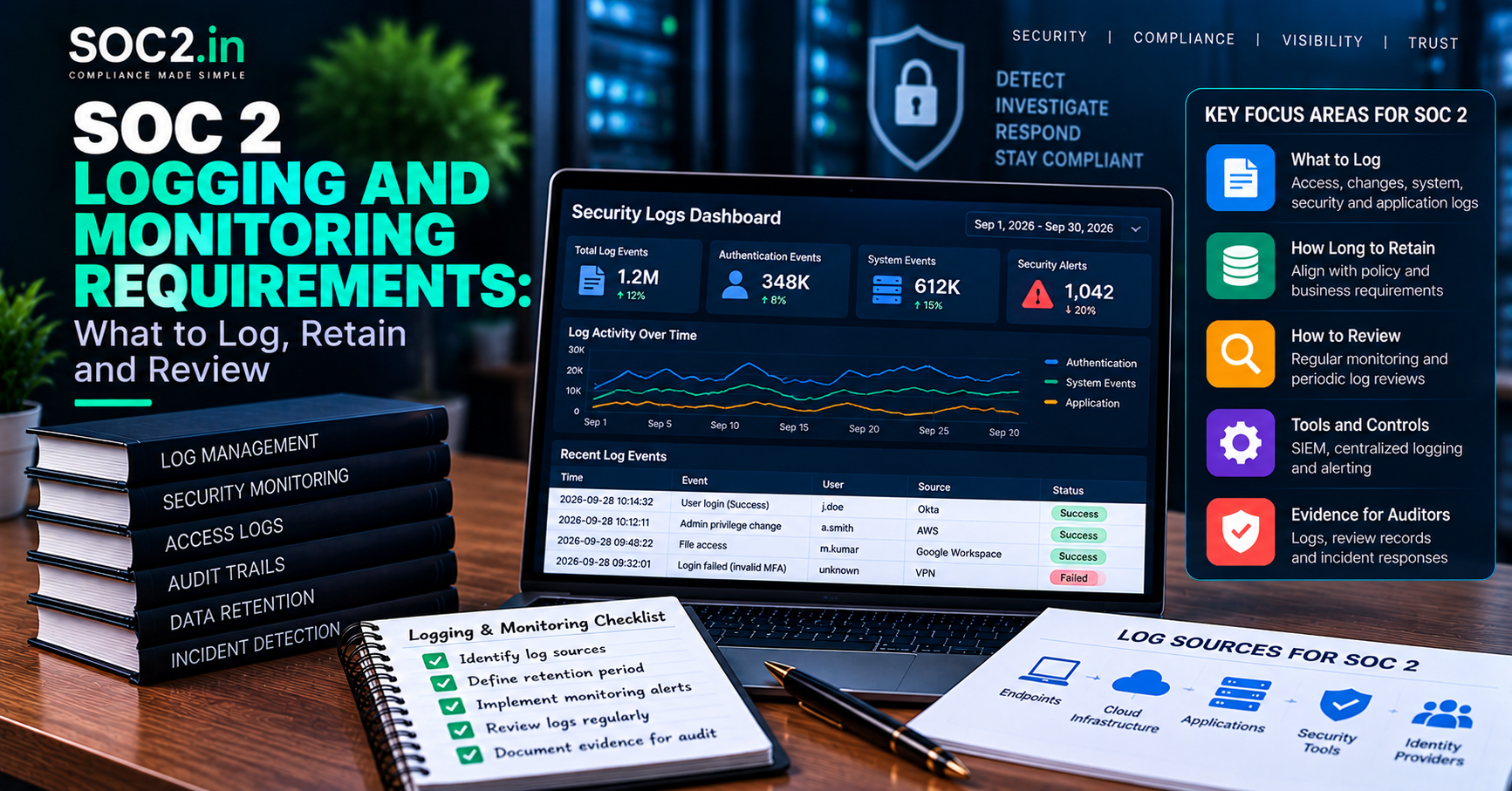
Examples of monitored activities include:
- Access management
- Security monitoring
- Infrastructure changes
- Incident response procedures
- Employee security training
Evidence collected during this period becomes part of the audit review.
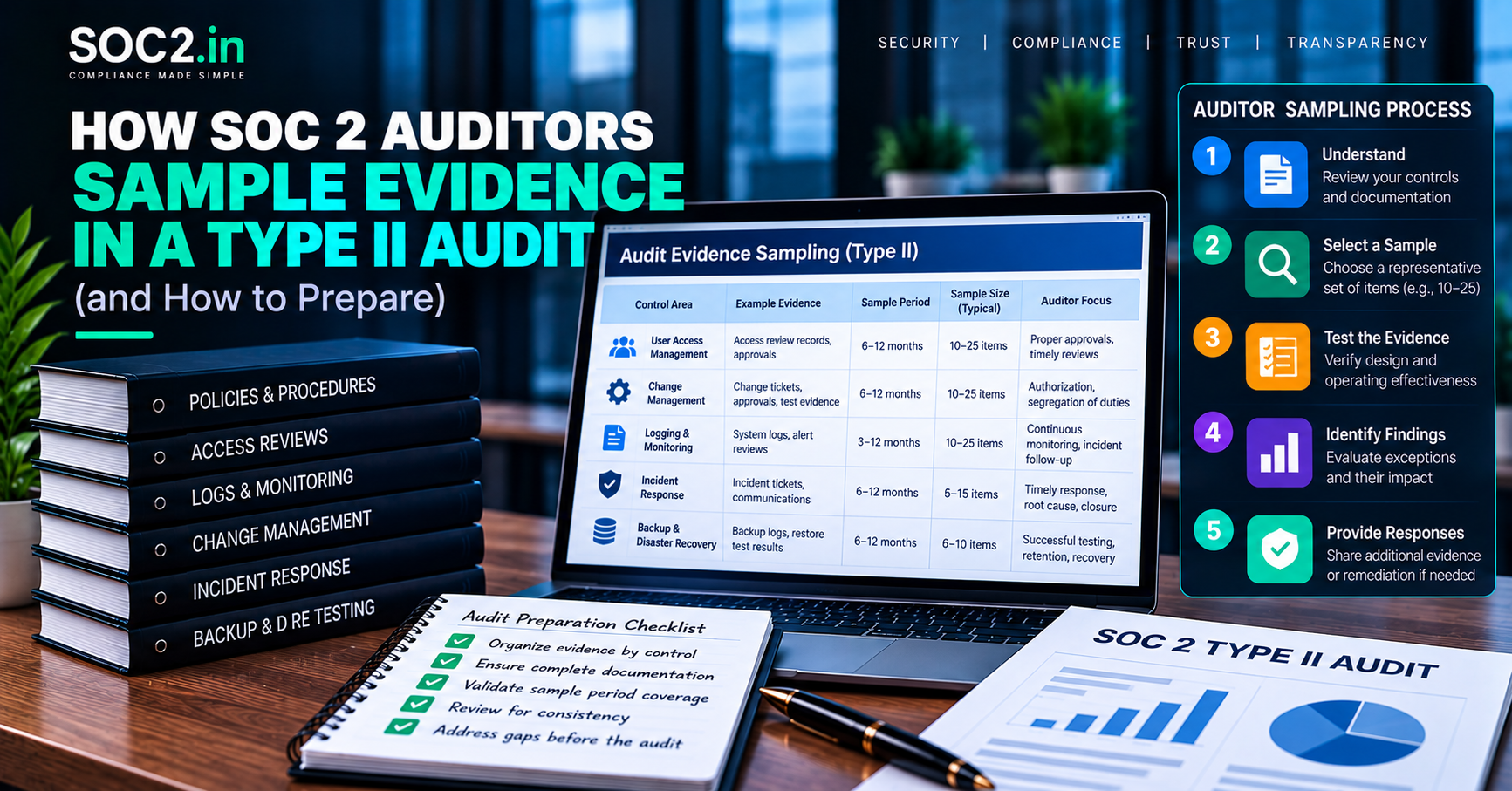
3. Auditor Examination
After the observation period ends, independent auditors review all collected evidence.
They may request additional documentation, clarification, or proof that certain controls were implemented properly.
Because auditors rotate teams frequently, organizations often need to explain internal systems and processes during each new audit cycle.
4. Final SOC 2 Report
Once the review is complete, auditors produce a SOC 2 report describing the system, controls, and their effectiveness.
The report becomes an important document used during vendor security reviews and enterprise procurement processes.
Expanding the Scope of a SOC 2 Audit
Organizations sometimes expand the scope of their SOC 2 audits to include additional applications, infrastructure, or business units.
For example, when new software platforms or acquisitions are integrated into company operations, they must also meet the same security standards.
Expanding the audit scope may require:
- Integrating new infrastructure into security monitoring tools
- Applying existing development practices to new products
- Including new CI/CD pipelines in compliance monitoring
- Updating documentation and risk assessments
Although expanding scope increases audit complexity, it ensures that all services follow consistent security standards.
Challenges During a SOC 2 Audit
SOC 2 audits can present operational and logistical challenges, especially during the first implementation.
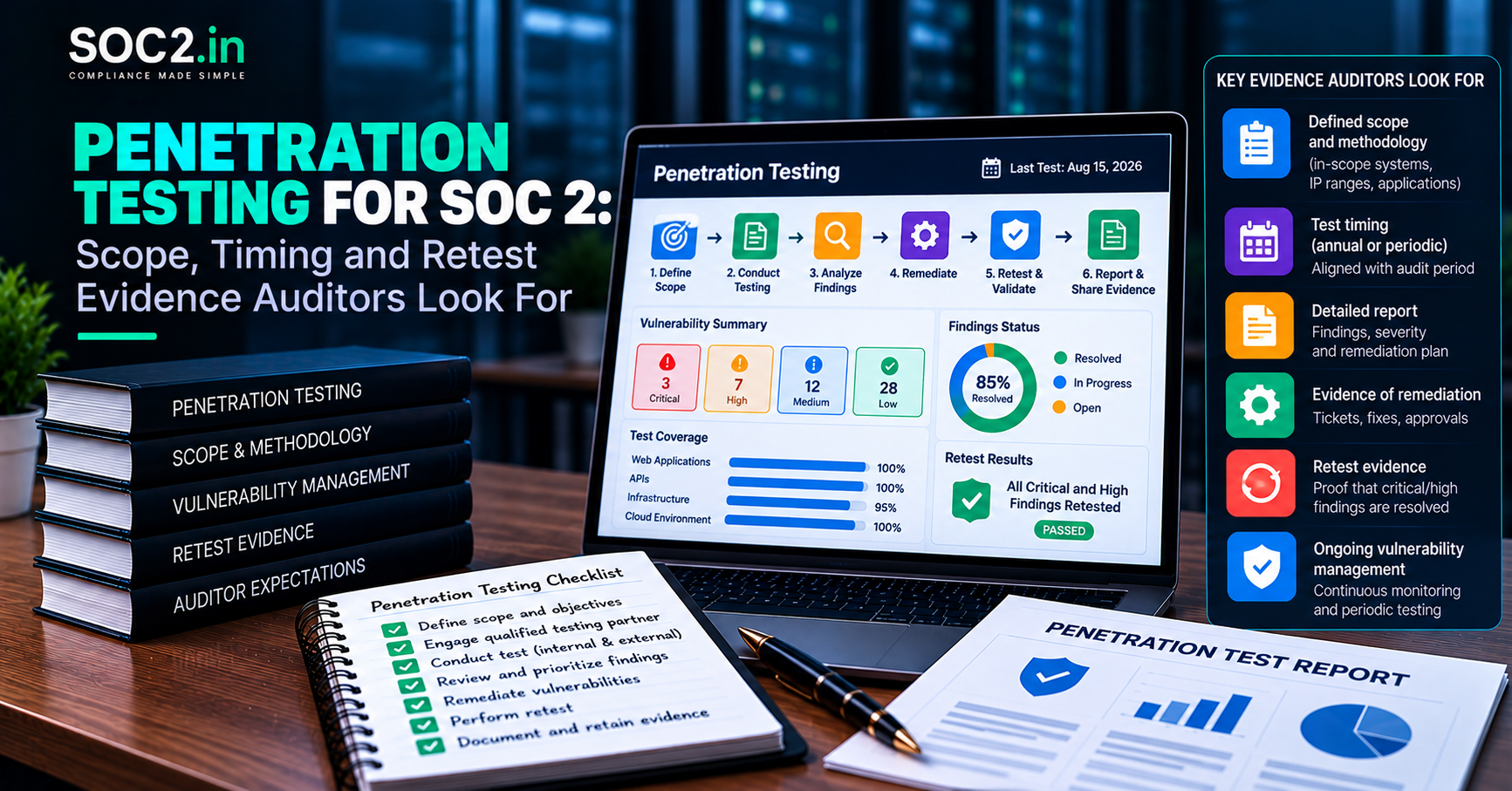
One common challenge is collecting sufficient evidence for auditors. Documentation may include:
- Access control logs
- Infrastructure change records
- Security training completion
- Incident management reports
- Policy acknowledgments from employees
Another challenge involves coordinating with internal teams. Because SOC 2 compliance affects the entire organization, multiple departments often contribute to the audit process.
Timing can also create complications. If an observation period ends during holidays or peak operational periods, gathering required documentation may become more difficult.
SOC 2 Compliance Is a Team Effort
Although compliance programs may be managed by security or compliance teams, SOC 2 involves the entire organization.
Every employee and contractor must follow security policies, because auditors evaluate how consistently policies are applied in practice.
Examples of employee responsibilities include:
- Following secure development practices
- Completing security training
- Using approved authentication methods
- Protecting sensitive company information
Organizations often embed SOC 2 practices into onboarding programs so that new employees understand these requirements from the beginning.
Continuous Audits Build Long-Term Trust
One important aspect of SOC 2 certification is that reports typically remain valid for only one year.
This means organizations must undergo regular audits to maintain compliance.
A single report may demonstrate compliance at one moment in time, but continuous annual audits show that security practices are consistently maintained.
For customers and partners, this ongoing validation provides stronger assurance that the organization takes security seriously.
Final Thoughts
SOC 2 certification is more than a compliance milestone. It represents a continuous commitment to protecting customer data and maintaining strong security practices.
Through regular audits, organizations validate that their controls operate effectively, their policies are enforced, and their systems remain resilient against security threats.
For customers, a renewed SOC 2 certification provides confidence that the company is investing in security, transparency, and long-term reliability.
As cloud services and SaaS platforms continue to expand, frameworks like SOC 2 will remain essential for building trust in modern digital ecosystems.