In 2026, SOC 2 compliance is no longer just a “nice-to-have” security badge. For most SaaS and technology-driven service companies, it has become a commercial requirement. Customers, partners, and enterprise procurement teams now expect formal proof that your organization can protect data and operate securely.
SOC 2 is a voluntary security and assurance framework developed by the
American Institute of Certified Public Accountants (AICPA).
It is designed specifically for service organizations that store, process, or manage customer data.
Let’s break down what SOC 2 really means in 2026 and how your company can prepare.
What is SOC 2 compliance?
SOC 2 evaluates how well your organization designs and operates internal controls related to data protection and system reliability. Unlike technical security standards, SOC 2 focuses on operational discipline, governance, and evidence.
It is not a tool, software, or certificate.
It is an independent audit report prepared by a licensed CPA firm.
In 2026, most customers are no longer satisfied with verbal assurances or internal security claims. They expect a formal SOC 2 report to confirm that your controls actually exist and are being followed.
The Five Trust Services Criteria (TSCs)
SOC 2 is based on five Trust Services Criteria.
1. Security (Required)
This principle focuses on protecting systems against unauthorized access. It includes identity management, authentication controls, network security, vulnerability management, and monitoring.
2. Availability
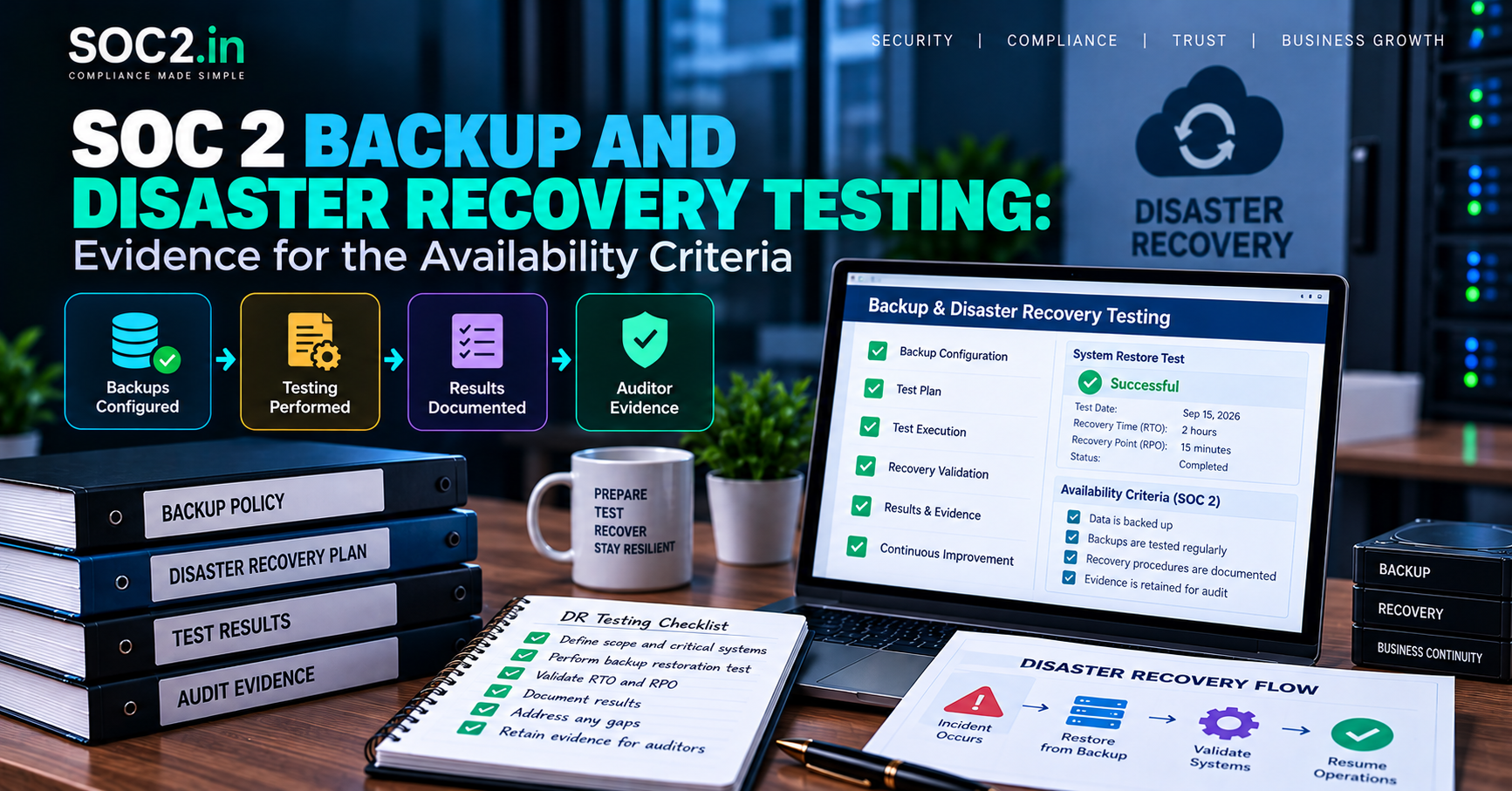
Availability ensures that your systems meet uptime and performance commitments. It typically covers disaster recovery, backup strategies, and incident response readiness.
3. Processing Integrity
This principle confirms that system processing is complete, accurate, valid, and timely. It is especially important for financial platforms, billing systems, and data processing services.
4. Confidentiality
Confidentiality addresses how sensitive business data such as contracts, source code, and proprietary information is protected.
5. Privacy
Privacy focuses on how personal data is collected, used, stored, shared, and deleted.
In 2026, most organizations start with Security only and gradually expand to other criteria as customer requirements increase.
Core SOC 2 requirements in 2026
Although SOC 2 is flexible, auditors expect a consistent set of baseline controls.
These include:
- Logical access controls and role-based permissions
- Multi-factor authentication for critical systems
- Physical security for offices and data centers
- Vendor and third-party risk management
- Change management and release approvals
- Risk assessments and risk treatment plans
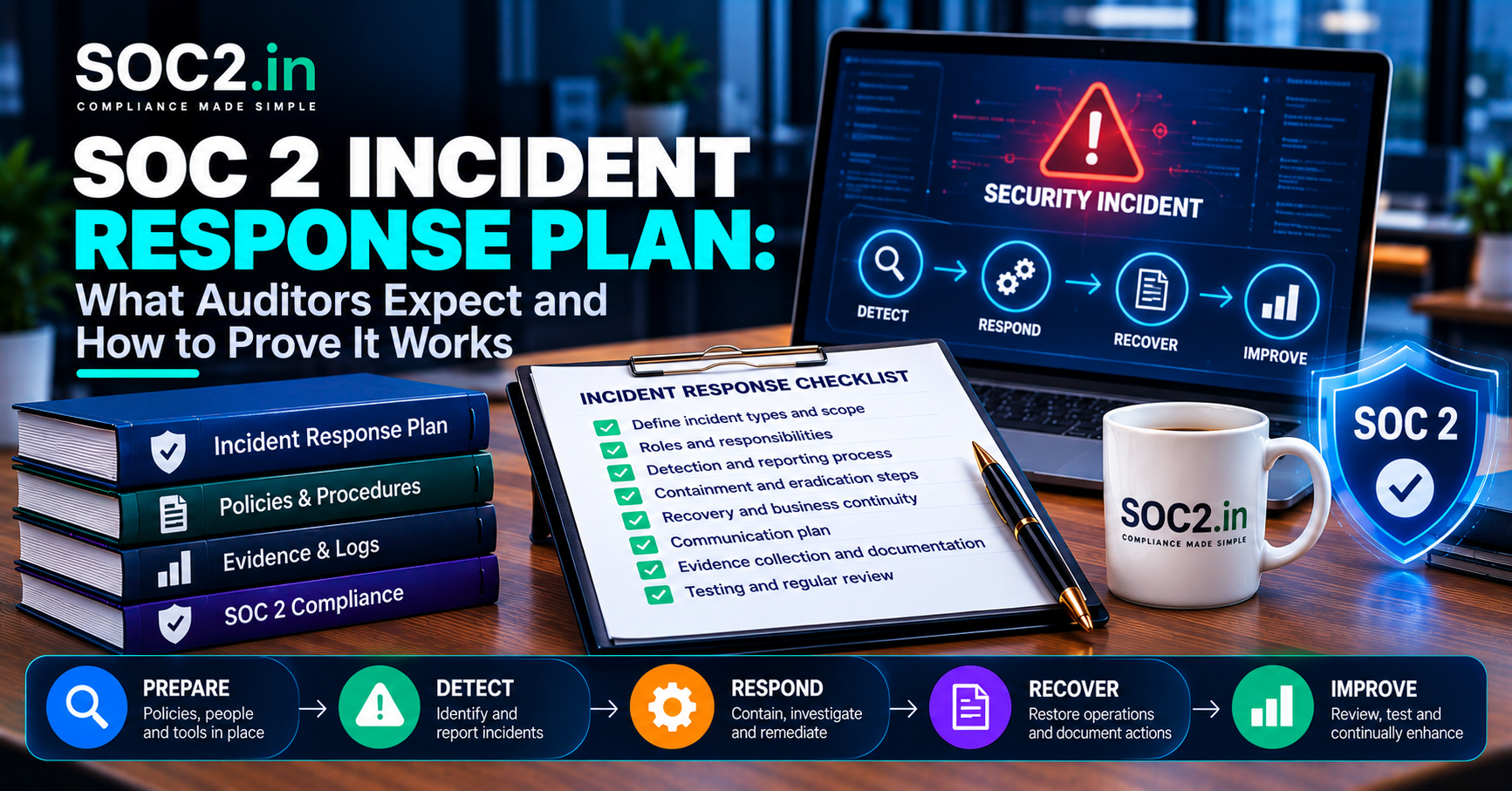
- Incident response procedures and testing
- Logging, monitoring, and alerting
A major shift in 2026 is stronger expectations around vendor risk. Companies are now expected to formally assess cloud providers, payment processors, and outsourced service partners.
Documentation expectations
In 2026, undocumented security practices do not count.
Auditors expect:
- Written policies and procedures
- Clear ownership for each control
- Evidence that policies are reviewed at least annually
- Proof that employees follow defined processes
Policy libraries that are never reviewed or approved are a common audit failure point.
SOC 2 Type 1 vs Type 2
Understanding the difference is critical.
SOC 2 Type 1 evaluates whether your controls are properly designed at a specific point in time. It answers the question:
“Are your controls designed appropriately today?”
SOC 2 Type 2 evaluates whether your controls actually operated effectively over a period of time, usually between three and twelve months.
In 2026, most buyers and enterprise customers explicitly ask for SOC 2 Type 2.
The 5-step SOC 2 compliance process
Step 1: Define scope
Identify which products, systems, and services are included and which Trust Services Criteria apply.
Step 2: Perform a risk assessment
Document threats, vulnerabilities, and business risks. Define mitigation actions and ownership.
Step 3: Implement controls and policies
Deploy technical controls such as encryption, access management, and monitoring, along with administrative processes like approvals and reviews.
Step 4: Internal readiness or gap assessment
Before engaging an auditor, perform an internal audit to confirm controls are operating as designed and evidence is available.
Step 5: External audit
Engage a licensed CPA firm to perform a SOC 2 Type 1 or Type 2 examination and issue the final report.
Why SOC 2 is crucial in 2026
Stronger buyer expectations
SOC 2 is now embedded into most enterprise vendor onboarding programs. Without it, deals stall or are disqualified entirely.
Growing cloud security risks
As organizations rely more heavily on cloud infrastructure and third-party services, operational security failures have wider impact. SOC 2 pushes teams to manage these risks formally.
Alignment with global privacy and security regulations
While SOC 2 is not a regulatory requirement, it strongly supports compliance with data protection laws and internal governance frameworks.
For SaaS companies, SOC 2 has become part of basic market credibility.
Best practices for SOC 2 in 2026
Automate evidence collection
Modern compliance platforms can automatically gather logs, access reviews, and configuration snapshots. This reduces manual effort and improves audit accuracy.
Move toward continuous monitoring
Instead of preparing controls only during audit season, organizations now operate SOC 2 as a continuous program. This is especially important for maintaining Type 2 effectiveness.
Start with Security and mature gradually
Security remains the foundation of every SOC 2 engagement. Expanding to Availability, Confidentiality, or Privacy should be driven by business and customer needs.
Assign control ownership clearly
Every control must have an accountable owner. Ambiguous ownership is one of the most common reasons evidence collection fails.
Final thoughts
SOC 2 compliance in 2026 is less about passing an audit and more about proving operational maturity. Organizations that treat SOC 2 as a living security program, rather than a one-time project, gain long-term trust with customers and significantly improve their internal security posture.
If your company stores, processes, or supports customer data, SOC 2 is no longer optional. It is now a competitive and commercial requirement.