In today’s world of constant cyber threats, organizations are expected to prove that their systems and data handling practices are secure. That’s where SOC 2 compliance comes in. It’s not just a certificate — it’s a commitment to security, privacy, and trust. One of the most effective ways to meet SOC 2 requirements is through penetration testing (pentesting).
Let’s look at why a pentest is essential for SOC 2 compliance and how it strengthens your overall security posture.
Understanding the Importance of SOC 2 Compliance
SOC 2 (Service Organization Control 2) compliance focuses on five key principles: security, availability, processing integrity, confidentiality, and privacy. These standards ensure that service providers securely manage data to protect the interests of their clients.
Being SOC 2 compliant demonstrates that your organization follows strict data security protocols and can be trusted with sensitive information. However, meeting these standards requires continuous effort — especially in identifying and addressing vulnerabilities before they can be exploited.
This is where penetration testing plays a vital role.
What Is Penetration Testing?
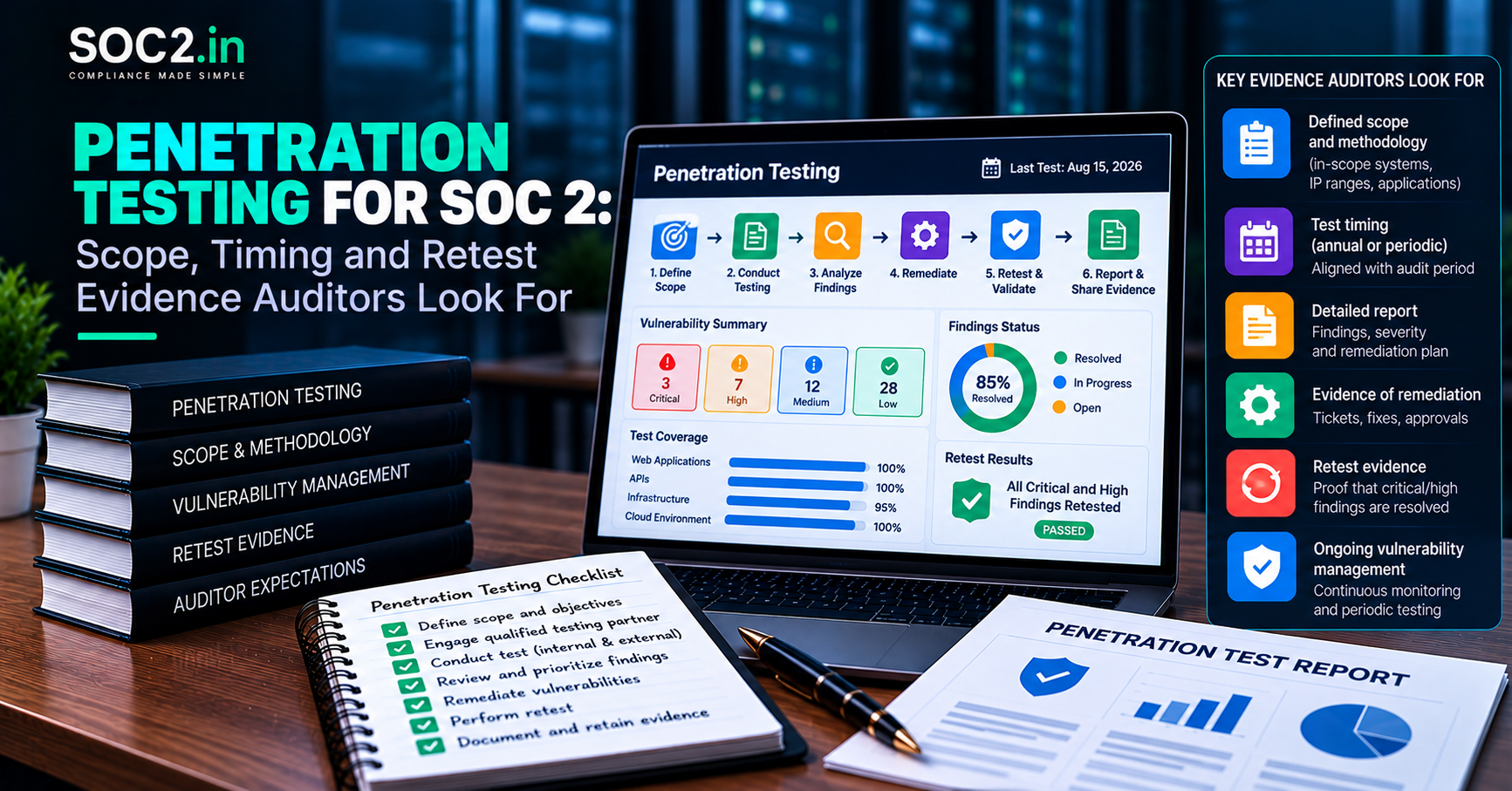
Penetration testing, or pentesting, is a simulated cyberattack designed to uncover weaknesses in your IT environment — from applications and networks to internal controls. Unlike automated scans, a pentest goes deeper, mimicking real-world attack scenarios to identify how hackers could exploit your system.
A thorough pentest helps organizations:
- Detect and patch vulnerabilities before attackers do
- Assess the effectiveness of current security measures
- Strengthen compliance with SOC 2 and other industry standards
- Demonstrate a proactive approach to protecting customer data
Simply put, penetration testing helps organizations validate their defenses and stay one step ahead of evolving cyber threats.
How Pentesting Supports SOC 2 Compliance
1. Addresses Security and Trust Services Criteria
The Trust Services Criteria (TSC) set by the American Institute of Certified Public Accountants (AICPA) are at the heart of SOC 2. Pentesting helps meet these criteria by ensuring that your systems are properly protected against unauthorized access, data breaches, and operational disruptions.
2. Demonstrates a Commitment to Data Protection
SOC 2 compliance isn’t a one-time achievement — it’s an ongoing commitment. Regular pentests show auditors, partners, and customers that your organization takes data protection seriously and actively works to maintain compliance.
3. Validates the Effectiveness of Security Controls
Even the best security policies need validation. A pentest provides measurable proof that your defenses are working as intended and highlights areas that need improvement. This validation is a key component of SOC 2 audits.
Benefits of Pentesting in SOC 2 Compliance
Improved Security Posture
Penetration testing identifies vulnerabilities in real time, allowing organizations to fix weaknesses before they’re exploited. The insights gained help fine-tune security controls and enhance overall system resilience — both of which are critical for SOC 2 compliance.
Reduced Risk of Non-Compliance
Non-compliance can lead to reputational damage, legal penalties, and loss of client trust. Regular pentests minimize this risk by ensuring your security controls align with SOC 2 standards, helping you stay compliant and audit-ready.
Increased Customer Confidence
When customers see that your organization performs regular pentests and maintains SOC 2 compliance, they gain confidence that their data is being handled responsibly. This transparency builds long-term trust and strengthens business relationships.
Case Study: Pentesting in Action
A technology company preparing for its SOC 2 audit conducted a comprehensive pentest across its infrastructure. The test uncovered several vulnerabilities — including outdated software versions and weak access controls.
By patching these issues and tightening their authentication processes, the company not only met SOC 2 requirements but also reduced the risk of future incidents. The pentest provided clear, actionable insights that guided their security improvements and impressed auditors during the compliance review.
This example highlights how pentesting does more than tick a compliance checkbox — it creates a stronger, more secure business environment.
Why Regular Pentesting Matters
Cyber threats are constantly evolving. What’s secure today may be vulnerable tomorrow. Regular penetration testing ensures your organization keeps up with emerging risks, maintains compliance, and continuously improves its defenses.
Incorporating pentests into your annual or semi-annual compliance routine helps you:
- Detect new vulnerabilities as systems evolve
- Stay aligned with updated SOC 2 standards
- Reduce downtime and data breach risks
- Enhance internal awareness of security best practices
Conclusion: Building Trust Through Security
SOC 2 compliance is more than a technical requirement — it’s about trust, accountability, and a proactive approach to cybersecurity. Penetration testing is one of the most powerful tools to achieve and maintain that trust.
By identifying and addressing vulnerabilities before they become threats, organizations can protect sensitive data, strengthen compliance, and demonstrate genuine care for customer privacy and safety.
If your organization is aiming for SOC 2 compliance or wants to reinforce its data protection strategy, start with a thorough penetration test. It’s not just a test — it’s an investment in resilience, reputation, and reliability.