Artificial intelligence is rapidly transforming industries such as finance, healthcare, cybersecurity, and e-commerce. Organizations are increasingly relying on AI systems to automate decisions, analyze data, and deliver intelligent services. However, with the growth of AI adoption comes a new set of security, privacy, and governance challenges.
This is where SOC 2 for AI becomes important.
SOC 2 is a widely recognized compliance framework developed by the American Institute of Certified Public Accountants (AICPA). It evaluates how organizations manage customer data based on strict security and privacy standards. While SOC 2 was originally designed for traditional cloud and SaaS companies, it is now being adapted to address the unique risks associated with artificial intelligence systems.
SOC 2 for AI focuses on applying the Trust Services Criteria to ensure that AI models, training data, and machine learning systems remain secure, reliable, and ethically managed.
This guide explains how SOC 2 applies to AI companies, the key controls required, benefits for organizations, and common challenges in achieving compliance.
Understanding SOC 2 in the Context of AI
SOC 2 is a compliance framework designed to evaluate an organization’s ability to securely manage and protect customer data.
It is based on five key Trust Services Criteria:
- Security
- Availability
- Processing Integrity
- Confidentiality
- Privacy
For companies building AI systems, these principles must be expanded to cover AI-specific security and governance risks, including:
- Data poisoning attacks
- Model theft and intellectual property risks
- Bias and ethical concerns in AI outputs
- Security of training datasets
- Privacy risks from sensitive data used in AI models
By integrating SOC 2 controls with AI governance practices, organizations can create AI systems that are not only secure but also trustworthy and responsible.
Why SOC 2 Is Important for AI Companies
AI systems process large volumes of sensitive information and influence critical decisions. Because of this, enterprises and regulators expect strong security and governance standards.
SOC 2 helps AI companies demonstrate that their systems are designed and operated with robust security and privacy controls.
Key reasons SOC 2 is essential for AI organizations include:
Building Customer Trust
Organizations deploying AI solutions must ensure customers that their data and systems are protected. SOC 2 certification provides third-party validation that security practices meet industry standards.
Meeting Enterprise Security Requirements
Large enterprises often require vendors to have SOC 2 compliance before entering into partnerships or contracts. For AI startups, SOC 2 can become a key requirement for enterprise sales.
Strengthening Data Security
AI models rely heavily on training datasets, which may contain sensitive or proprietary information. SOC 2 ensures strong controls are in place to protect these datasets.
Ensuring Ethical and Reliable AI Systems
SOC 2 frameworks encourage organizations to implement governance policies that address ethical AI usage and responsible data management.
Unique Risks in Artificial Intelligence Systems
Unlike traditional software systems, AI introduces additional security and operational risks that must be addressed.
Data Poisoning
Attackers may manipulate training datasets to influence how AI models behave. This can lead to incorrect predictions or malicious outputs.
Model Theft
AI models represent valuable intellectual property. Unauthorized access or replication of models can lead to financial and security risks.
Bias and Ethical Concerns
AI systems can produce biased outputs if training data contains imbalances or flawed information. This may lead to unfair or discriminatory outcomes.
Sensitive Training Data
Many AI models are trained on large datasets that may include personal or confidential information. Without proper controls, this data could be exposed.
SOC 2 helps organizations mitigate these risks through structured governance and security controls.
Applying SOC 2 Trust Services Criteria to AI Systems
SOC 2 compliance requires organizations to align their security practices with the five Trust Services Criteria. For AI companies, these principles must be applied specifically to AI models and data pipelines.
Security
Security is the foundation of SOC 2 compliance.
For AI systems, this includes protecting:
- AI models
- Training datasets
- AI infrastructure and APIs
Security controls may involve:
- Identity and access management
- Encryption of training data
- Secure model storage
- Monitoring for unauthorized access
Strong security practices ensure AI systems cannot be manipulated or accessed by unauthorized parties.
Availability
AI services must remain reliable and accessible for users and organizations.
Availability controls ensure that AI systems remain operational through:
- Infrastructure redundancy
- System monitoring
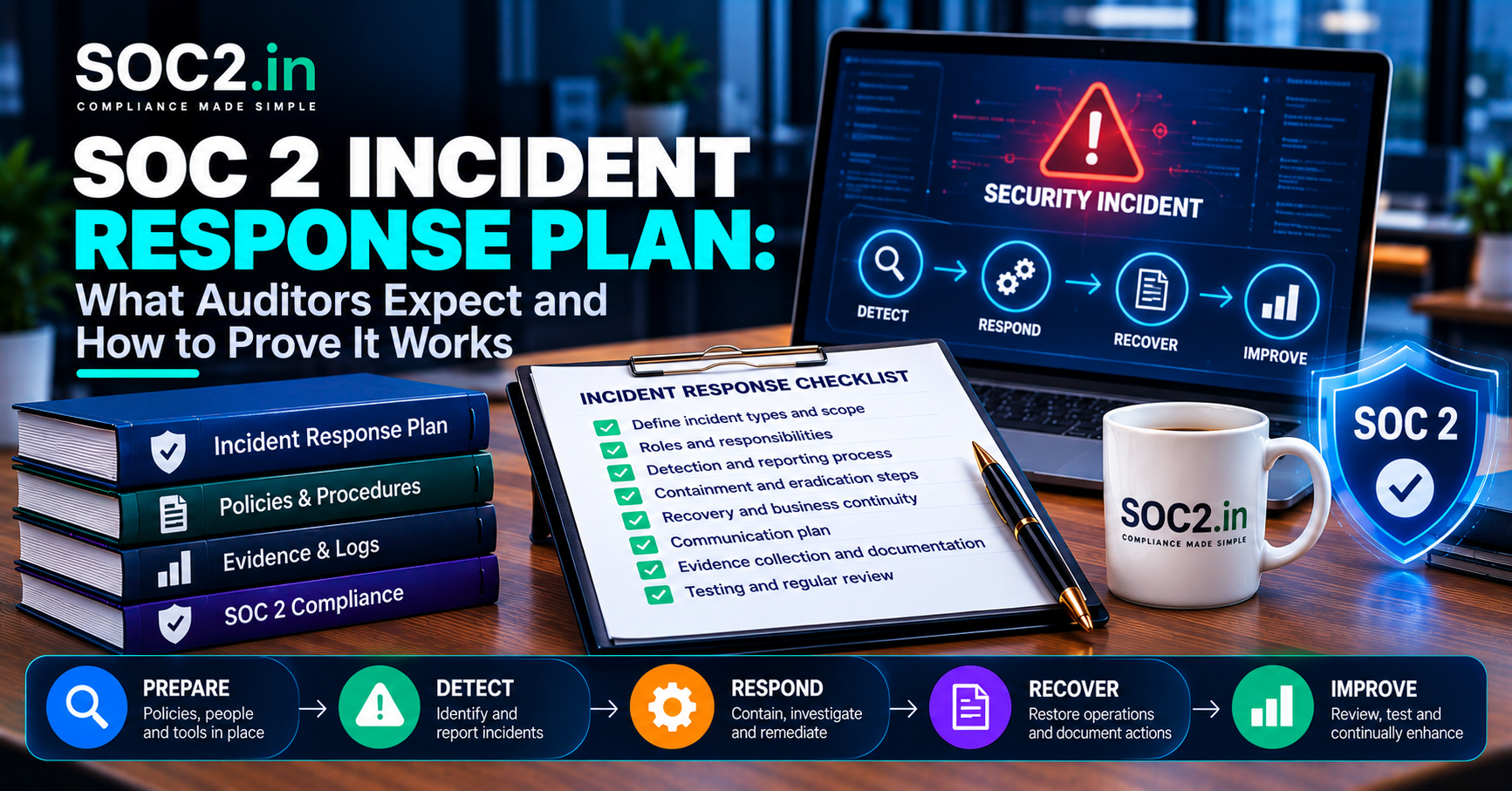
- Incident response procedures
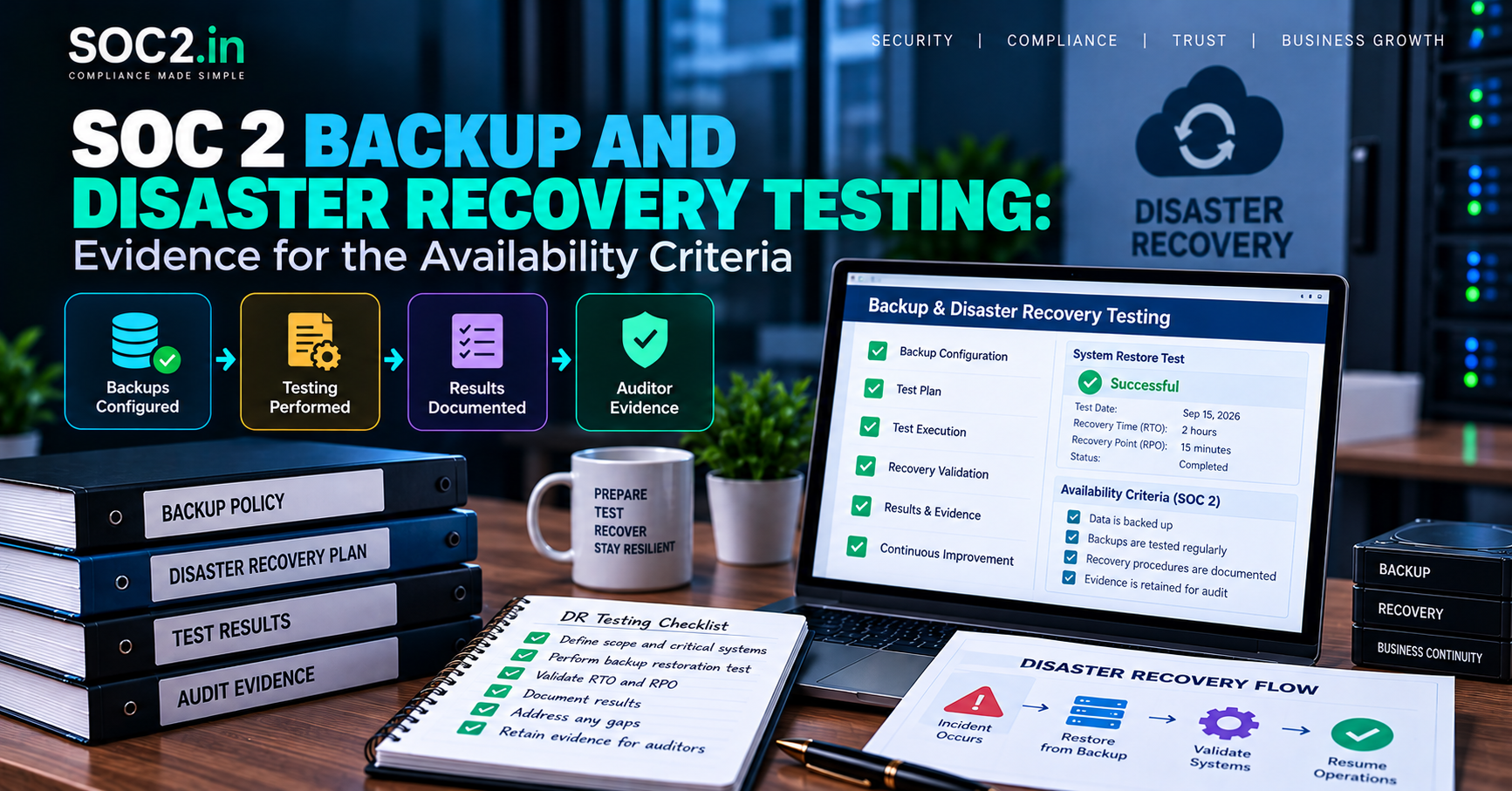
- Disaster recovery planning
These controls ensure that AI platforms remain functional even during system failures or cyber incidents.
Processing Integrity
Processing integrity focuses on ensuring that AI systems produce accurate, valid, and reliable outputs.
For AI organizations, this involves:
- Validating training data quality
- Monitoring model performance
- Testing AI outputs regularly
- Detecting anomalies or unexpected behaviors
Maintaining processing integrity helps prevent inaccurate or misleading results from AI systems.
Confidentiality
AI models often rely on confidential datasets or proprietary algorithms.
Confidentiality controls ensure that sensitive data and intellectual property remain protected through:
- Data encryption
- Secure storage systems
- Access control policies
- Monitoring of data usage
These measures prevent unauthorized disclosure of confidential data used in AI development.
Privacy
Privacy is particularly important when AI systems process personal information.
Organizations must ensure that user data is collected, stored, and processed according to strict privacy standards.
Privacy controls may include:
- Data anonymization
- User consent management
- Secure data handling policies
- Restrictions on using personal data for model training
These practices help protect individuals’ personal information while maintaining regulatory compliance.
AI Governance in SOC 2 Compliance
One of the most important aspects of SOC 2 for AI companies is AI governance.
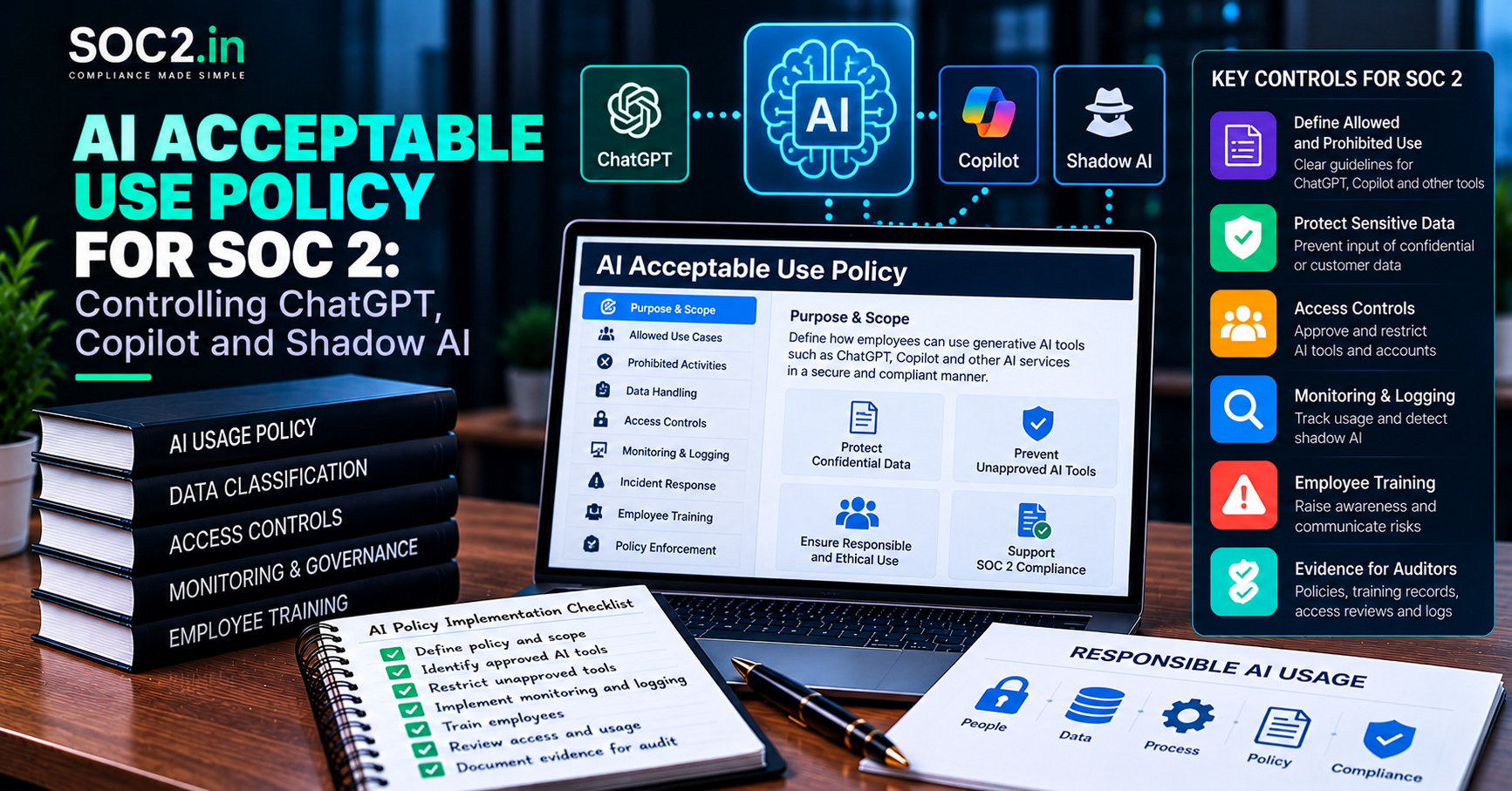
AI governance refers to the policies and procedures used to ensure AI systems are used responsibly and ethically.
Effective AI governance includes:
- Establishing ethical AI guidelines
- Monitoring model performance and fairness
- Documenting AI development processes
- Conducting regular security assessments
- Maintaining transparency in AI decision-making
Governance frameworks help organizations maintain accountability for how AI systems operate and evolve.
SOC 2 Type 1 vs SOC 2 Type 2 for AI Companies
SOC 2 reports are available in two formats.
SOC 2 Type 1
A SOC 2 Type 1 report evaluates whether security controls are properly designed at a specific point in time.
This assessment focuses on whether the organization has implemented appropriate policies and procedures.
However, it does not evaluate whether these controls operate effectively over time.
SOC 2 Type 2
A SOC 2 Type 2 report evaluates how well security controls function over an extended period, typically three to twelve months.
For AI companies, Type 2 certification is often more valuable because it demonstrates that security controls consistently protect AI systems in real-world environments.
Most enterprise customers prefer vendors with SOC 2 Type 2 compliance.
Benefits of SOC 2 Compliance for AI Organizations
SOC 2 compliance offers several advantages for AI companies.
Increased Trust and Transparency
SOC 2 certification demonstrates that an organization follows strict security and privacy practices.
Competitive Advantage
AI companies with SOC 2 compliance can differentiate themselves in competitive markets.
Improved Security Infrastructure
Preparing for SOC 2 audits encourages organizations to implement stronger cybersecurity controls.
Faster Enterprise Sales
Many enterprise clients require SOC 2 compliance before working with vendors.
Streamlined Compliance Management
Automation tools such as Vanta and Scytale can simplify evidence collection and audit preparation.
These tools help organizations manage compliance more efficiently.
Common Challenges in SOC 2 for AI
Although SOC 2 provides a valuable framework, AI companies may face several challenges during implementation.
Lack of AI-Specific Guidance
SOC 2 was originally designed for traditional software companies. As a result, it does not explicitly address many AI-specific risks.
Organizations must therefore interpret the framework and map AI controls to SOC 2 requirements.
Continuous Compliance Requirements
SOC 2 compliance is not a one-time effort. Organizations must continuously monitor security controls and undergo annual audits.
Complex AI Infrastructure
AI systems often involve multiple components including data pipelines, training environments, APIs, and deployment infrastructure. Managing security across these components can be complex.
Best Practices for Achieving SOC 2 Compliance in AI Companies
To successfully achieve SOC 2 compliance, AI organizations should adopt a structured approach.
Establish Clear AI Governance Policies
Organizations should define guidelines for ethical AI usage, data handling, and model monitoring.
Conduct Comprehensive Risk Assessments
Regular risk assessments help identify vulnerabilities related to AI models and datasets.
Implement Strong Data Security Controls
Training datasets and AI models should be protected with encryption, access control, and monitoring.
Maintain Transparent Documentation
Organizations should document AI development processes, security policies, and compliance procedures.
Perform Regular Audits
Internal and external audits help ensure compliance controls remain effective over time.
The Future of SOC 2 in AI Security
As artificial intelligence continues to evolve, compliance frameworks like SOC 2 will also adapt to address emerging risks.
Future developments may include:
- AI-specific compliance standards
- Expanded governance requirements
- Stronger transparency requirements for AI decision making
- Integration with AI ethics frameworks
Organizations that implement strong security and governance practices today will be better prepared for future regulatory expectations.
Conclusion
By applying the Trust Services Criteria to AI environments, organizations can ensure their AI models, datasets, and infrastructure remain secure, reliable, and ethically managed.
Implementing SOC 2 for AI involves establishing strong governance frameworks, protecting training data, monitoring AI model performance, and maintaining transparent security practices.
Companies that achieve SOC 2 compliance demonstrate a strong commitment to security, privacy, and responsible AI development, helping them build trust with customers, partners, and regulators.