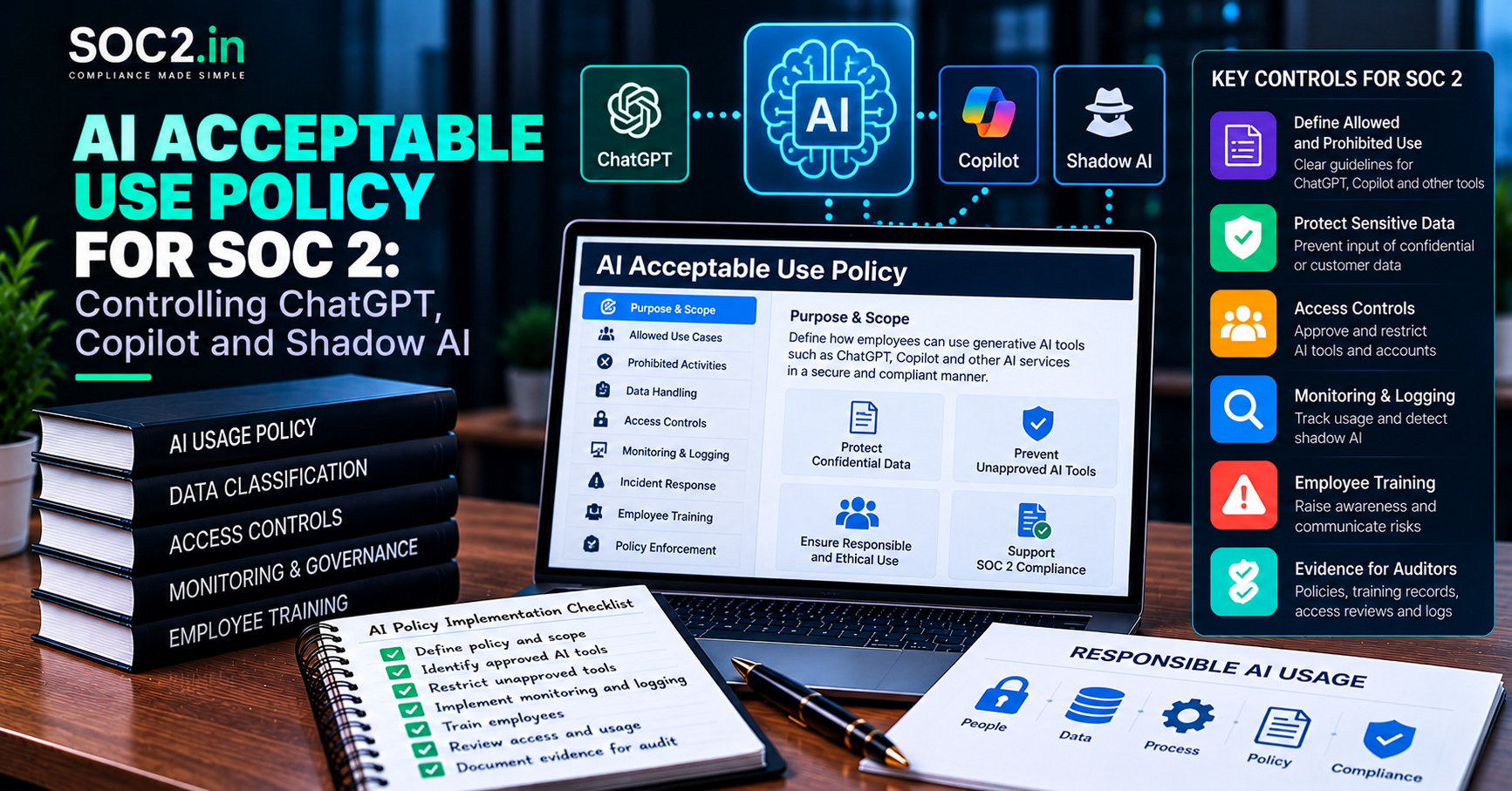
If you’re beginning your SOC 2 compliance journey, you’ll quickly encounter technical terms related to security, auditing, governance, and risk management. Understanding these terms helps organizations communicate effectively with auditors, customers, and compliance teams while preparing for a successful SOC 2 audit.
This glossary explains the most common SOC 2 terminology in simple language.
A
AICPA
The American Institute of Certified Public Accountants (AICPA) is the organization that developed the SOC reporting framework, including SOC 2.
Audit Period
The timeframe during which an auditor evaluates the effectiveness of security controls. For SOC 2 Type II, this is typically between 3 and 12 months.
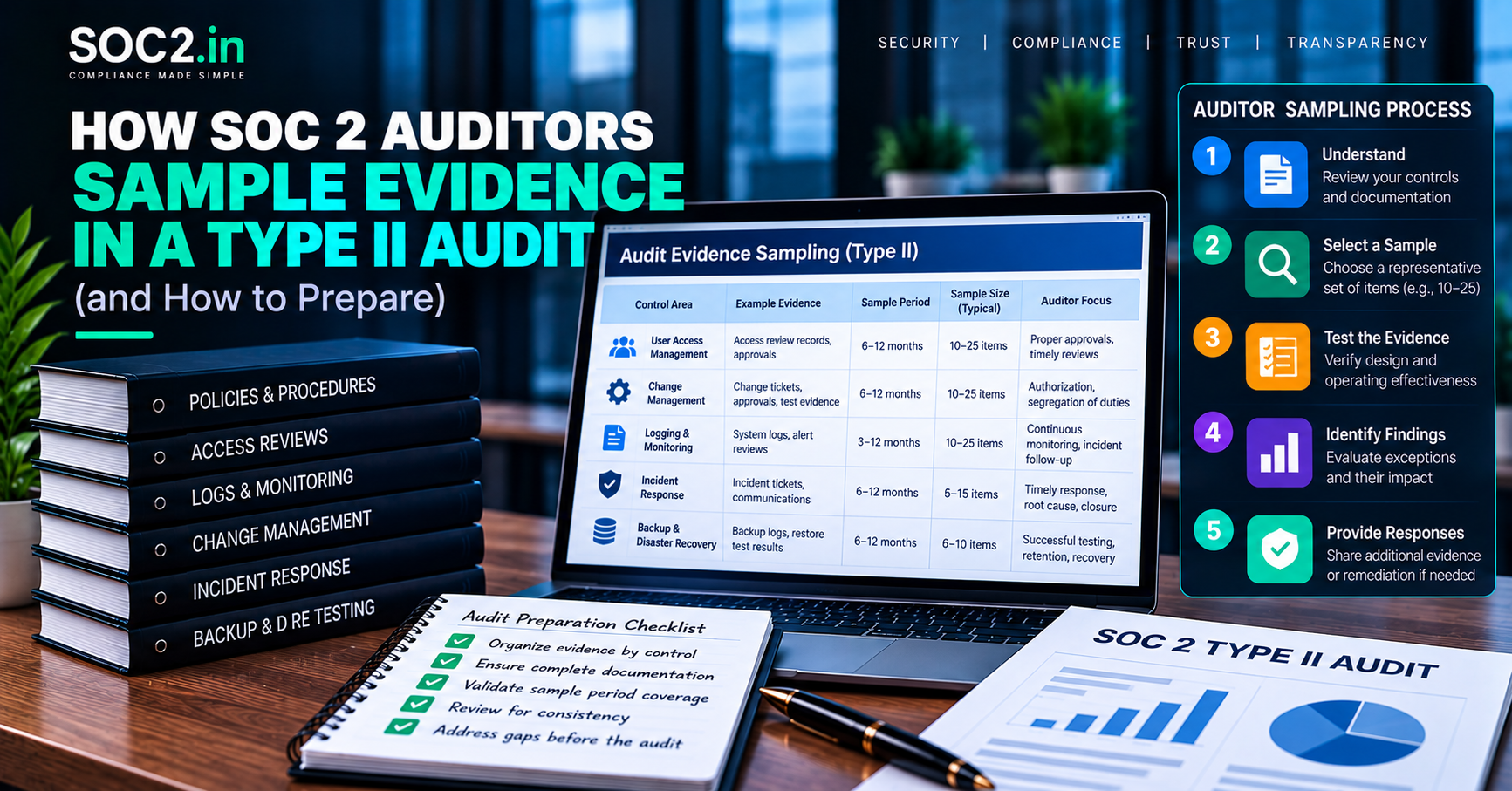
Audit Evidence
Documentation collected to demonstrate that security controls are operating effectively, such as policies, logs, screenshots, and system reports.
B
Business Continuity Plan (BCP)
A documented strategy that enables an organization to continue operations during disruptions such as cyberattacks, natural disasters, or system failures.
C
Change Management
The process of reviewing, approving, testing, and documenting changes to systems, software, and infrastructure.
Confidentiality
One of the five Trust Services Criteria that ensures confidential information is protected from unauthorized access.
Continuous Controls Monitoring (CCM)
The ongoing monitoring of security controls to identify issues in real time and maintain continuous compliance.
Control
A policy, process, or technical safeguard implemented to reduce security risks.
D
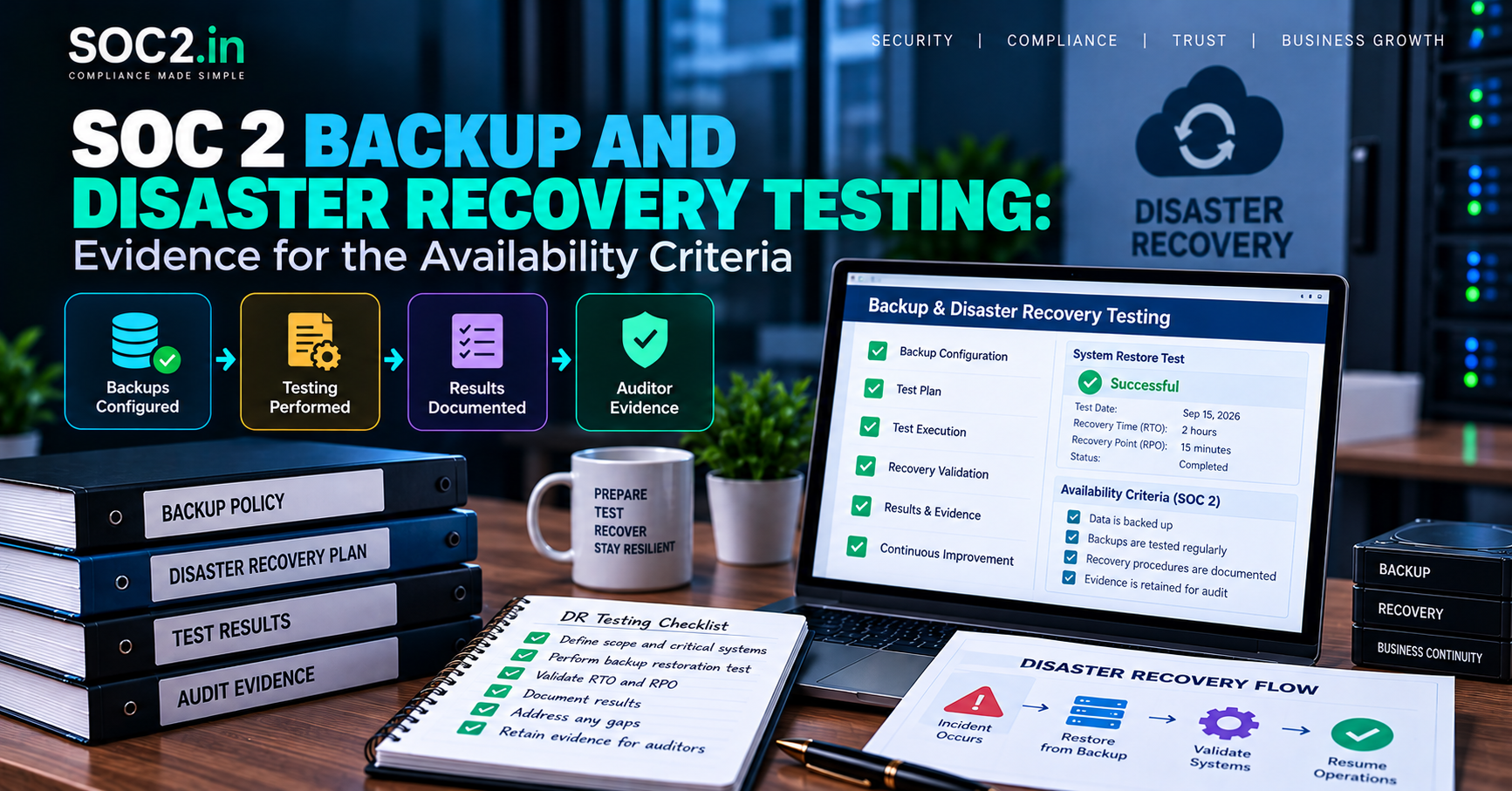
Disaster Recovery Plan (DRP)
A documented process for restoring systems and data after a major outage or disaster.
Data Encryption
The process of converting data into an unreadable format to protect it from unauthorized access.
E
Exception
A control deficiency or issue identified during the SOC 2 audit that requires remediation.
I
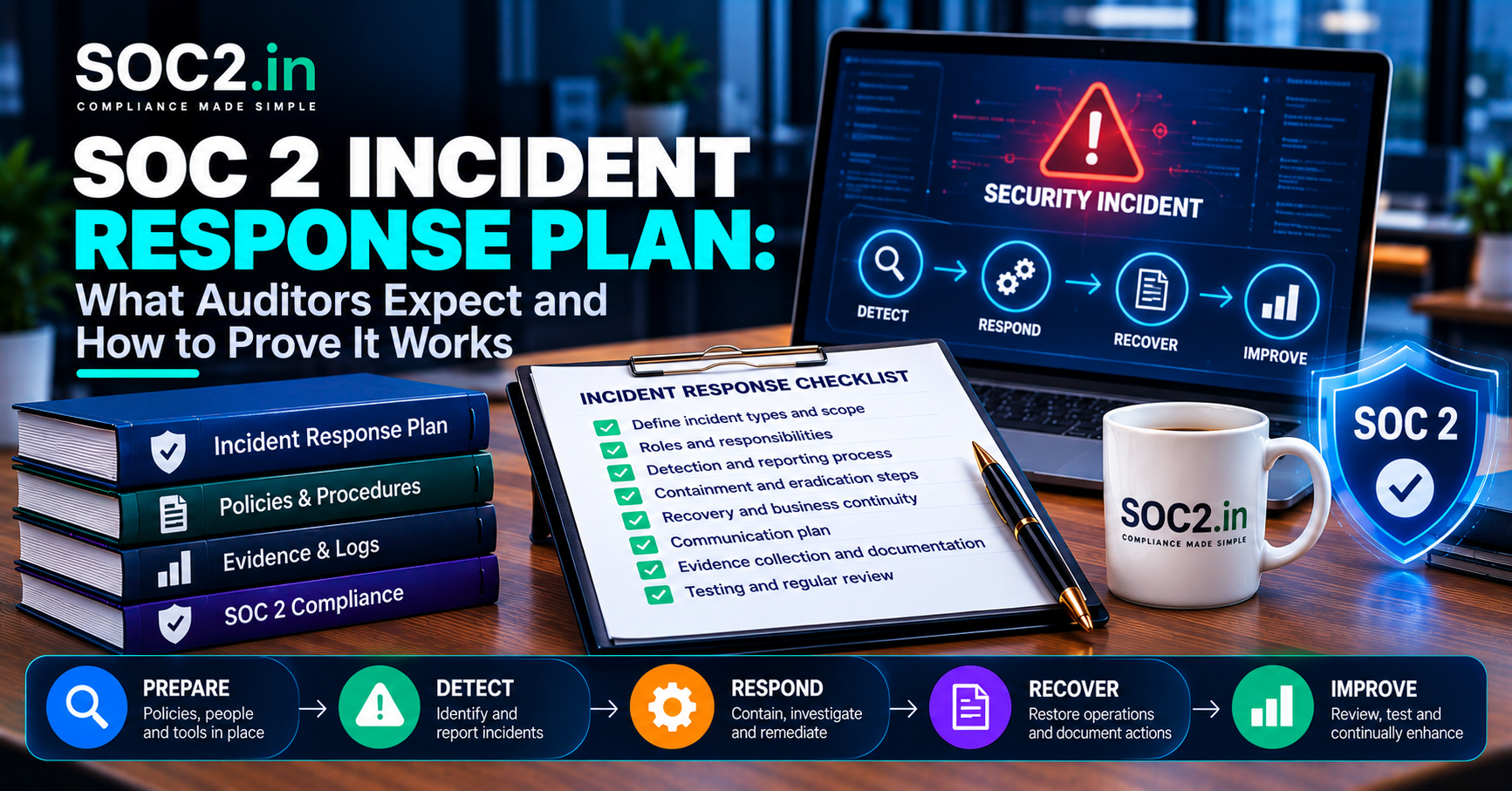
Incident Response Plan
A documented process for detecting, responding to, investigating, and recovering from cybersecurity incidents.
Internal Controls
Policies, procedures, and technical safeguards implemented to manage security and operational risks.
L
Least Privilege
A security principle where users receive only the minimum level of access required to perform their job responsibilities.
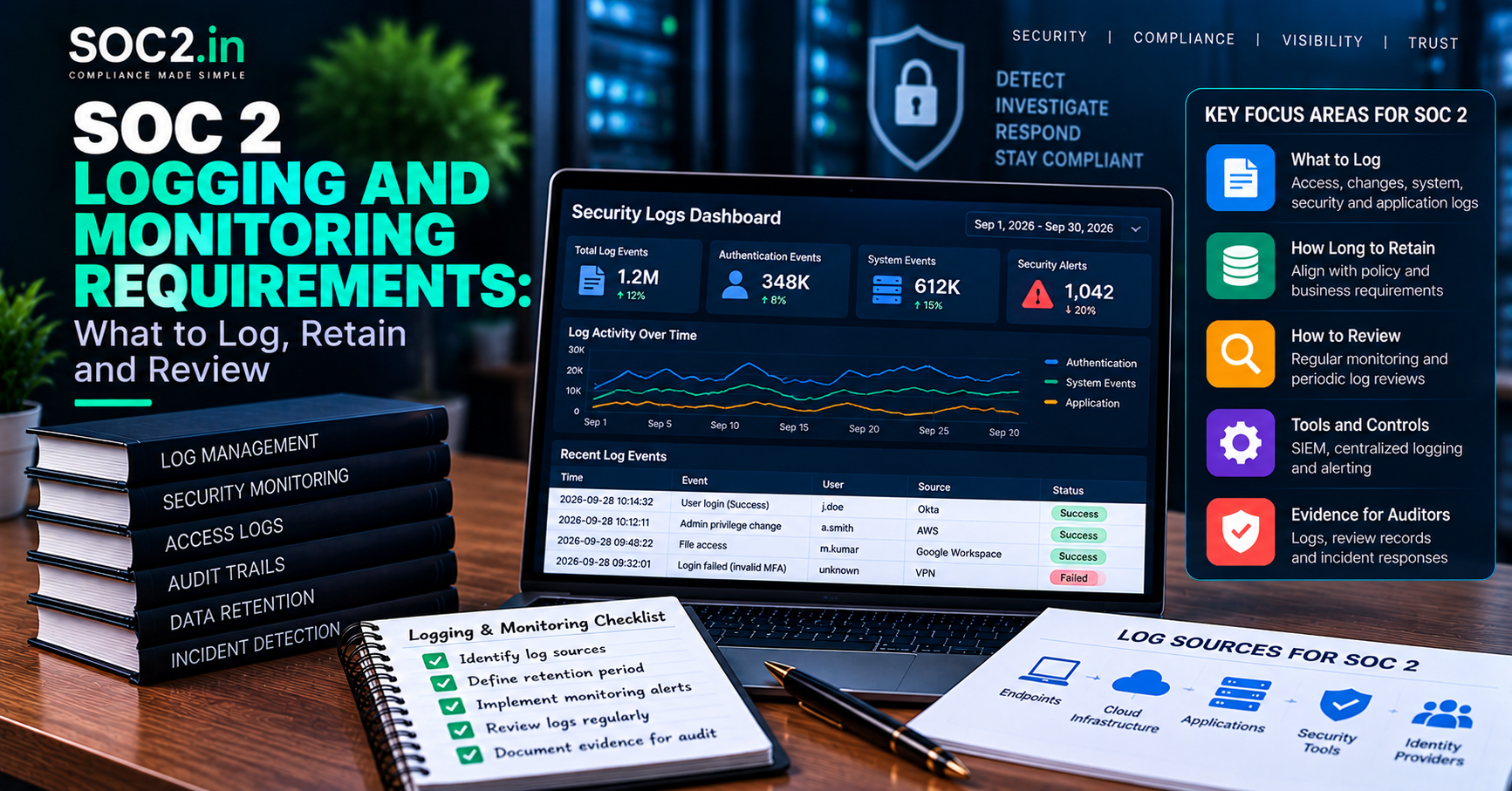
Logging
The collection of system activity records used for monitoring, troubleshooting, and forensic investigations.
M
Multi-Factor Authentication (MFA)
An authentication method requiring two or more verification factors before granting system access.
Monitoring
Continuous observation of systems and security events to detect threats and unusual activities.
P
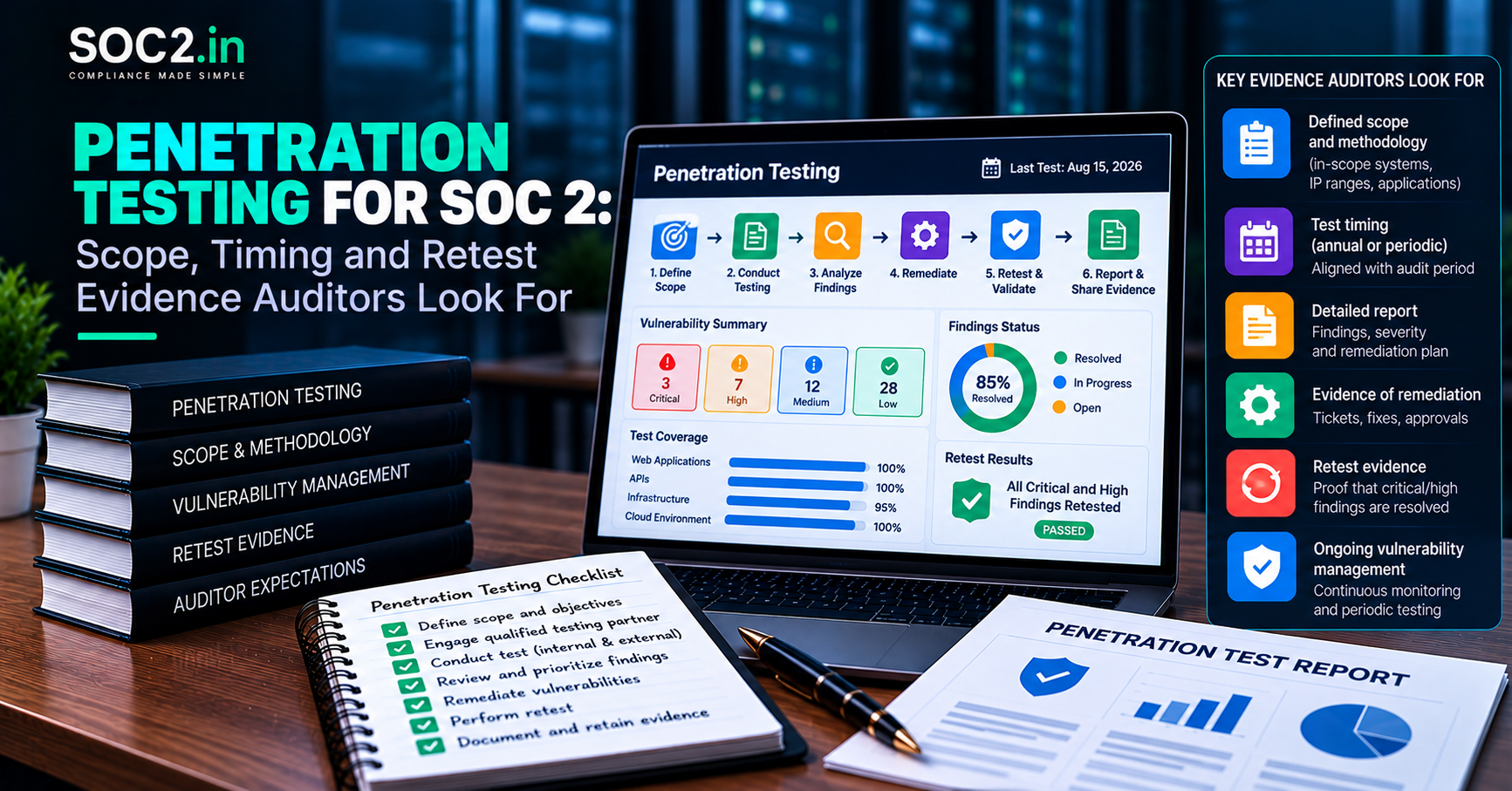
Penetration Testing
A controlled security assessment that simulates cyberattacks to identify vulnerabilities before attackers do.
Privacy
A Trust Services Criterion that governs how personal information is collected, stored, processed, shared, and deleted.
Processing Integrity
Ensures systems process information accurately, completely, and on time.
R
Risk Assessment
The process of identifying, analyzing, and prioritizing risks that could impact business operations or information security.
Remediation
The corrective actions taken to resolve identified security weaknesses or audit findings.
Role-Based Access Control (RBAC)
A security model that grants access based on a user’s role within the organization.
S
Security
The mandatory Trust Services Criterion focused on protecting systems against unauthorized access and cyber threats.
Security Awareness Training
Employee education programs that help staff recognize phishing attacks, social engineering, and other cybersecurity risks.
SOC 2
An independent audit framework that evaluates how organizations protect customer data using the Trust Services Criteria.
SOC 2 Type I
A report that evaluates whether security controls are properly designed at a specific point in time.
SOC 2 Type II
A report that evaluates whether security controls operate effectively over a defined observation period.
System Description
A section of the SOC 2 report describing the organization’s services, infrastructure, people, software, data, and security controls.
T
Third-Party Risk Management
The process of evaluating and monitoring vendors to ensure they maintain appropriate security controls.
Trust Services Criteria (TSC)
The five principles used in SOC 2 audits:
- Security
- Availability
- Processing Integrity
- Confidentiality
- Privacy
V
Vulnerability Assessment
A systematic scan used to identify security weaknesses within systems, applications, and networks.
Vendor Risk Assessment
An evaluation of a third-party provider’s security posture before sharing sensitive information or establishing a business relationship.
Why Understanding SOC 2 Terms Matters
A strong understanding of SOC 2 terminology helps organizations:
- Prepare for audits more effectively
- Improve communication with auditors
- Respond confidently to customer security questionnaires
- Strengthen internal security programs
- Accelerate compliance initiatives
Whether you’re a startup or an enterprise, knowing these terms makes the SOC 2 journey easier and more efficient.
Conclusion
SOC 2 compliance involves much more than passing an audit. It requires understanding the language of security, governance, and risk management. This SOC 2 Glossary of Terms provides a practical reference for business leaders, IT teams, compliance professionals, and anyone involved in the compliance process.
Bookmark this glossary as a quick reference while preparing for your SOC 2 readiness assessment or audit.
Frequently Asked Questions
What is the Trust Services Criteria (TSC)?
The Trust Services Criteria are the five principles used to evaluate SOC 2 compliance: Security, Availability, Processing Integrity, Confidentiality, and Privacy.
What is the difference between SOC 2 Type I and Type II?
Type I evaluates the design of controls at a specific point in time, while Type II evaluates how effectively those controls operate over a defined period.
Why is MFA important for SOC 2?
Multi-Factor Authentication helps prevent unauthorized access and is considered a critical security control for protecting sensitive systems and data.
Who should understand SOC 2 terminology?
Business owners, IT teams, security professionals, compliance managers, auditors, and organizations preparing for SOC 2 should all be familiar with these terms.