Enterprise customers increasingly expect vendors to demonstrate strong security practices before sharing sensitive information. For SaaS companies, cloud service providers, FinTech businesses, healthcare organizations, and managed service providers, SOC 2 compliance has become an essential requirement for winning new business and building customer trust.
However, jumping directly into a SOC 2 audit without preparation often leads to delays, unexpected remediation work, and higher compliance costs. This is where a SOC 2 Readiness Assessment becomes invaluable.
A readiness assessment is a proactive evaluation of your organization’s security controls, policies, processes, and documentation before the official audit begins. It identifies compliance gaps, highlights security risks, creates a practical implementation roadmap, and ensures your business is fully prepared for a successful SOC 2 audit.
This guide explains every stage of a SOC 2 Readiness Assessment and how it can significantly improve your chances of achieving SOC 2 compliance.
What Is a SOC 2 Readiness Assessment?
A SOC 2 Readiness Assessment is a pre-audit review that measures your organization’s current security posture against the SOC 2 Trust Services Criteria.
Unlike the official SOC 2 audit conducted by a licensed CPA firm, a readiness assessment is designed to identify weaknesses before the audit starts. It gives organizations time to implement missing controls, improve documentation, and collect the evidence required for a successful audit.
The primary objective is simple: identify and fix compliance gaps before an auditor evaluates your organization.
Why Is a SOC 2 Readiness Assessment Important?
Many organizations assume that implementing a few security tools is enough to achieve SOC 2 compliance. In reality, SOC 2 evaluates people, processes, technology, and governance together.
A readiness assessment helps organizations:
- Understand current compliance status
- Identify missing security controls
- Reduce audit risks
- Improve documentation
- Strengthen cybersecurity practices
- Save time during the official audit
- Reduce remediation costs
- Increase confidence before engaging an auditor
Organizations that complete a readiness assessment are generally better prepared and experience a smoother audit process.
Gap Analysis Against SOC 2 Requirements
The first step in a readiness assessment is conducting a comprehensive gap analysis.
Gap analysis compares your existing security practices against the SOC 2 Trust Services Criteria to determine what is already in place and what still needs improvement.
Areas Typically Reviewed
- Information security policies
- Access management
- User provisioning and deprovisioning
- Password policies
- Multi-Factor Authentication (MFA)
- Data encryption
- Security monitoring
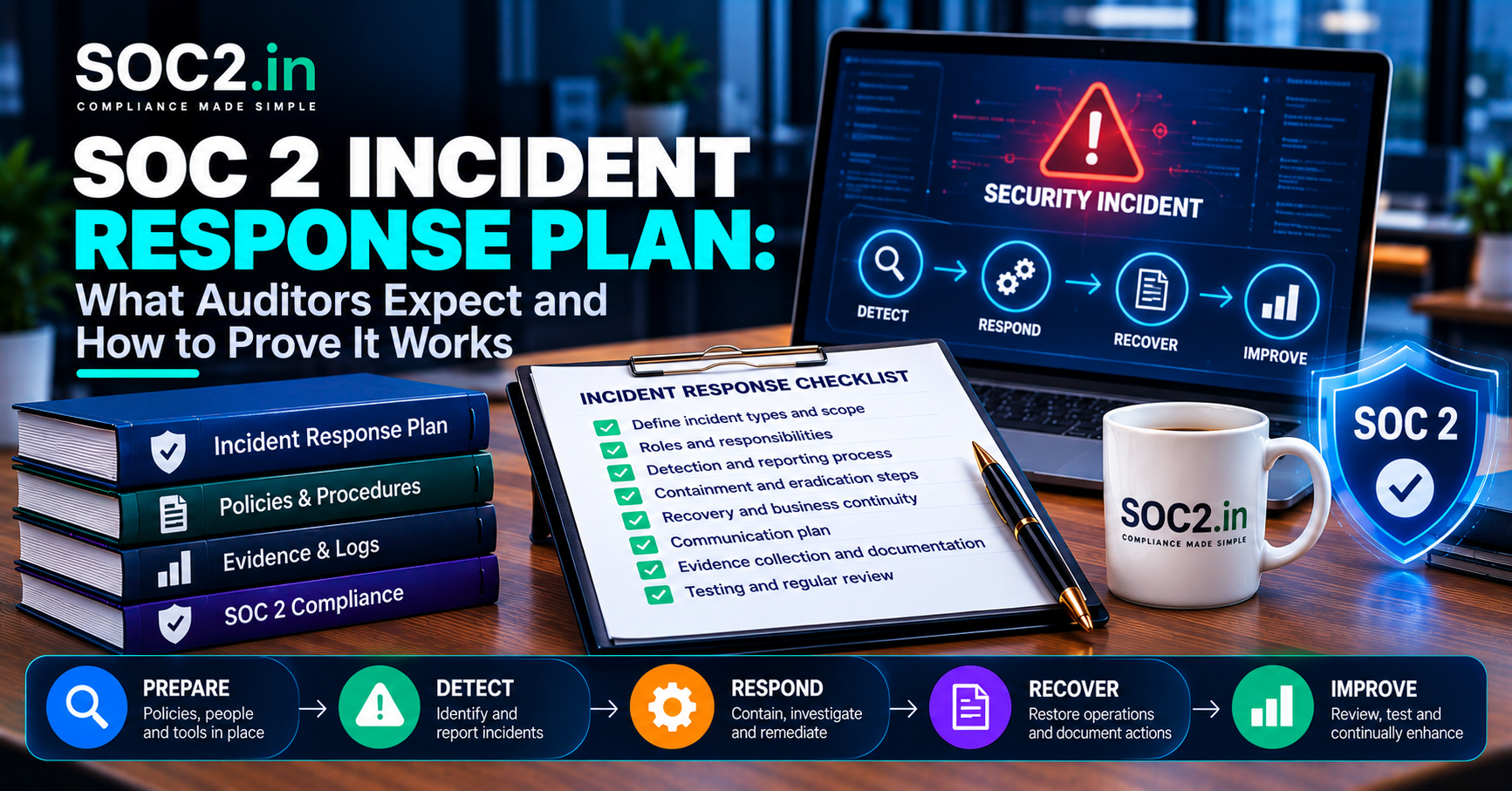
- Incident response procedures
- Vendor management
- Change management
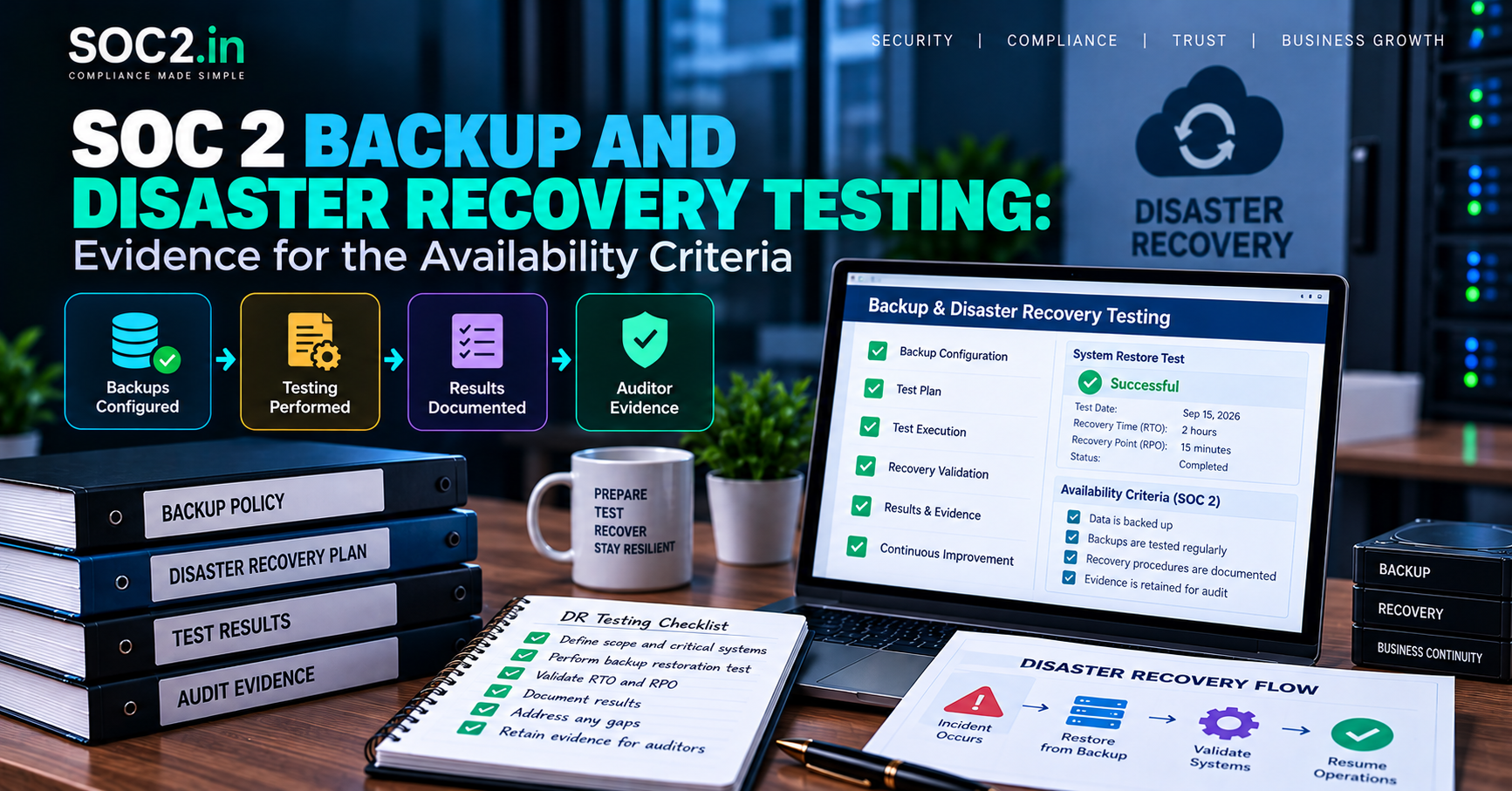
- Backup and disaster recovery
- Employee security awareness training
Common Gaps Identified
Organizations often discover issues such as:
- Missing documented policies
- Excessive user permissions
- Weak password controls
- Incomplete logging
- Lack of formal risk assessments
- Missing vulnerability management processes
- Poor evidence management
- Inadequate vendor security reviews
Identifying these gaps early allows organizations to address them before the audit begins.
Risk Identification
Risk management is a fundamental component of SOC 2 compliance.
During the readiness assessment, organizations identify and evaluate risks that could affect the confidentiality, integrity, or availability of customer information.
Typical Risk Categories
Technical Risks
- Unpatched systems
- Cloud misconfigurations
- Weak authentication
- Insecure APIs
Operational Risks
- Lack of documented procedures
- Human error
- Weak change management
- Poor access reviews
Business Risks
- Vendor dependencies
- Regulatory changes
- Business continuity concerns
- Third-party security issues
Each identified risk is evaluated based on its likelihood and potential business impact.
Organizations should then develop mitigation strategies and assign ownership for each risk.
Compliance Roadmap Creation
After identifying gaps and risks, the next step is creating a structured compliance roadmap.
Rather than trying to solve everything at once, organizations should prioritize activities based on business impact and audit requirements.
A typical compliance roadmap includes:
Phase 1: Governance
- Define compliance scope
- Identify stakeholders
- Assign responsibilities
Phase 2: Policy Development
Develop or update:
- Information Security Policy
- Access Control Policy
- Incident Response Policy
- Vendor Management Policy
- Business Continuity Plan
- Disaster Recovery Plan
Phase 3: Technical Controls
Implement:
- Multi-Factor Authentication
- Endpoint protection
- Security monitoring
- Vulnerability scanning
- Encryption
- Backup solutions
Phase 4: Operational Processes
Establish:
- Access review procedures
- Change management
- Security awareness training
- Vendor assessments
- Incident response testing
Phase 5: Evidence Collection
Begin collecting documentation such as:
- Access review reports
- Training records
- Vulnerability scan reports
- Risk assessments
- Incident logs
- Backup test results
A well-defined roadmap helps organizations stay on schedule and avoid last-minute compliance issues.
Audit Readiness Evaluation
The final stage of the readiness assessment is determining whether the organization is prepared for the official SOC 2 audit.
This evaluation verifies that:
- Security controls are implemented
- Policies are documented
- Employees understand security procedures
- Evidence is available
- Risks are managed appropriately
- Monitoring is operational
- Required documentation is complete
Think of this as a final practice run before the actual audit.
Any remaining issues can be resolved before engaging the CPA firm.
Best Practices for a Successful Readiness Assessment
To maximize the value of your readiness assessment:
- Clearly define the audit scope.
- Involve stakeholders from IT, HR, Legal, and Operations.
- Maintain accurate documentation.
- Perform regular vulnerability assessments.
- Conduct periodic access reviews.
- Test incident response procedures.
- Train employees on security awareness.
- Monitor security events continuously.
- Review third-party vendors regularly.
These practices strengthen your security posture while reducing audit risks.
Common Mistakes to Avoid
Organizations often encounter challenges because they:
- Skip the readiness assessment entirely.
- Wait until the audit begins to collect evidence.
- Use generic security policies that don’t reflect actual operations.
- Ignore third-party vendor risks.
- Delay vulnerability remediation.
- Conduct employee training only once a year.
- Fail to document security activities.
Avoiding these mistakes improves both compliance and operational security.
SOC 2 Readiness Assessment Checklist
Use the following checklist to evaluate your preparedness:
✔ Compliance scope defined
✔ Security policies documented
✔ Multi-Factor Authentication enabled
✔ Access reviews completed
✔ Risk assessment performed
✔ Vulnerability scanning implemented
✔ Security monitoring operational
✔ Incident response plan documented
✔ Vendor management process established
✔ Employee security awareness training completed
✔ Evidence repository organized
✔ Internal compliance review completed
Benefits of Completing a Readiness Assessment
Organizations that complete a readiness assessment often experience:
- Faster audit completion
- Reduced compliance costs
- Fewer remediation efforts
- Improved security posture
- Stronger customer confidence
- Better operational governance
- Increased chances of passing the audit on the first attempt
Most importantly, a readiness assessment transforms compliance from a reactive exercise into a proactive business strategy.
Conclusion
A SOC 2 Readiness Assessment is one of the most valuable investments an organization can make before pursuing SOC 2 compliance. By identifying security gaps, assessing risks, creating a structured compliance roadmap, and evaluating audit readiness, organizations can approach their SOC 2 audit with confidence.
Rather than viewing readiness as an optional step, businesses should treat it as the foundation of a successful compliance program. Proper preparation not only simplifies the audit process but also strengthens cybersecurity, improves operational resilience, and demonstrates a long-term commitment to protecting customer data.
Whether you are a startup preparing for your first SOC 2 audit or an established enterprise expanding your compliance program, a comprehensive readiness assessment will significantly improve your chances of achieving a successful SOC 2 report.
Frequently Asked Questions
1. What is a SOC 2 Readiness Assessment?
It is a pre-audit evaluation that identifies security gaps and prepares an organization for a successful SOC 2 audit.
2. Is a readiness assessment mandatory?
No, but it is highly recommended because it helps reduce audit risks and remediation costs.
3. How long does a SOC 2 Readiness Assessment take?
Depending on the organization’s size and complexity, it typically takes between 2 and 6 weeks.
4. What are the key deliverables?
A gap analysis report, risk assessment, compliance roadmap, remediation recommendations, and an audit readiness evaluation.
5. Can startups benefit from a readiness assessment?
Yes. It helps startups build security controls efficiently and prepare for enterprise customer requirements.