Preparing for a SOC 2 audit requires more than implementing security tools. Organizations must evaluate their controls, identify compliance gaps, manage risks, and ensure that policies and processes are operating effectively. This guide provides a comprehensive SOC 2 Readiness Assessment Checklist to help businesses prepare confidently for a successful SOC 2 audit.
For SaaS companies, cloud service providers, managed service providers, FinTech businesses, and organizations handling sensitive customer information, achieving SOC 2 compliance has become an important milestone. Enterprise customers increasingly request a SOC 2 report before signing contracts because it demonstrates that your organization has implemented effective security controls to protect customer data.
However, many businesses make the mistake of starting the official audit before verifying whether they are truly prepared. Missing documentation, inconsistent security practices, or incomplete controls can lead to delays, additional remediation work, and increased costs.
A SOC 2 Readiness Assessment Checklist helps organizations evaluate their current security posture before the audit begins. It identifies gaps, highlights potential risks, creates a remediation plan, and ensures your business is prepared for a successful SOC 2 examination.
In this guide, we’ll walk through the essential checklist every organization should complete before engaging a SOC 2 auditor.
What Is a SOC 2 Readiness Assessment Checklist?
A SOC 2 Readiness Assessment Checklist is a structured review of your organization’s people, processes, technology, and documentation against the SOC 2 Trust Services Criteria.
Rather than waiting for an external auditor to identify issues, the checklist allows your team to proactively evaluate compliance and correct deficiencies before the audit.
The checklist typically covers:
- Security governance
- Policies and procedures
- Access management
- Risk management
- Monitoring and logging
- Vendor management
- Incident response
- Business continuity
- Employee awareness
- Evidence collection
Completing this assessment significantly improves audit readiness and reduces the likelihood of major findings.
Why Is a Readiness Assessment Important?
A readiness assessment is one of the most valuable investments you can make before beginning the SOC 2 audit process.
It helps organizations:
- Identify compliance gaps early
- Reduce remediation costs
- Improve security posture
- Organize documentation
- Prepare employees for interviews
- Build confidence before the audit
- Accelerate the audit timeline
Instead of reacting to audit findings, organizations can resolve issues proactively.
SOC 2 Readiness Assessment Checklist
Use the following checklist to evaluate your organization’s readiness.
1. Define the Audit Scope
Clearly identify the systems, applications, services, and business processes included in the audit.
Document:
- Products covered
- Cloud environments
- Data flows
- Business locations
- Third-party vendors
A well-defined scope keeps the audit focused and manageable.
2. Perform a Gap Analysis
Compare your existing controls with SOC 2 requirements.
Review areas such as:
- Access controls
- Security monitoring
- Data encryption
- Backup procedures
- Incident response
- Vendor management
- Change management
- Employee training
The goal is to identify missing or ineffective controls before the audit.
3. Conduct a Risk Assessment
Risk management is a core SOC 2 requirement.
Identify risks related to:
- Technology
- People
- Business operations
- Third-party vendors
- Regulatory changes
For each risk, evaluate:
- Likelihood
- Business impact
- Existing controls
- Recommended mitigation
Maintain a documented risk register that is reviewed regularly.
4. Review Security Policies
Ensure all required policies are documented, approved, and communicated to employees.
Essential policies include:
- Information Security Policy
- Access Control Policy
- Password Policy
- Incident Response Policy
- Vendor Management Policy
- Change Management Policy
- Business Continuity Plan
- Disaster Recovery Plan
- Data Classification Policy
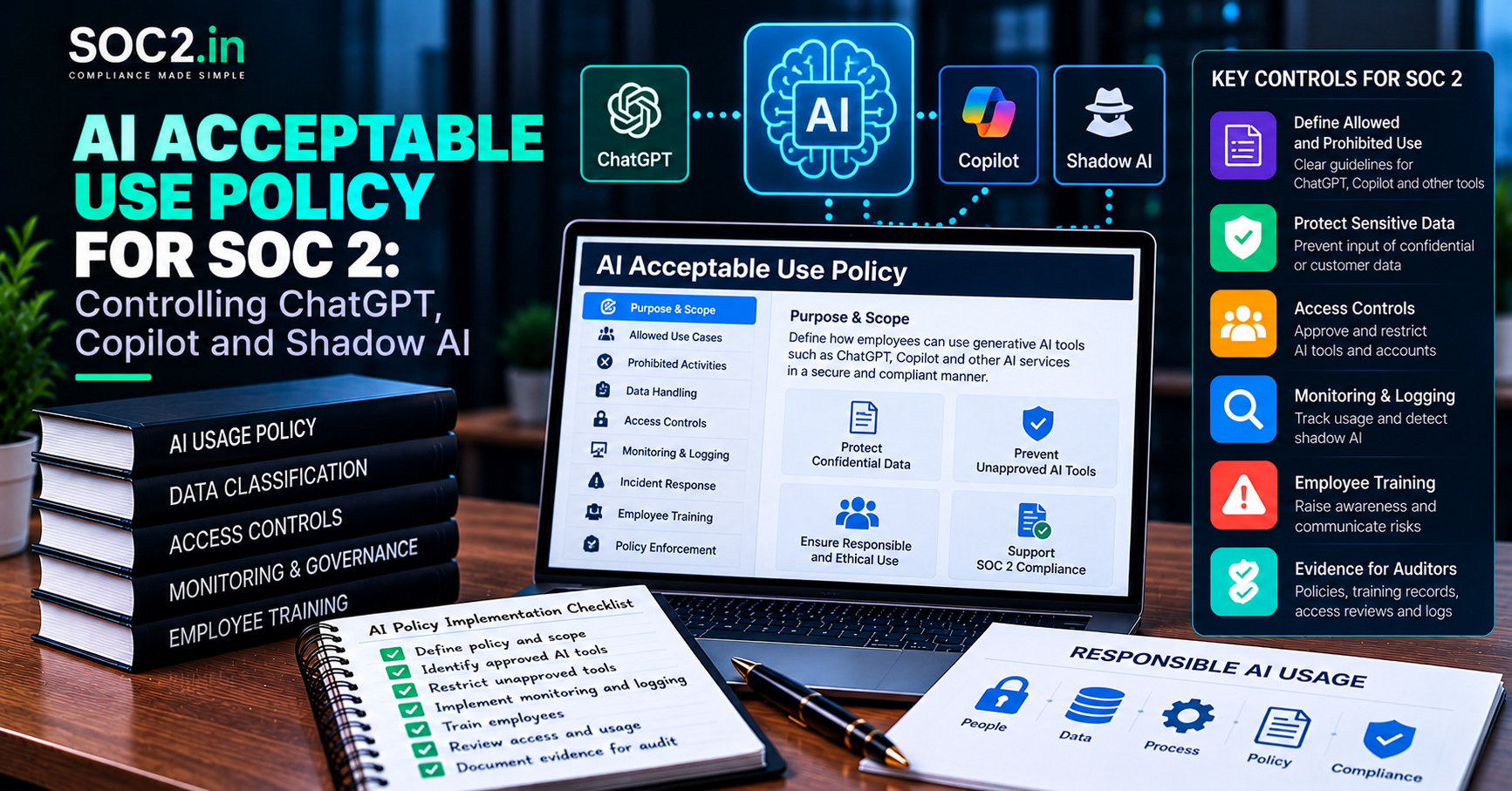
- Acceptable Use Policy
Policies should accurately reflect your organization’s actual practices.
5. Strengthen Identity and Access Management
Verify that access controls follow the Principle of Least Privilege.
Checklist items:
✔ Multi-Factor Authentication enabled
✔ Role-Based Access Control implemented
✔ Administrative access restricted
✔ Dormant accounts removed
✔ Quarterly access reviews completed
Strong identity management is one of the most important SOC 2 controls.
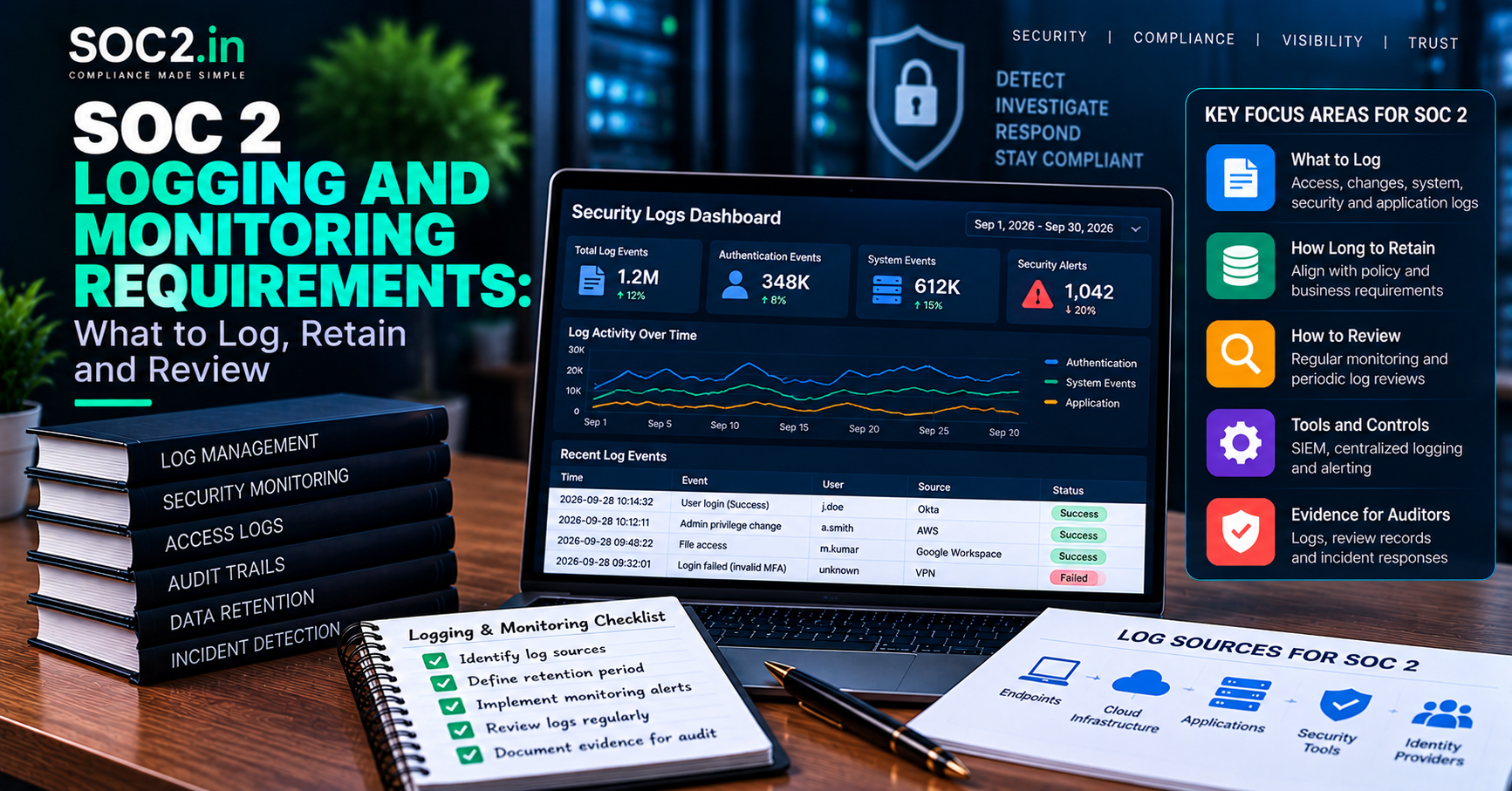
6. Verify Security Monitoring
Continuous monitoring demonstrates that your security controls operate effectively.
Ensure you have:
- Centralized logging
- Security alerts
- Endpoint monitoring
- Cloud monitoring
- Log retention policies
Security events should be reviewed and documented regularly.
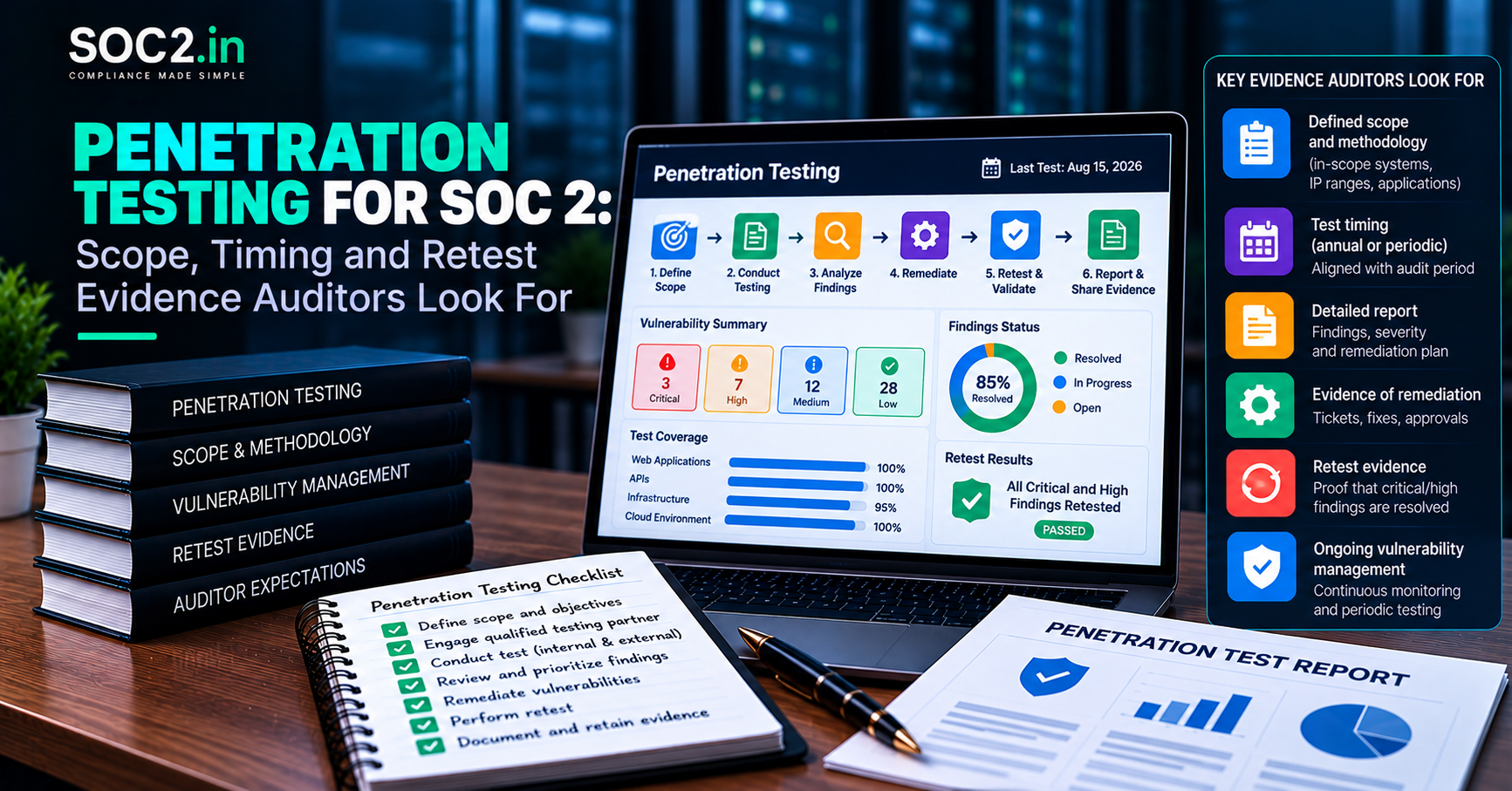
7. Review Vulnerability Management
Organizations should have a documented process for identifying and addressing vulnerabilities.
Best practices include:
- Regular vulnerability scanning
- Annual penetration testing
- Patch management procedures
- Risk-based remediation
- Evidence of corrective actions
Auditors will expect proof that vulnerabilities are managed consistently.
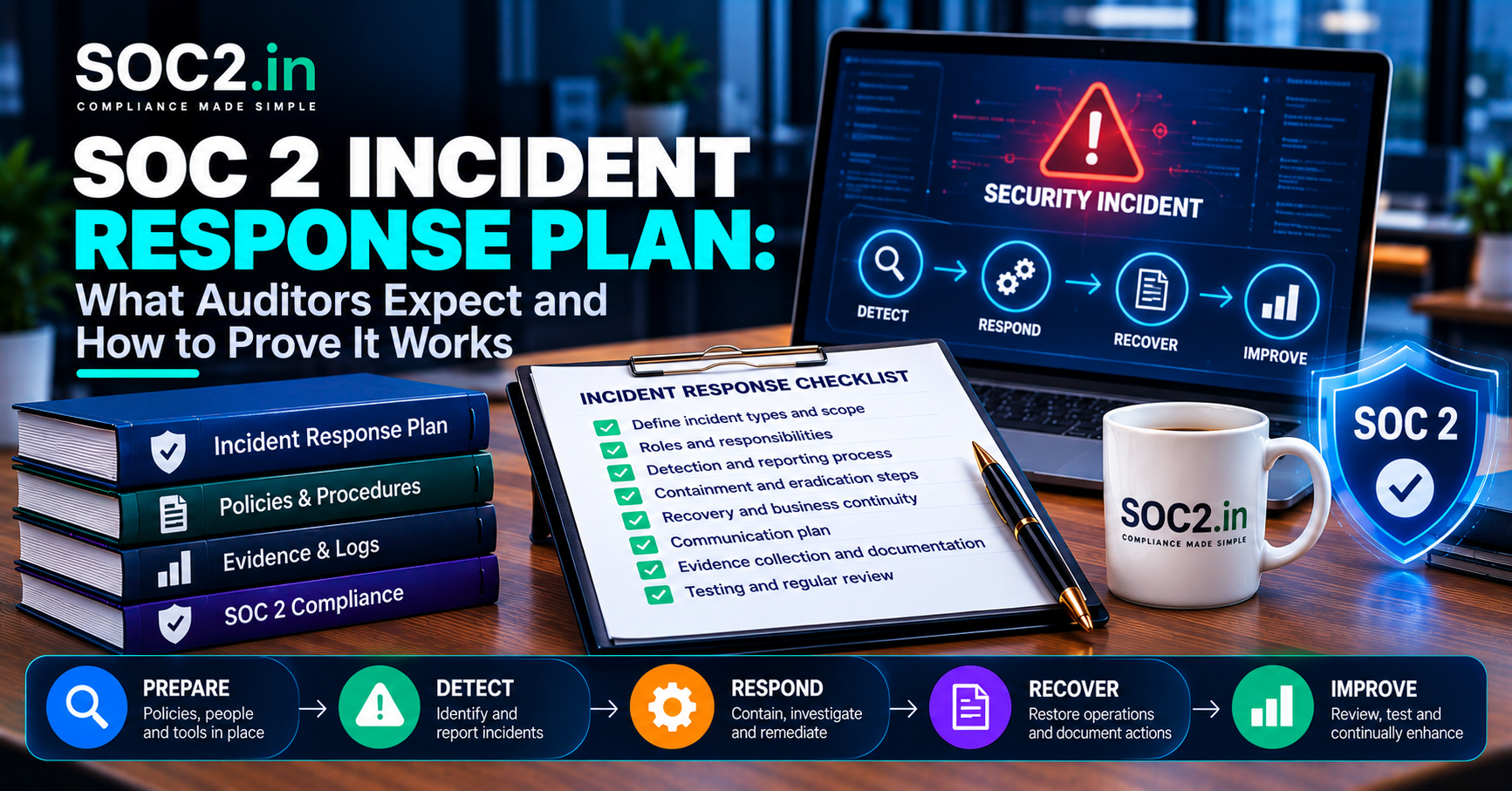
8. Validate Incident Response
Your incident response program should include:
- Incident response policy
- Escalation procedures
- Investigation process
- Communication plan
- Recovery procedures
- Lessons learned documentation
Conduct periodic tabletop exercises to ensure employees understand their responsibilities.
9. Evaluate Vendor Risk Management
Third-party vendors often have access to sensitive systems or customer information.
Maintain:
- Vendor inventory
- Risk assessments
- Security questionnaires
- Signed agreements
- Vendor SOC reports where applicable
Review vendors regularly to ensure ongoing compliance.
10. Deliver Security Awareness Training
Employees play a vital role in maintaining compliance.
Training should cover:
- Phishing awareness
- Password security
- Data handling
- Social engineering
- Remote work security
- Incident reporting
Maintain records of completed training for audit evidence.
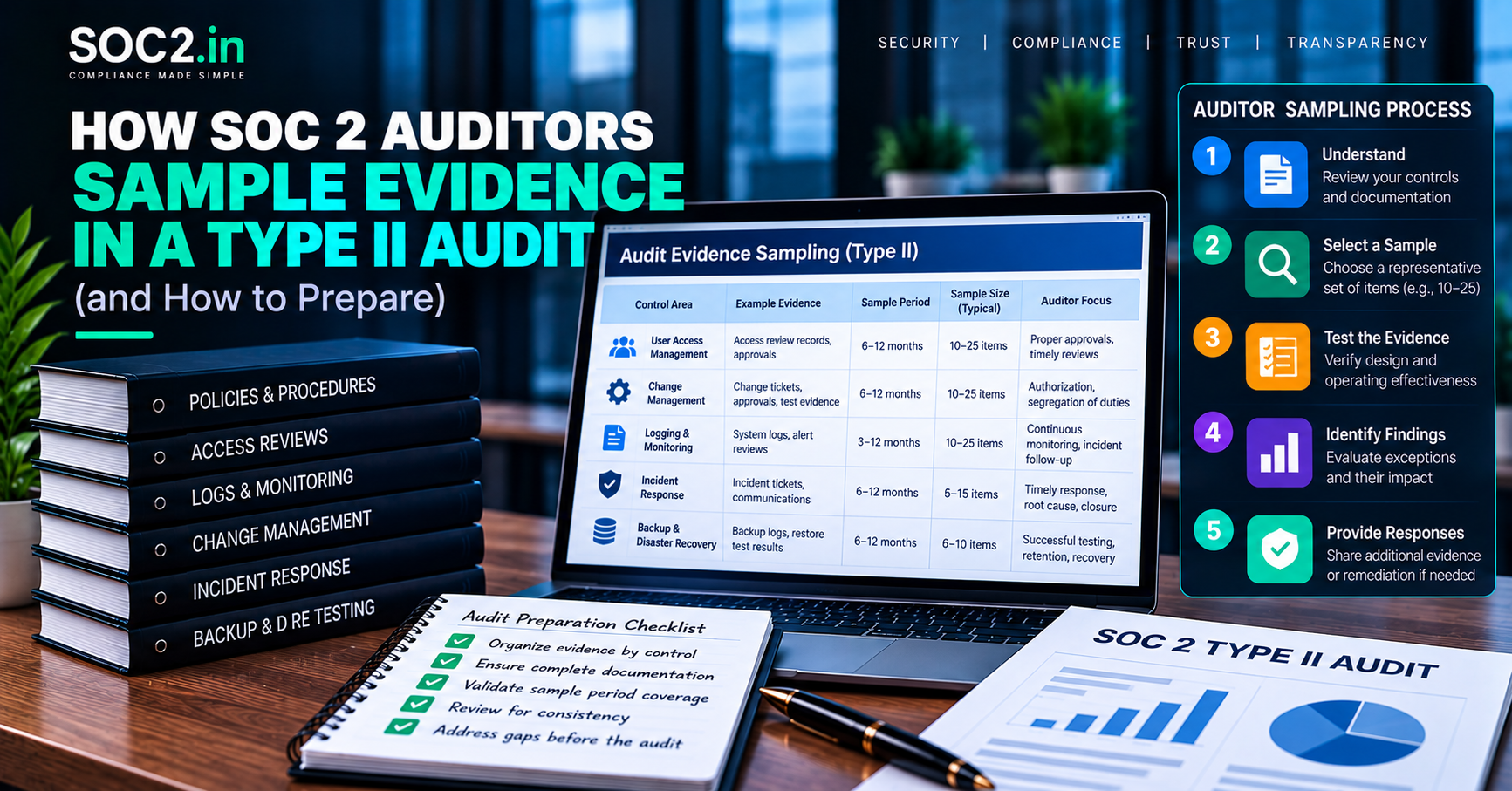
11. Organize Audit Evidence
One of the most time-consuming aspects of a SOC 2 audit is gathering evidence.
Prepare documentation such as:
- Access review reports
- Risk assessments
- Security training records
- Vulnerability scan reports
- Monitoring logs
- Incident records
- Backup test results
- Policy acknowledgments
Storing evidence in a centralized repository simplifies the audit process.
12. Perform an Internal Audit Readiness Review
Before engaging your external auditor, conduct an internal review to verify that:
- Controls are implemented
- Policies are followed
- Evidence is complete
- Risks are managed
- Employees understand security procedures
This final evaluation helps identify any remaining issues.
Common Mistakes to Avoid
Organizations frequently encounter challenges because they:
- Skip the readiness assessment
- Use generic policy templates
- Delay evidence collection
- Ignore third-party risks
- Fail to perform access reviews
- Neglect employee training
- Treat compliance as a one-time project
Avoiding these mistakes improves both audit success and long-term security.
Best Practices for SOC 2 Readiness
To strengthen your readiness program:
- Define your audit scope early.
- Conduct regular risk assessments.
- Keep policies updated.
- Automate evidence collection where possible.
- Monitor security controls continuously.
- Review user access periodically.
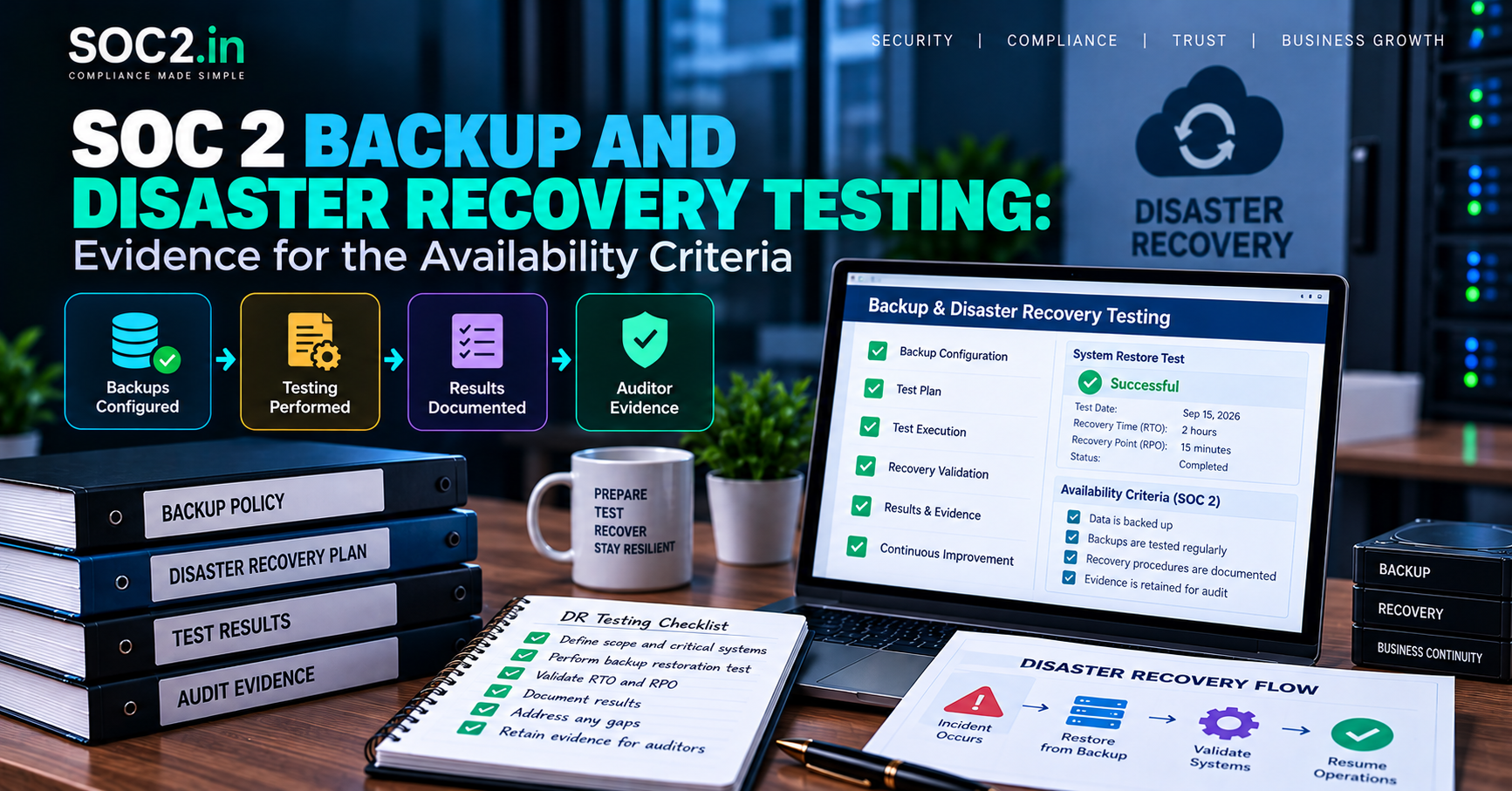
- Test backup and disaster recovery plans.
- Engage stakeholders across the organization.
- Document every compliance activity.
Continuous preparation is far more effective than last-minute remediation.
Benefits of Using a Readiness Assessment Checklist
Organizations that complete a readiness assessment often experience:
- Faster audits
- Reduced remediation costs
- Stronger security posture
- Better documentation
- Improved customer trust
- Higher audit success rates
- Greater operational maturity
A structured checklist provides clarity and keeps compliance efforts organized.
Conclusion
A SOC 2 Readiness Assessment Checklist is more than a preparation tool—it’s a roadmap for building a secure and compliant organization. By evaluating your security controls, performing a thorough gap analysis, identifying risks, organizing documentation, and validating operational processes, you can approach your SOC 2 audit with confidence.
Whether your organization is pursuing SOC 2 for the first time or preparing for a renewal audit, investing time in readiness assessment significantly increases your chances of a smooth audit and a successful outcome. More importantly, it strengthens your overall cybersecurity program and demonstrates your commitment to protecting customer data.
Frequently Asked Questions
1. What is a SOC 2 Readiness Assessment Checklist?
It is a structured checklist used to evaluate whether an organization is prepared for a SOC 2 audit by reviewing security controls, policies, documentation, and operational processes.
2. Is a readiness assessment required before a SOC 2 audit?
It is not mandatory, but it is strongly recommended because it helps identify and resolve issues before the official audit.
3. What is included in a readiness assessment?
Typical activities include gap analysis, risk assessment, policy reviews, access control evaluation, evidence collection, and audit readiness validation.
4. How long does a readiness assessment take?
Most organizations complete it within 2 to 6 weeks, depending on their size and complexity.
5. Can startups benefit from a SOC 2 Readiness Assessment?
Yes. It helps startups establish the right controls early, reduce audit costs, and meet enterprise customer expectations.