For many solo founders, achieving SOC 2 Type II can feel overwhelming.
Most compliance guides assume you have:
- A security team
- A compliance manager
- DevOps engineers
- Dedicated IT staff
But what if you’re running a SaaS company alone?
The good news is that SOC 2 Type II compliance is absolutely possible for solo entrepreneurs. In fact, many bootstrapped SaaS founders successfully achieve SOC 2 to win enterprise customers and accelerate growth.
The challenge is not necessarily the audit itself.
The challenge is building a security program that is practical, scalable, and manageable for a one-person business.
In this guide, you’ll learn:
- Whether solo founders can achieve SOC 2 Type II
- The biggest challenges for one-person businesses
- A step-by-step roadmap to compliance
- Tools that reduce manual work
- Common mistakes to avoid
- Realistic timelines and costs
Can a Solo Entrepreneur Achieve SOC 2 Type II?
The simple answer is yes.
SOC 2 does not require a minimum number of employees.
Auditors care about:
- Security controls
- Operational processes
- Documentation
- Evidence collection
- Risk management
They do not require a company to have a large team.
What matters is whether the controls are appropriate for your business size and whether they operate consistently over time.
A solo founder can successfully pass SOC 2 if the company demonstrates mature security practices.
Why SOC 2 Matters for Solo SaaS Founders
Many solo founders initially believe SOC 2 is only relevant for larger companies.
However, enterprise customers increasingly require SOC 2 before signing contracts.
Without SOC 2, founders often face:
- Delayed sales cycles
- Security questionnaires
- Vendor approval challenges
- Lost enterprise opportunities
SOC 2 can help demonstrate that even a small company takes security seriously.
Understanding SOC 2 Type II
SOC 2 Type II evaluates whether security controls operate effectively over a defined period.
Unlike Type I, which only assesses control design, Type II reviews ongoing performance.
This includes:
- Access management
- Security monitoring
- Change management
- Incident response
- Vendor management
- Employee security practices
For solo founders, this means demonstrating consistent execution rather than simply having policies in place.
The Biggest Challenge for Solo Entrepreneurs
The biggest obstacle is not security.
It is operational bandwidth.
As a solo founder, you are often responsible for:
- Product development
- Customer support
- Marketing
- Sales
- Security
- Compliance
SOC 2 introduces additional responsibilities such as:
- Documentation
- Evidence collection
- Risk assessments
- Policy reviews
Without automation, these tasks can quickly become overwhelming.
Common Security Controls a Solo Founder Must Implement
Even small businesses must demonstrate fundamental security practices.
Access Control
Ensure access to systems is restricted and monitored.
Examples:
- Multi-factor authentication (MFA)
- Strong password policies
- Role-based access
Endpoint Security
Protect devices used to access business systems.
This may include:
- Device encryption
- Antivirus protection
- Automatic updates
- Device management tools
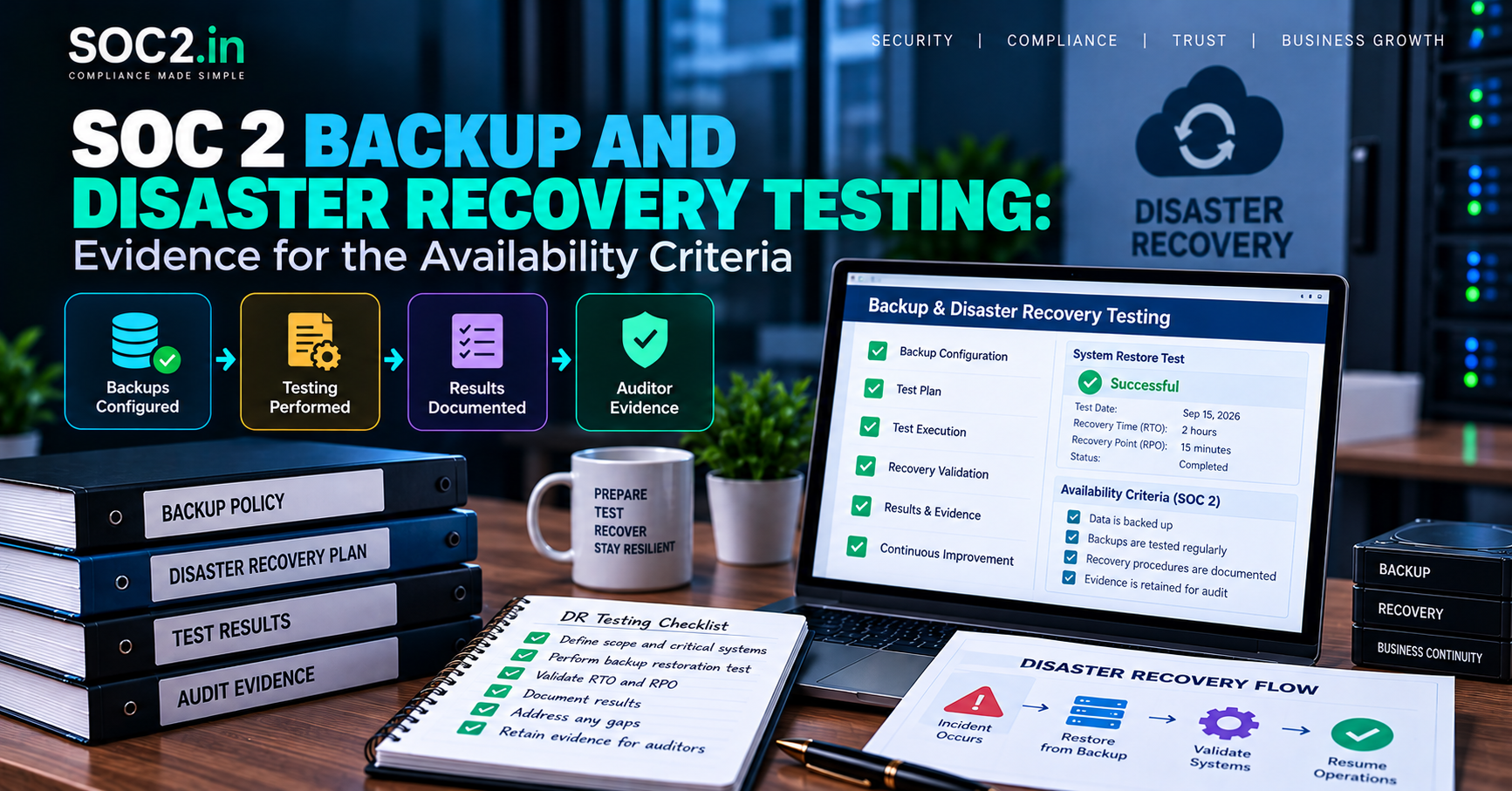
Backup and Recovery
Implement reliable backup procedures.
Auditors often expect:
- Regular backups
- Recovery testing
- Disaster recovery planning
Logging and Monitoring
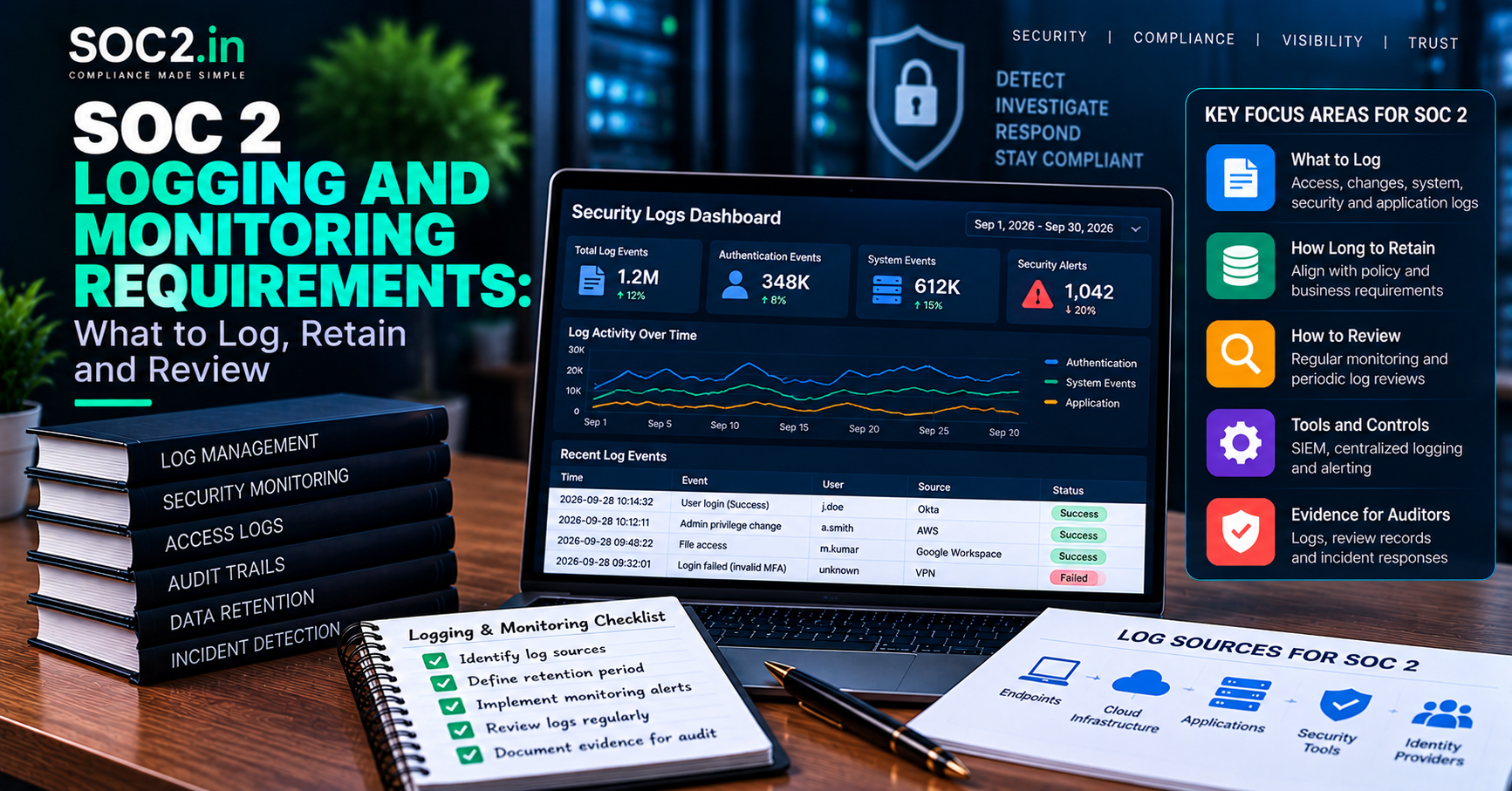
Track important activities across critical systems.
Examples:
- Login events
- Administrative actions
- Security alerts
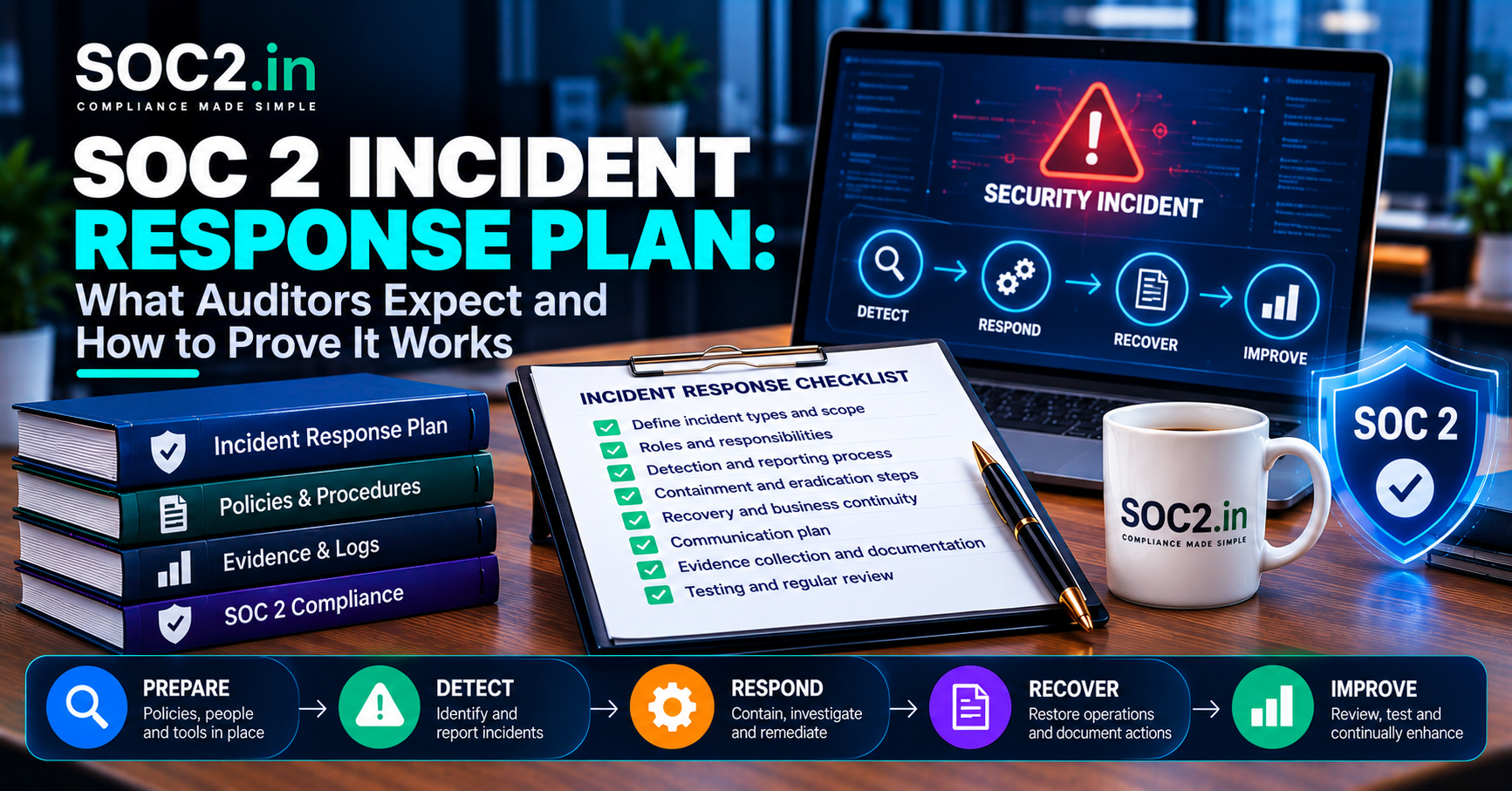
Incident Response
Create a documented process for handling security incidents.
Even if you’re the only employee, a response plan is still required.
Step-by-Step SOC 2 Type II Roadmap for Solo Founders
Step 1: Define Scope Carefully
One of the biggest mistakes founders make is creating an unnecessarily large audit scope.
Include only:
- Production systems
- Customer-facing infrastructure
- Critical business applications
Smaller scope means:
- Lower costs
- Faster implementation
- Simpler audits
Step 2: Perform a Gap Assessment
Before engaging an auditor, identify missing controls.
Review:
- Security policies
- Infrastructure configuration
- Vendor management
- Access controls
This helps avoid surprises later.
Step 3: Create Essential Policies
You do not need hundreds of pages of documentation.
Start with:
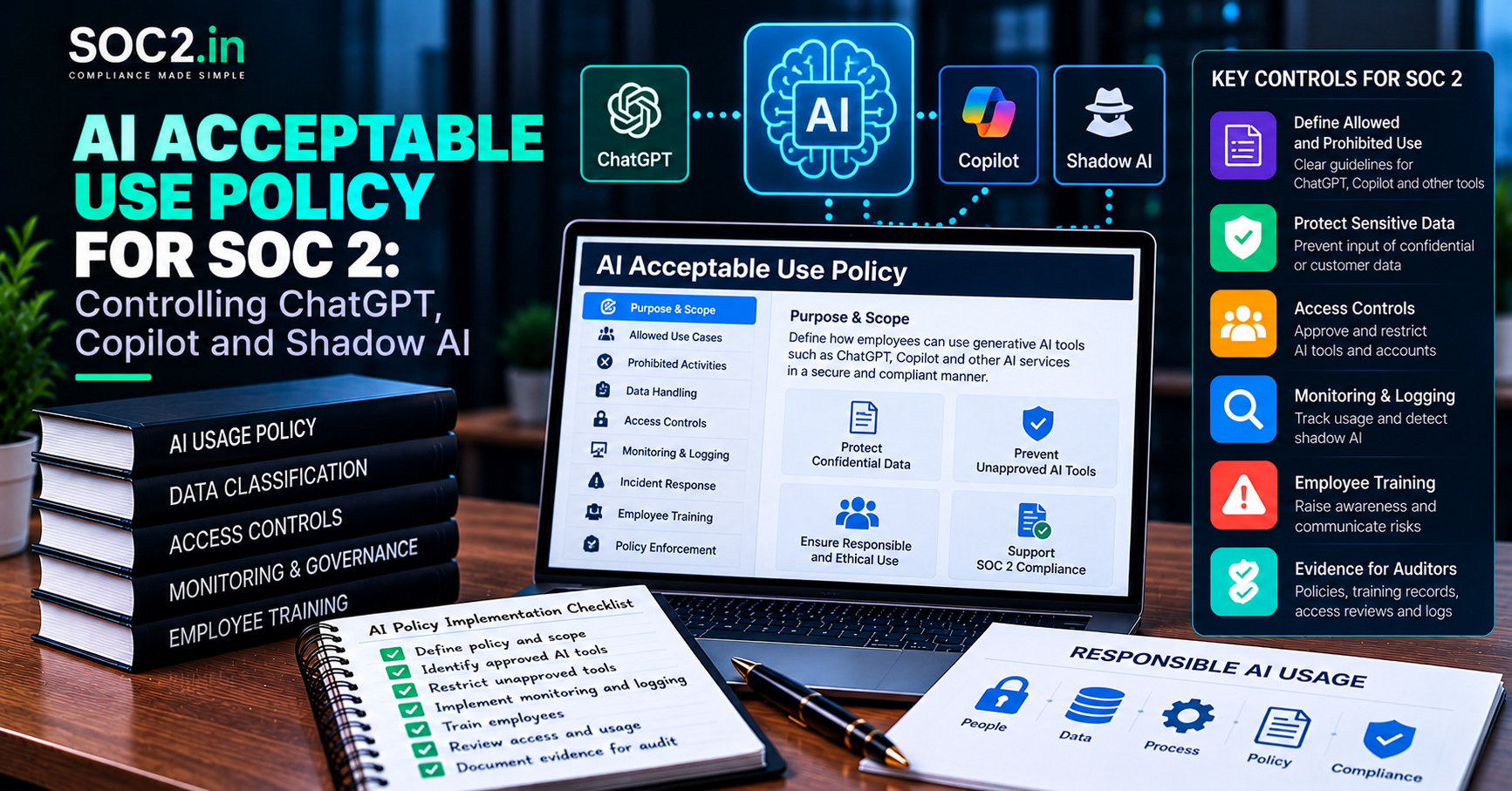
- Information Security Policy
- Access Control Policy
- Incident Response Plan
- Vendor Management Policy
- Backup Policy
Policies should reflect how your business actually operates.
Step 4: Implement Security Controls
Focus on high-impact controls first:
Identity Security
- MFA everywhere
- Password manager
- Least-privilege access
Infrastructure Security
- Cloud security monitoring
- Secure backups
- Encryption
Operational Security
- Change management process
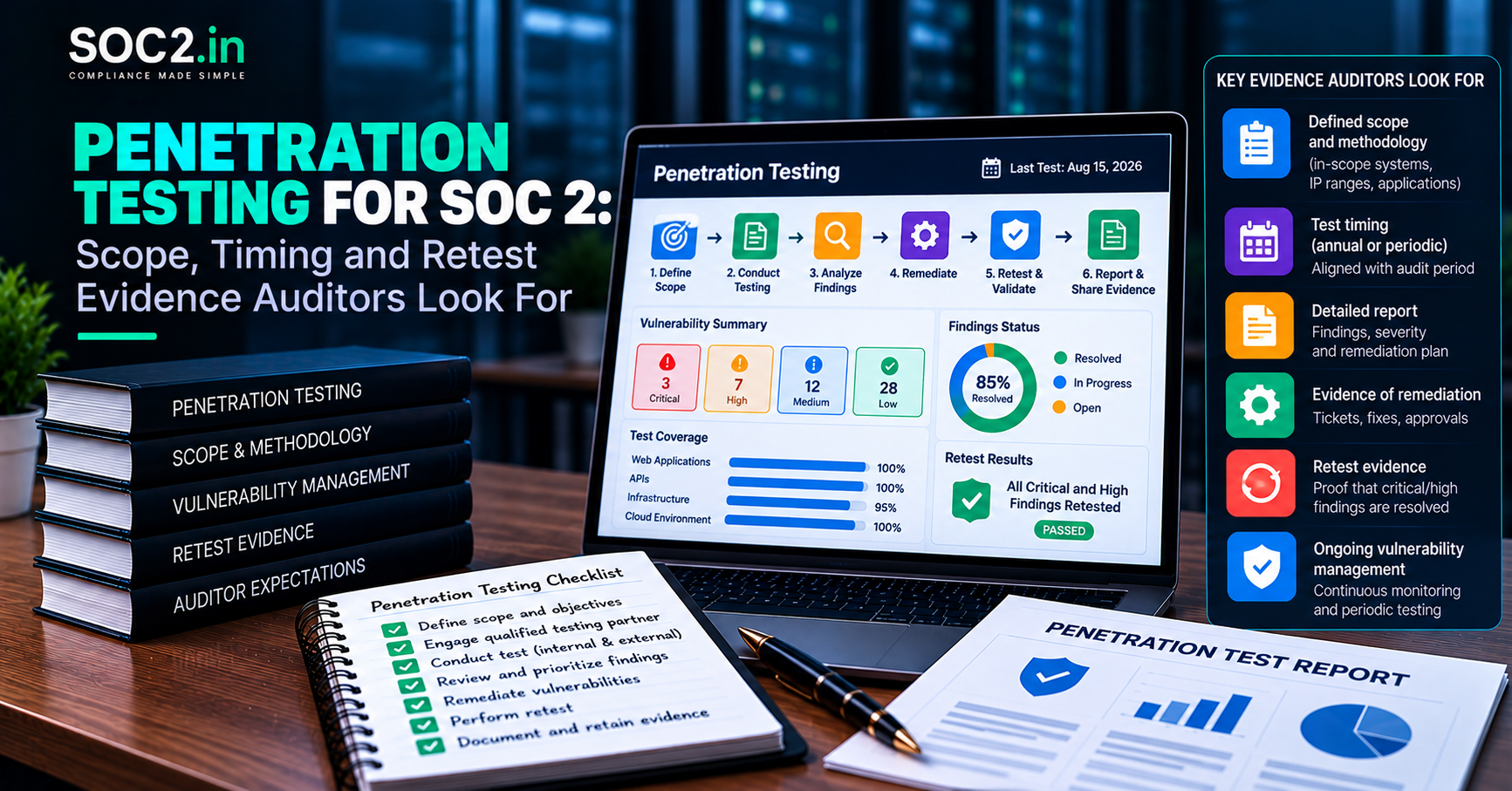
- Vulnerability management
- Incident handling procedures
Step 5: Automate Evidence Collection
This is where most solo founders save significant time.
Compliance platforms can automatically collect evidence from:
- GitHub
- AWS
- Google Workspace
- Microsoft 365
- Okta
- Azure
Automation reduces manual audit preparation dramatically.
Step 6: Start the Observation Period
SOC 2 Type II requires controls to operate over time.
Most observation periods range from:
- 3 months
- 6 months
- 12 months
During this period, continue:
- Monitoring controls
- Performing reviews
- Collecting evidence
Step 7: Complete the Audit
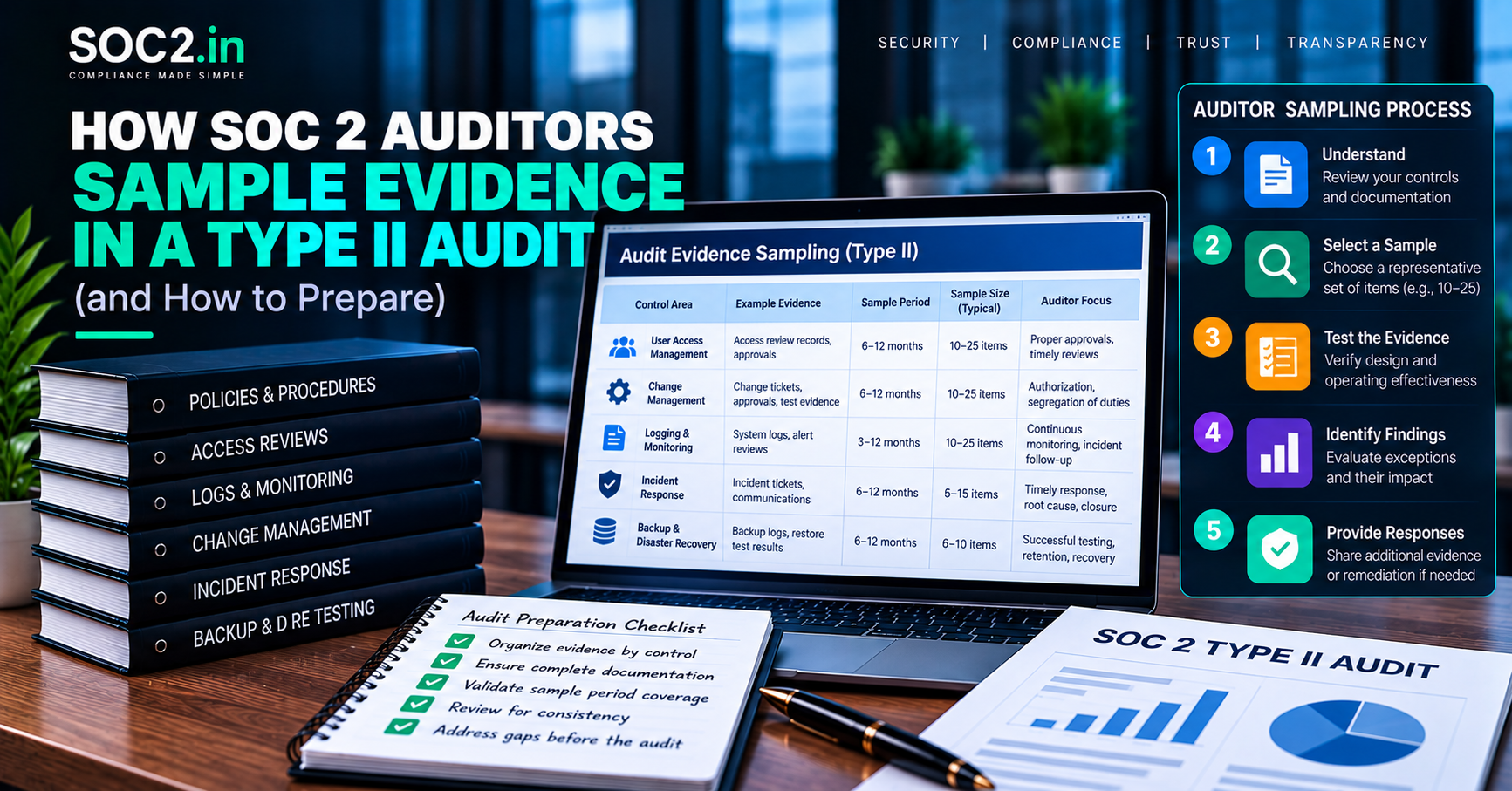
Once the observation period ends, auditors review:
- Policies
- Logs
- Monitoring evidence
- Security controls
- Operational records
A well-prepared solo founder can successfully complete the audit without a dedicated compliance team.
Recommended Tools for Solo Founders
Several tools can simplify SOC 2 compliance.
Compliance Automation
- Vanta
- Drata
- Sprinto
Password Management
- 1Password
- Bitwarden
Endpoint Security
- CrowdStrike
- SentinelOne
Cloud Security
- AWS Security Hub
- Microsoft Defender
The right tools can reduce hundreds of hours of manual work.
How Much Does SOC 2 Cost for a Solo Entrepreneur?
Costs vary depending on scope and infrastructure complexity.
Typical expenses include:
| Item | Estimated Cost |
|---|---|
| Readiness Assessment | $1,000–$5,000 |
| Compliance Platform | $2,000–$10,000 annually |
| Audit Fee | $5,000–$15,000 |
| Security Tools | Variable |
| Total Project Cost | $8,000–$30,000+ |
A focused scope can significantly reduce costs.
Common Mistakes Solo Founders Make
Waiting Until a Customer Demands SOC 2
Compliance projects take time.
Starting early reduces sales delays.
Overengineering Controls
Small companies often create unnecessarily complex processes.
Keep controls simple and effective.
Ignoring Documentation
If it isn’t documented, auditors may consider it incomplete.
Manual Evidence Collection
Manual processes increase workload and create audit stress.
Automation is usually worth the investment.
Expanding Scope Too Early
Audit only what is necessary.
Additional systems increase cost and complexity.
Benefits of Achieving SOC 2 as a Solo Founder
SOC 2 can create a competitive advantage even for small companies.
Benefits include:
- Faster enterprise sales
- Improved customer trust
- Stronger security posture
- Reduced vendor review friction
- Better operational maturity
Many enterprise buyers care more about security maturity than company size.
Is SOC 2 Worth It for a One-Person Business?
If your target customers include:
- Mid-market companies
- Enterprises
- Regulated industries
- Security-conscious buyers
then SOC 2 can provide significant value.
However, if you’re still validating your product or serving only small businesses, it may be worth delaying compliance until customer demand justifies the investment.
Final Thoughts
SOC 2 Type II is not reserved for large organizations.
With the right strategy, a solo entrepreneur can achieve compliance and compete effectively for enterprise business.
The key is focusing on:
- Practical controls
- Smart automation
- Clear documentation
- Continuous monitoring
A lean, well-structured security program often performs better than a complicated compliance environment.
SOC 2 is not about the size of your company.
It is about demonstrating that customer data is protected through consistent and reliable security practices.
For solo SaaS founders looking to grow into enterprise markets, SOC 2 Type II can become one of the most valuable investments in long-term business credibility and customer trust.