As cybersecurity and data privacy regulations continue to evolve, businesses handling sensitive information are expected to maintain strong compliance standards.
For SaaS companies, healthcare providers, cloud platforms, and digital health startups, two common frameworks often come into discussion:
Although both focus on protecting sensitive data, they serve very different purposes.
This creates a common question for growing businesses:
What is the difference between SOC 2 and HIPAA, and which one does your company actually need?
In this guide, we’ll explain:
- What SOC 2 and HIPAA are
- Their core differences
- Security and compliance requirements
- Audit and certification processes
- Which industries need each framework
- Whether businesses should implement both together
What is SOC 2?
SOC 2 is a cybersecurity compliance framework developed by the American Institute of Certified Public Accountants (AICPA).
It is designed primarily for service organizations and technology companies that store or process customer data.
SOC 2 focuses on how effectively a company protects information through operational security controls.
The framework is based on five Trust Services Criteria:
- Security
- Availability
- Confidentiality
- Processing Integrity
- Privacy
Most organizations primarily focus on the Security principle.
What is HIPAA?
HIPAA is a US healthcare regulation created to protect sensitive patient information.
It establishes rules for how healthcare organizations and their partners handle Protected Health Information (PHI).
HIPAA applies to:
- Healthcare providers
- Health insurance companies
- Healthcare clearinghouses
- Business associates handling healthcare data
The primary goal of HIPAA is protecting patient privacy and healthcare information security.
Core Difference Between SOC 2 and HIPAA
Although both frameworks involve cybersecurity and data protection, they are fundamentally different.
| Area | SOC 2 | HIPAA |
|---|---|---|
| Type | Compliance framework | Federal regulation |
| Industry Focus | SaaS & service organizations | Healthcare industry |
| Primary Goal | Security control assurance | Protection of PHI |
| Governing Authority | AICPA | US Department of Health & Human Services |
| Audit Output | SOC 2 report | HIPAA compliance validation |
| Applicability | Voluntary / customer-driven | Legally required for covered entities |
Understanding SOC 2 Compliance
SOC 2 evaluates whether an organization has implemented effective controls to protect customer information.
There are two common audit types:
SOC 2 Type I
Evaluates whether controls are properly designed at a specific point in time.
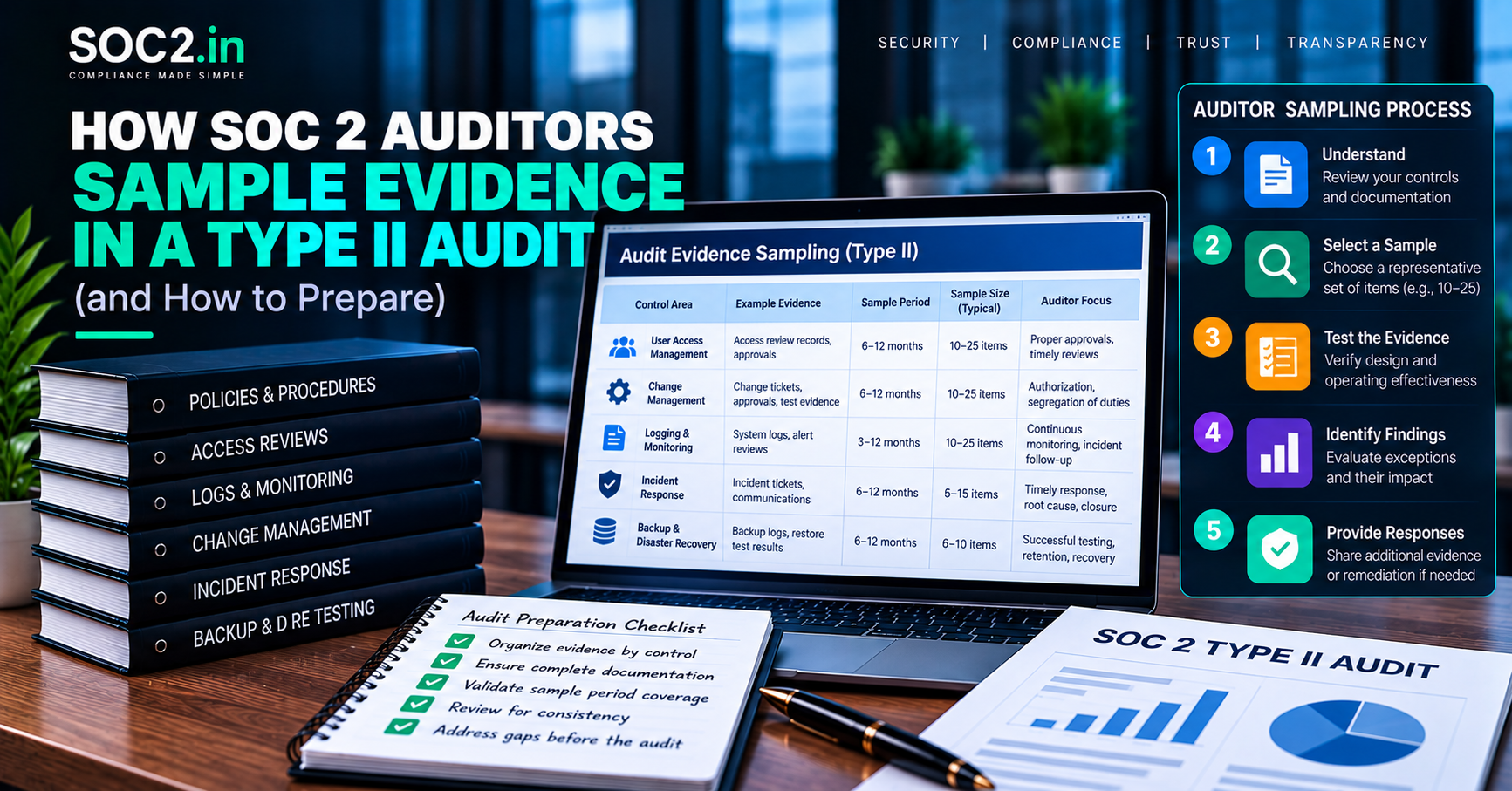
SOC 2 Type II
Evaluates whether controls operate effectively over a monitoring period.
SOC 2 Type II is generally preferred by enterprise customers because it demonstrates continuous operational maturity.
Understanding HIPAA Compliance
HIPAA compliance revolves around protecting Protected Health Information (PHI).
The regulation includes several major rules:
HIPAA Privacy Rule
Defines how patient information can be used and disclosed.
HIPAA Security Rule
Focuses on technical, administrative, and physical safeguards for electronic PHI (ePHI).
HIPAA Breach Notification Rule
Requires organizations to report certain data breaches involving PHI.
Unlike SOC 2, HIPAA is not simply a security framework. It is a legal requirement for applicable healthcare entities.
Who Needs SOC 2?
SOC 2 is commonly required for:
- SaaS companies
- Cloud providers
- Technology platforms
- Managed service providers
- Data processing companies
Enterprise customers often request SOC 2 reports during vendor onboarding and procurement reviews.
Who Needs HIPAA?
HIPAA applies to:
- Hospitals
- Clinics
- Telehealth platforms
- Healthcare software providers
- Insurance companies
- Healthcare business associates
Any organization handling PHI may need to comply with HIPAA requirements.
Main Similarities Between SOC 2 and HIPAA
Despite their differences, SOC 2 and HIPAA share several common security principles.
Both require:
- Access control
- Risk management
- Incident response processes
- Security monitoring
- Employee training
- Data protection practices
Many technical controls overlap significantly.
Key Differences Between SOC 2 and HIPAA
1. Regulatory Requirement vs Industry Standard
HIPAA is legally required for covered healthcare entities.
SOC 2 is generally market-driven and requested by customers or enterprise partners.
2. Industry Scope
SOC 2 applies across many industries.
HIPAA specifically focuses on healthcare-related organizations and PHI protection.
3. Audit and Certification Process
SOC 2 involves independent audits conducted by CPA firms.
HIPAA does not provide official certification in the same way. Organizations must demonstrate compliance with legal requirements.
4. Focus Area
SOC 2 focuses broadly on operational security controls.
HIPAA focuses specifically on protecting healthcare information and patient privacy.
5. Geographic Relevance
HIPAA applies primarily within the United States healthcare sector.
SOC 2 is widely recognized across global SaaS and technology markets.
Can a Company Need Both SOC 2 and HIPAA?
Yes, many healthcare technology companies implement both frameworks.
For example:
- Telehealth SaaS platforms
- Healthcare cloud providers
- Medical software companies
may require:
- HIPAA compliance for healthcare regulations
- SOC 2 for enterprise customer trust and vendor reviews
Benefits of Combining SOC 2 and HIPAA
Organizations implementing both can achieve:
- Stronger security posture
- Better healthcare compliance maturity
- Faster enterprise onboarding
- Improved customer confidence
- Reduced vendor security concerns
Many security controls can support both frameworks simultaneously.
Shared Controls Between SOC 2 and HIPAA
Common overlapping areas include:
- Identity and access management
- Encryption
- Incident response
- Risk assessment
- Security awareness training
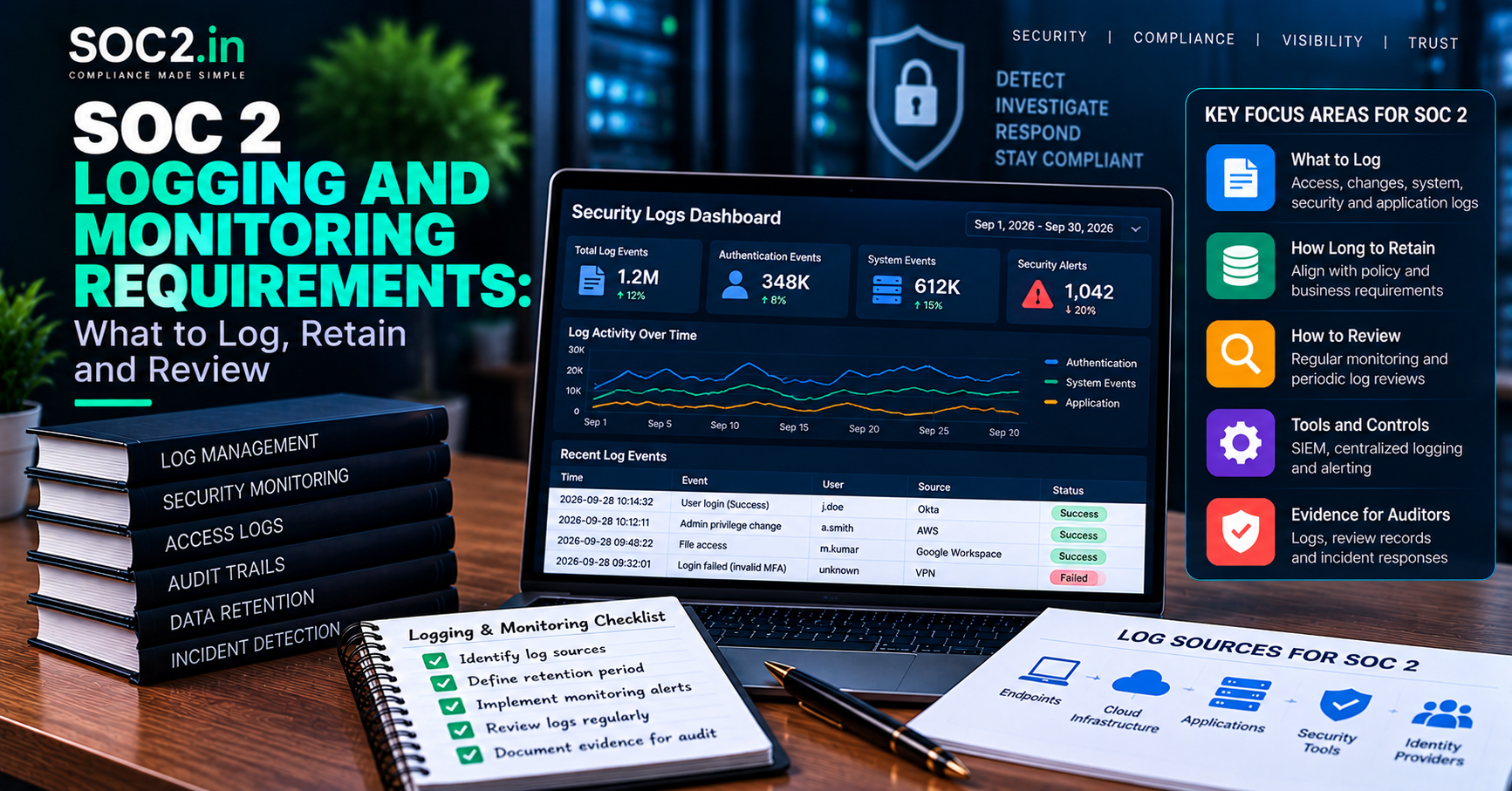
- Logging and monitoring
A unified compliance approach helps reduce duplicate work.
Common Challenges Businesses Face
Misunderstanding Scope
Some businesses incorrectly assume SOC 2 automatically covers HIPAA requirements.
It does not.
Weak Documentation
Policies and procedures must align with operational practices.
Inconsistent Monitoring
Both frameworks require ongoing security management, not one-time implementation.
Vendor Risks
Third-party vendors handling PHI or customer data must also be evaluated properly.
Which One Should Your Business Choose?
Choose SOC 2 if:
- You are a SaaS or cloud service provider
- Enterprise clients request security assurance
- You want stronger vendor trust
- Your focus is operational cybersecurity maturity
Choose HIPAA if:
- You handle Protected Health Information (PHI)
- You operate in the healthcare industry
- You are legally required to protect patient data
Choose Both if:
- You are a healthcare technology company
- You serve enterprise healthcare clients
- You manage healthcare SaaS platforms
- You need both legal compliance and customer trust
SOC 2 vs HIPAA Cost Comparison
Implementation costs vary based on:
- Company size
- Infrastructure complexity
- Existing security maturity
- Scope of systems and applications
HIPAA often requires additional healthcare-specific controls and legal oversight.
SOC 2 generally involves:
- Compliance consulting
- Audit fees
- Continuous evidence collection
Organizations implementing both together can often reduce duplicate implementation effort.
Final Thoughts
SOC 2 and HIPAA are not competing standards. They solve different security and compliance challenges.
- SOC 2 demonstrates operational security maturity
- HIPAA protects patient privacy and healthcare data
For healthcare technology companies, implementing both frameworks together often provides the strongest long-term security and compliance strategy.
The right choice depends on:
- Your industry
- Customer requirements
- Regulatory obligations
- Long-term growth strategy
Businesses that build scalable compliance programs early are better positioned for growth, customer trust, and enterprise partnerships.
Need Help with SOC 2 or HIPAA Compliance?
Whether you’re preparing for SOC 2, HIPAA, or a combined healthcare compliance strategy, the right approach can simplify implementation and improve audit readiness.
- Assess your security posture
- Identify compliance gaps
- Build scalable security controls
- Streamline documentation and monitoring
Strong compliance programs help organizations protect sensitive data, strengthen customer confidence, and grow securely in regulated industries.