As organizations increasingly store and process sensitive customer data, demonstrating strong security practices has become a business necessity. Enterprise customers, partners, and regulators expect organizations to prove that they have effective controls in place to protect information. One of the most recognized ways to provide this assurance is through a SOC 2 audit.
Whether you’re a SaaS company, cloud service provider, managed service provider (MSP), FinTech business, or healthcare technology organization, understanding what is required in an SOC 2 audit can help you prepare efficiently and avoid costly delays.
What Is an SOC 2 Audit?
A SOC 2 audit is an independent assessment performed by a licensed CPA firm to evaluate whether an organization has implemented appropriate controls to protect customer data. The audit is based on the SOC 2 Trust Services Criteria (TSC) developed by the American Institute of Certified Public Accountants (AICPA).
Every SOC 2 audit includes the Security criterion, while Availability, Processing Integrity, Confidentiality, and Privacy may be included depending on the organization’s services and customer requirements.
Key Requirements of an SOC 2 Audit
1. Clearly Define the Audit Scope
The audit begins by identifying which systems, applications, cloud infrastructure, services, and business processes will be included. A well-defined scope ensures that the audit focuses on the systems responsible for handling customer data.
2. Implement Security Controls
Organizations must establish technical and administrative controls that protect sensitive information.
Common controls include:
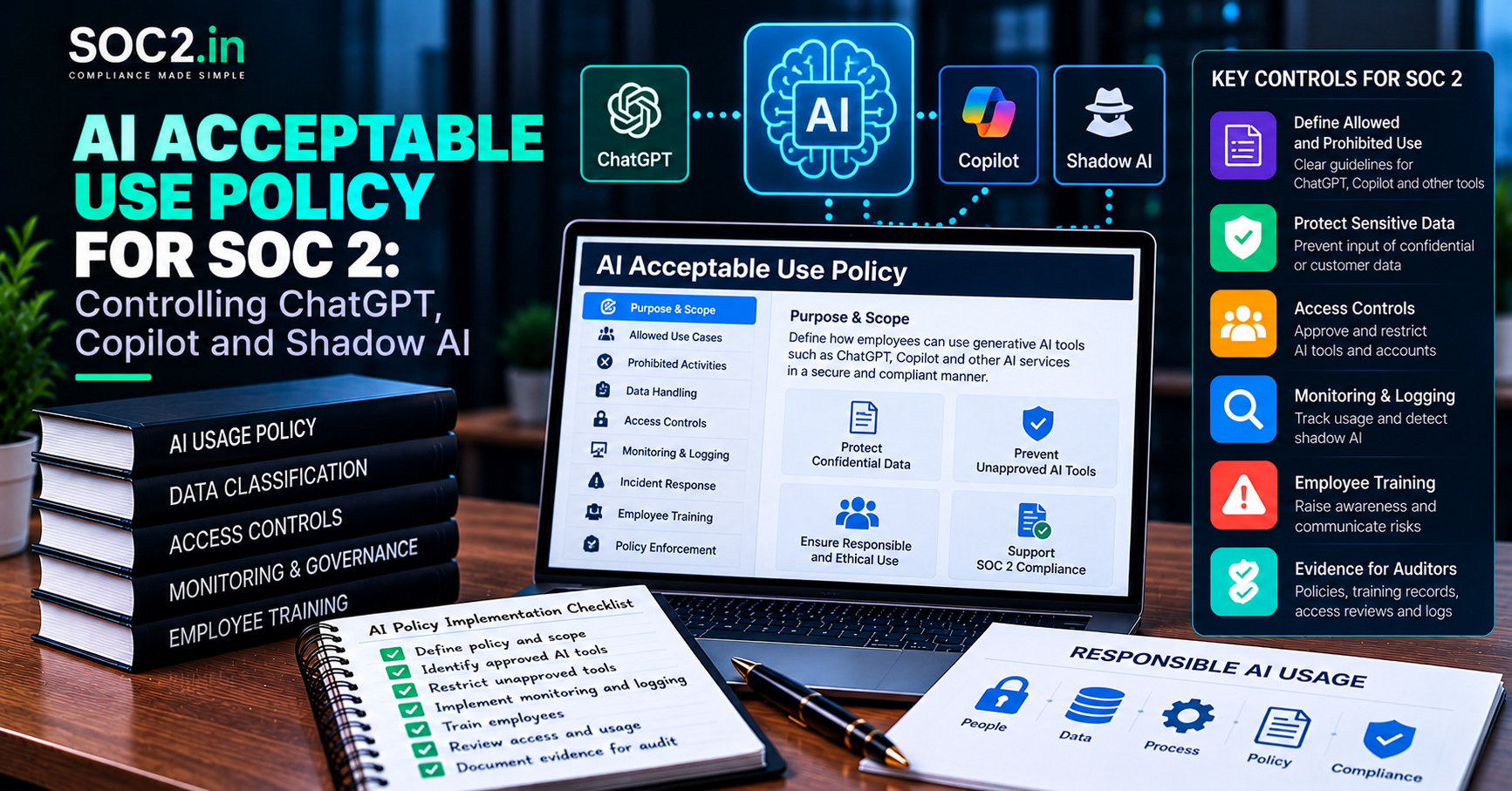
- Multi-Factor Authentication (MFA)
- Role-Based Access Control (RBAC)
- Least Privilege Access
- Data encryption
- Endpoint protection
- Network security
- Secure configuration management
These controls help prevent unauthorized access and reduce cybersecurity risks.
3. Maintain Security Policies
SOC 2 auditors review documented policies to confirm that the organization follows consistent security practices.
Typical policies include:
- Information Security Policy
- Access Control Policy
- Password Policy
- Incident Response Plan
- Vendor Management Policy
- Change Management Policy
- Business Continuity Plan
- Disaster Recovery Plan
Policies should reflect actual business operations and be reviewed regularly.
4. Conduct Risk Assessments
Organizations must identify and evaluate security risks that could impact customer data or business operations.
A documented risk assessment should include:
- Risk identification
- Likelihood and impact analysis
- Mitigation strategies
- Periodic reviews
Regular risk assessments demonstrate a proactive approach to information security.
5. Monitor Systems Continuously
Continuous monitoring is an important part of SOC 2 compliance.
Auditors typically review:
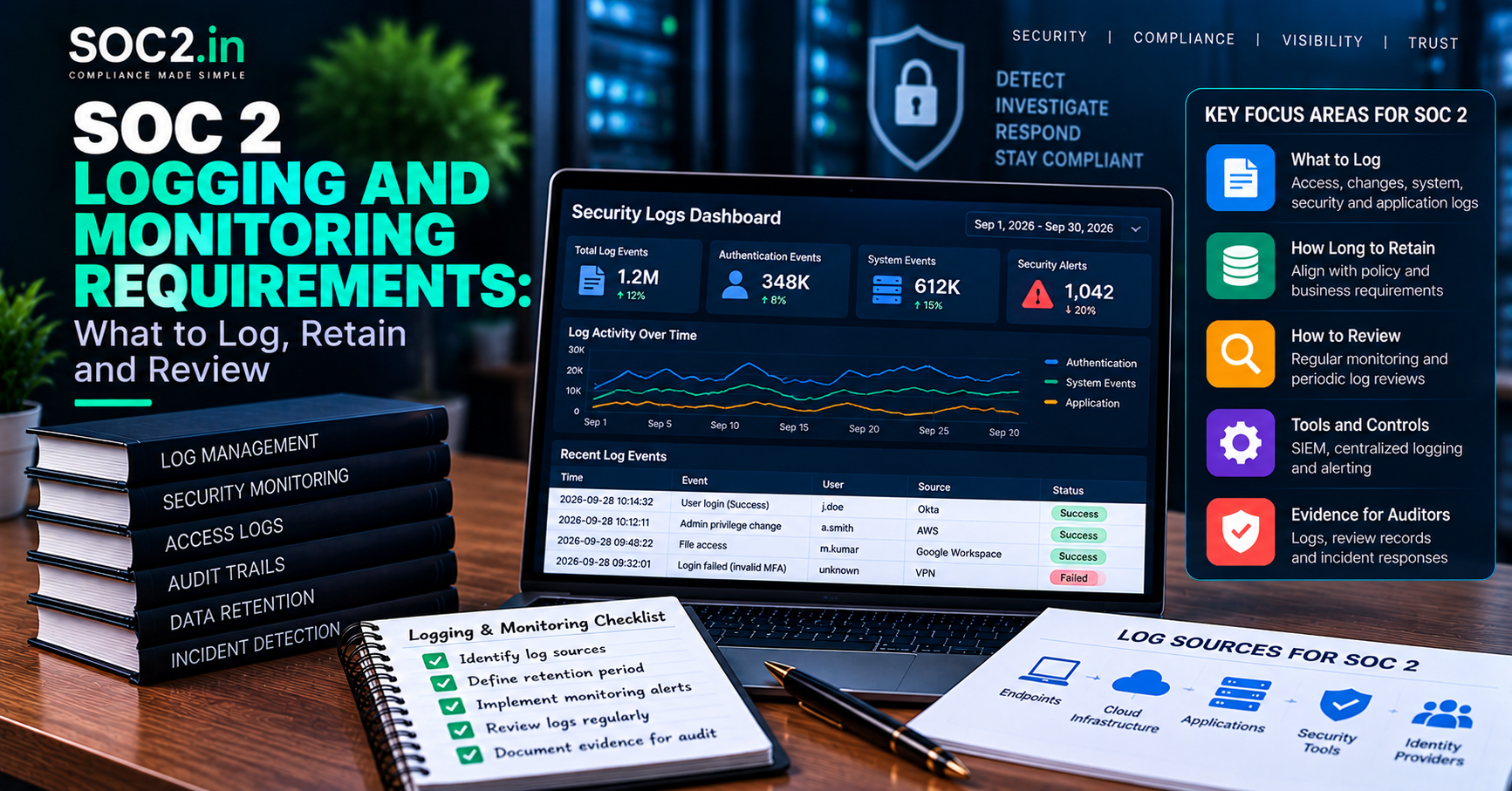
- Security logs
- System monitoring
- Security alerts
- Endpoint monitoring
- Log retention practices
Monitoring helps detect suspicious activity and supports timely incident response.
6. Manage Vulnerabilities
Organizations should have a formal process for identifying and addressing vulnerabilities.
This includes:
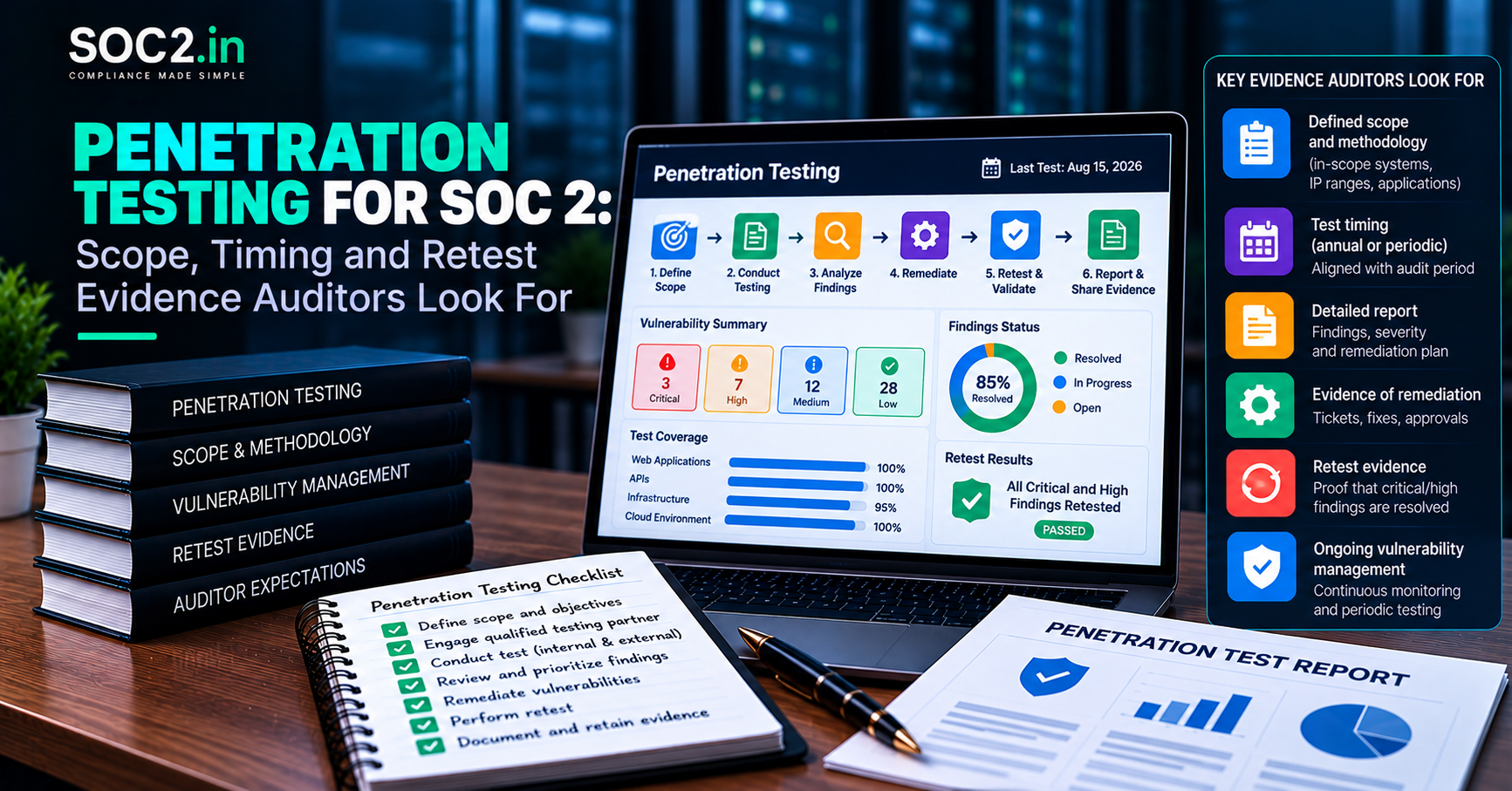
- Vulnerability scanning
- Penetration testing
- Patch management
- Remediation tracking
Auditors expect evidence that vulnerabilities are reviewed and resolved promptly.
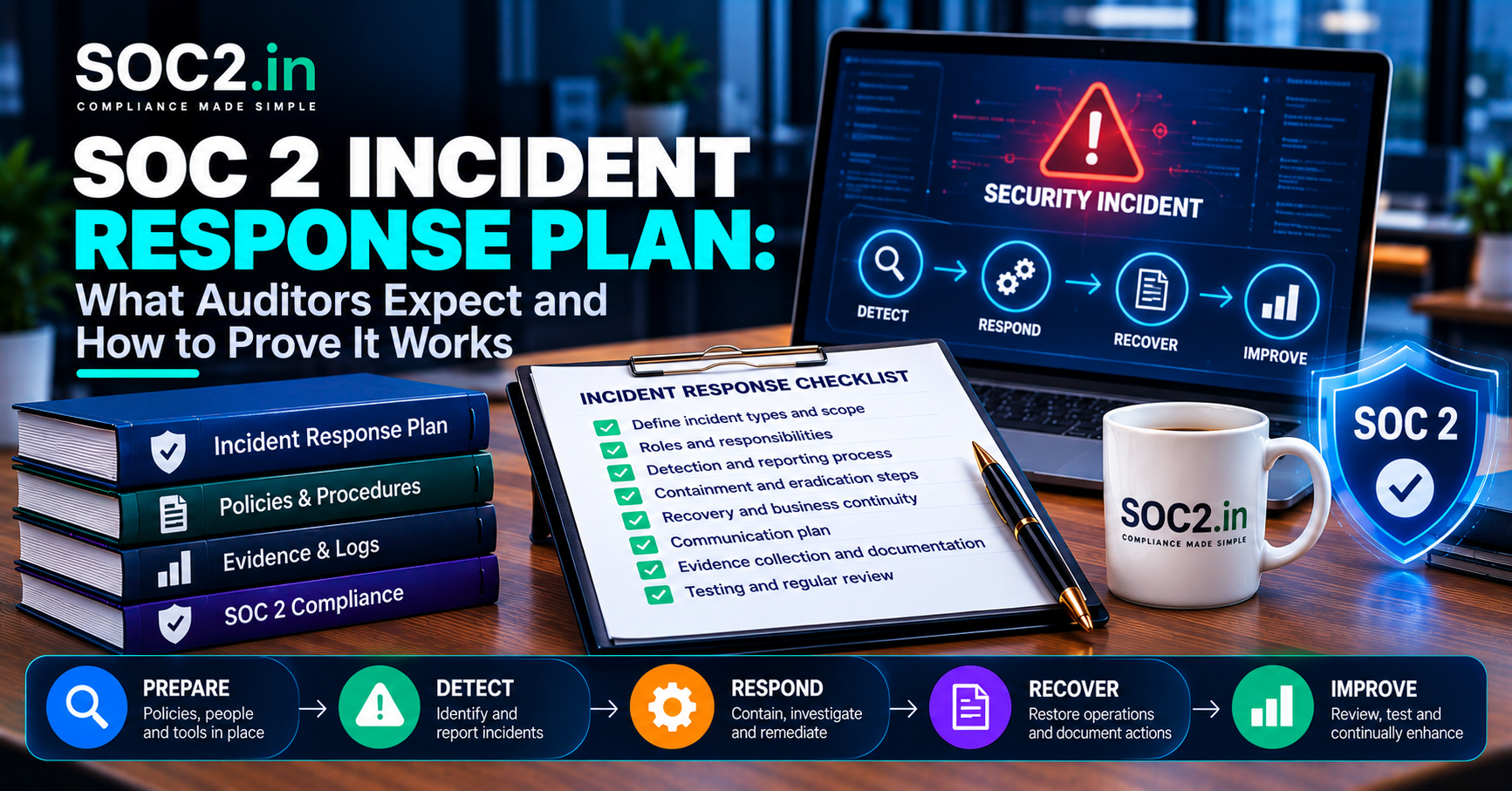
7. Prepare an Incident Response Program
A documented incident response process is essential.
Organizations should maintain:
- Incident Response Policy
- Escalation procedures
- Investigation process
- Recovery procedures
- Incident records
Testing the incident response plan periodically demonstrates operational readiness.
8. Review Third-Party Vendors
Third-party vendors often have access to critical systems or customer information.
SOC 2 auditors typically review:
- Vendor inventory
- Security assessments
- Contracts
- Vendor monitoring
- Third-party SOC reports, when available
Effective vendor risk management reduces supply chain risks.
9. Train Employees
People play a critical role in maintaining security.
Organizations should provide regular security awareness training covering topics such as phishing, password security, data protection, social engineering, and incident reporting.
Training records are commonly requested during the audit.
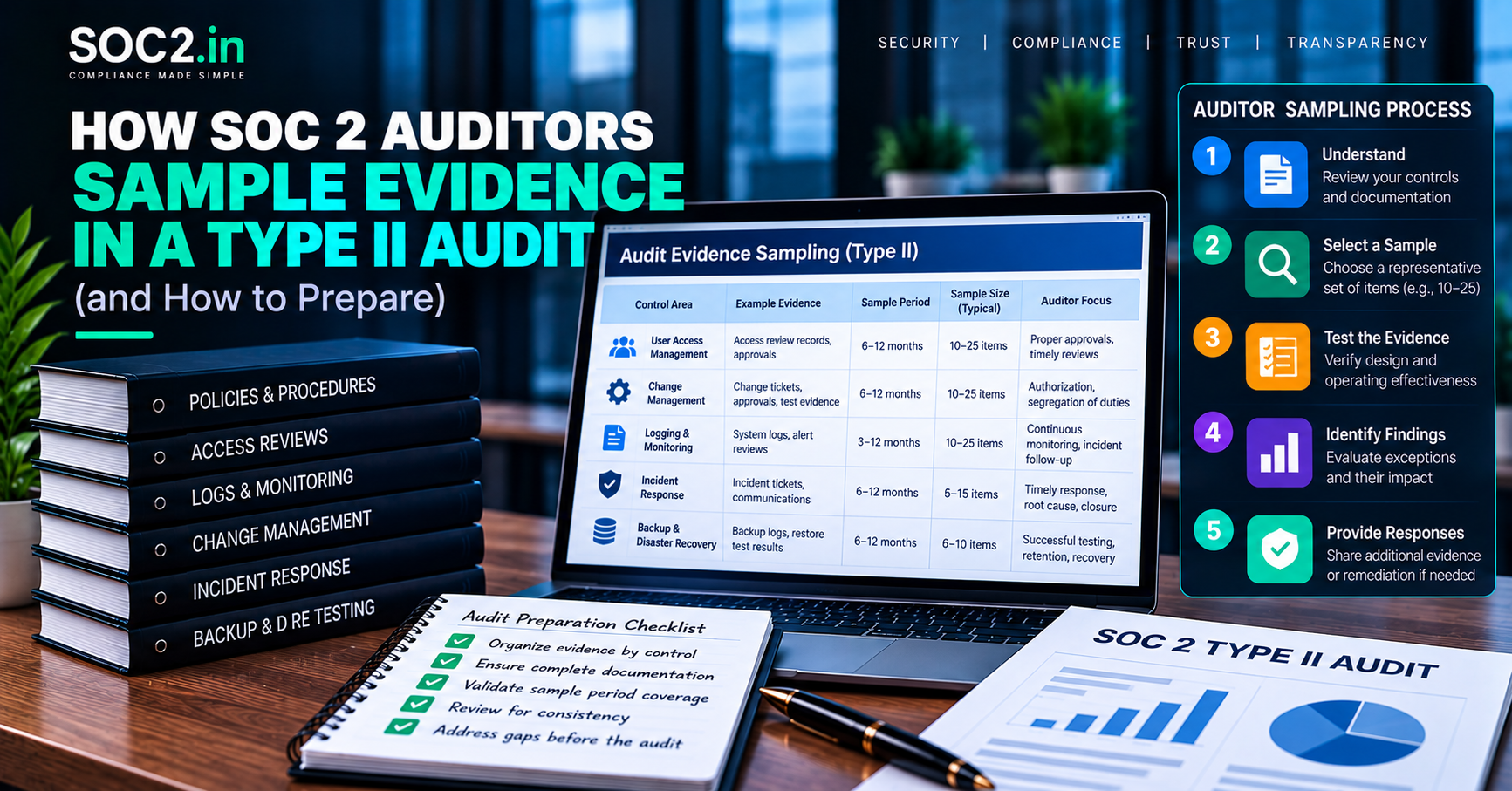
10. Collect Audit Evidence
Evidence is one of the most important components of a SOC 2 audit.
Examples include:
- Security policies
- Risk assessments
- Access review reports
- Employee training records
- Vulnerability scan reports
- Incident logs
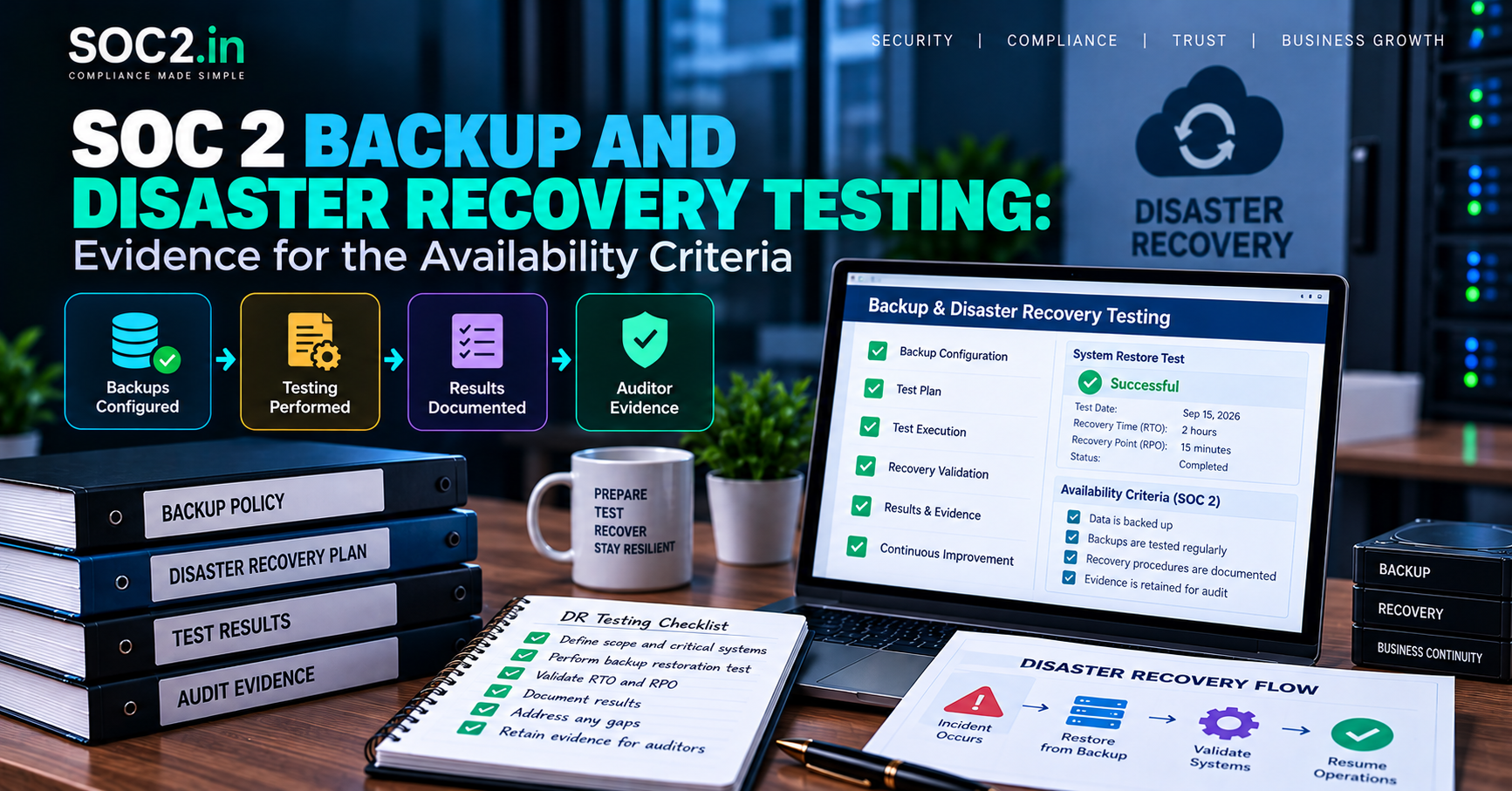
- Backup testing results
- Change management records
Maintaining evidence throughout the year simplifies the audit process.
SOC 2 Type I vs. Type II
A SOC 2 Type I audit evaluates whether your controls are appropriately designed at a specific point in time.
A SOC 2 Type II audit goes further by assessing whether those controls operated effectively over a defined observation period, typically between 3 and 12 months. Because it demonstrates ongoing control effectiveness, many enterprise customers prefer a Type II report.
Best Practices for a Successful SOC 2 Audit
Preparing early can significantly improve your audit experience.
Best practices include:
- Conduct a SOC 2 Readiness Assessment before the audit.
- Define your audit scope clearly.
- Keep policies current and approved.
- Review user access regularly.
- Monitor security controls continuously.
- Perform periodic risk assessments.
- Organize audit evidence in a central repository.
- Train employees on security responsibilities.
- Test incident response and disaster recovery plans.
Treating compliance as an ongoing process rather than a one-time project makes future audits easier and strengthens your overall security program.
Conclusion
A successful SOC 2 audit requires much more than installing security software. Organizations must demonstrate that they have effective controls, documented policies, ongoing risk management, trained employees, and evidence showing that these controls operate consistently. By preparing in advance through a readiness assessment and maintaining continuous compliance, businesses can reduce audit challenges, improve cybersecurity, and build lasting trust with customers. More importantly, a SOC 2 audit helps organizations create a stronger security culture that supports long-term growth and resilience.
Frequently Asked Questions
1. What is the most important requirement in a SOC 2 audit?
The Security Trust Services Criterion is mandatory and forms the foundation of every SOC 2 audit.
2. Is a readiness assessment required before the audit?
It isn’t mandatory, but it is highly recommended because it helps identify and fix compliance gaps before the official audit.
3. How long does a SOC 2 audit take?
A Type I audit can often be completed within a few weeks, while a Type II audit includes an observation period of three to twelve months.
4. What evidence do auditors request?
Common evidence includes policies, risk assessments, access reviews, security logs, vulnerability reports, incident records, and employee training documentation.
5. Who should undergo a SOC 2 audit?
SOC 2 is ideal for SaaS companies, cloud service providers, MSPs, FinTech organizations, healthcare technology companies, and any business that stores or processes customer data.