In the modern digital world, businesses rely heavily on cloud services and SaaS platforms to manage operations and store customer data. As organizations increasingly handle sensitive information online, cybersecurity has become a top priority.
To address this challenge, several cybersecurity frameworks have been developed to guide organizations in implementing strong security controls. One of the most important frameworks for technology and SaaS companies is SOC 2 compliance.
SOC 2 helps organizations prove that they follow strict security practices when handling customer data. It ensures that companies implement proper systems and controls to protect information from unauthorized access, misuse, or breaches.
What is SOC 2?
SOC 2, short for Service Organization Control Type 2, is a cybersecurity compliance framework developed by the American Institute of Certified Public Accountants (AICPA).
The primary goal of SOC 2 is to ensure that service providers manage customer data securely. It focuses on organizations that store or process client data in cloud environments, such as SaaS platforms, data hosting providers, and technology companies.
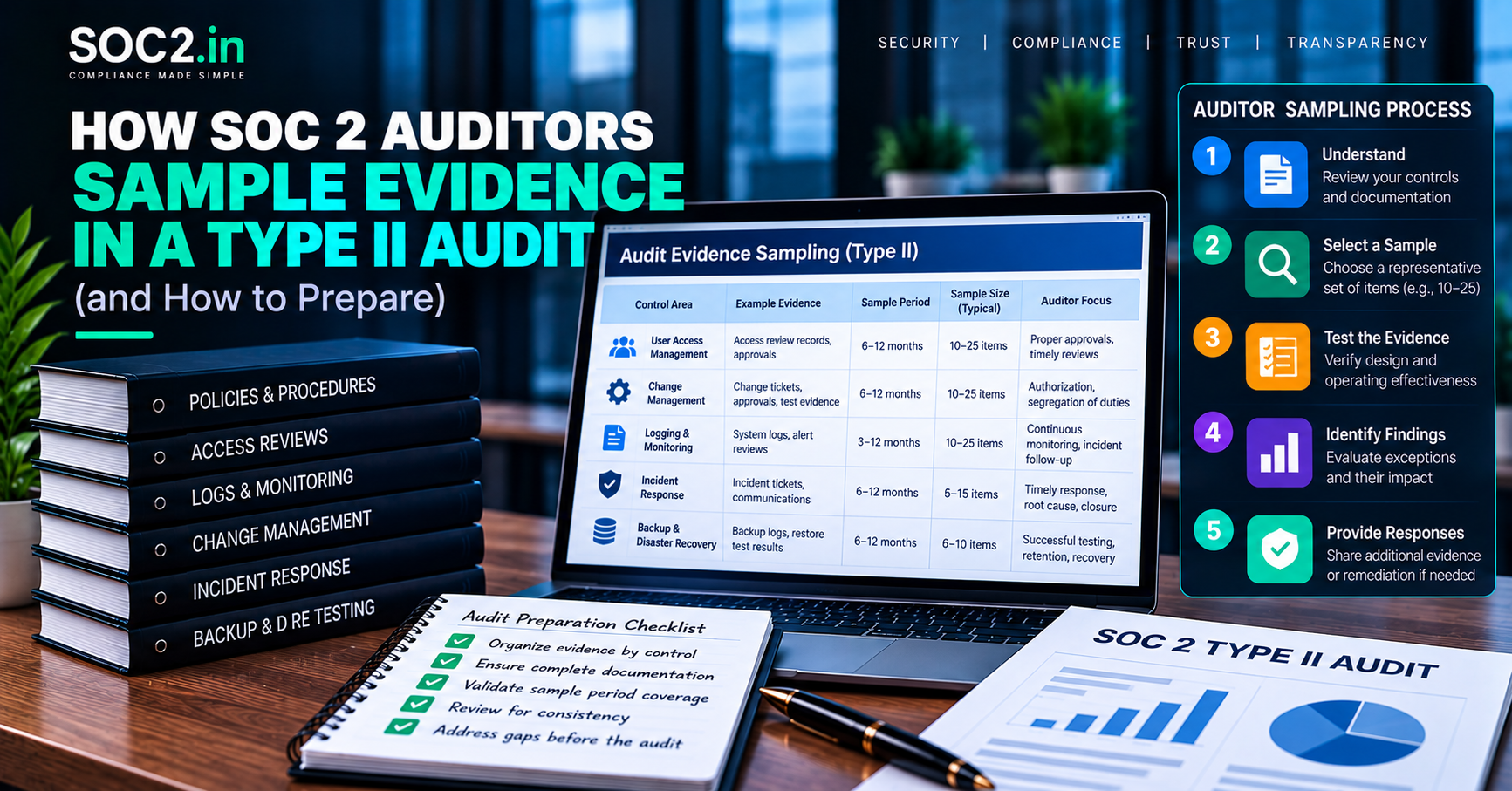
SOC 2 compliance evaluates whether a company has implemented effective controls to protect customer information. These controls are assessed through an independent audit performed by certified auditors.
The framework is built around five Trust Service Principles, which define how organizations should manage data security and privacy.
SOC 2 Principles Explained
Unlike many compliance standards that follow a fixed checklist, SOC 2 allows organizations to design their own controls based on their systems and operations. However, these controls must support the five Trust Service Criteria.
1. Security
Security is the core principle of SOC 2 and is mandatory for every SOC 2 audit. It ensures that systems and data are protected from unauthorized access.
Organizations must implement security measures such as:
• Identity and access management systems
• Firewalls and network security controls
• Multi-factor authentication
• Intrusion detection systems
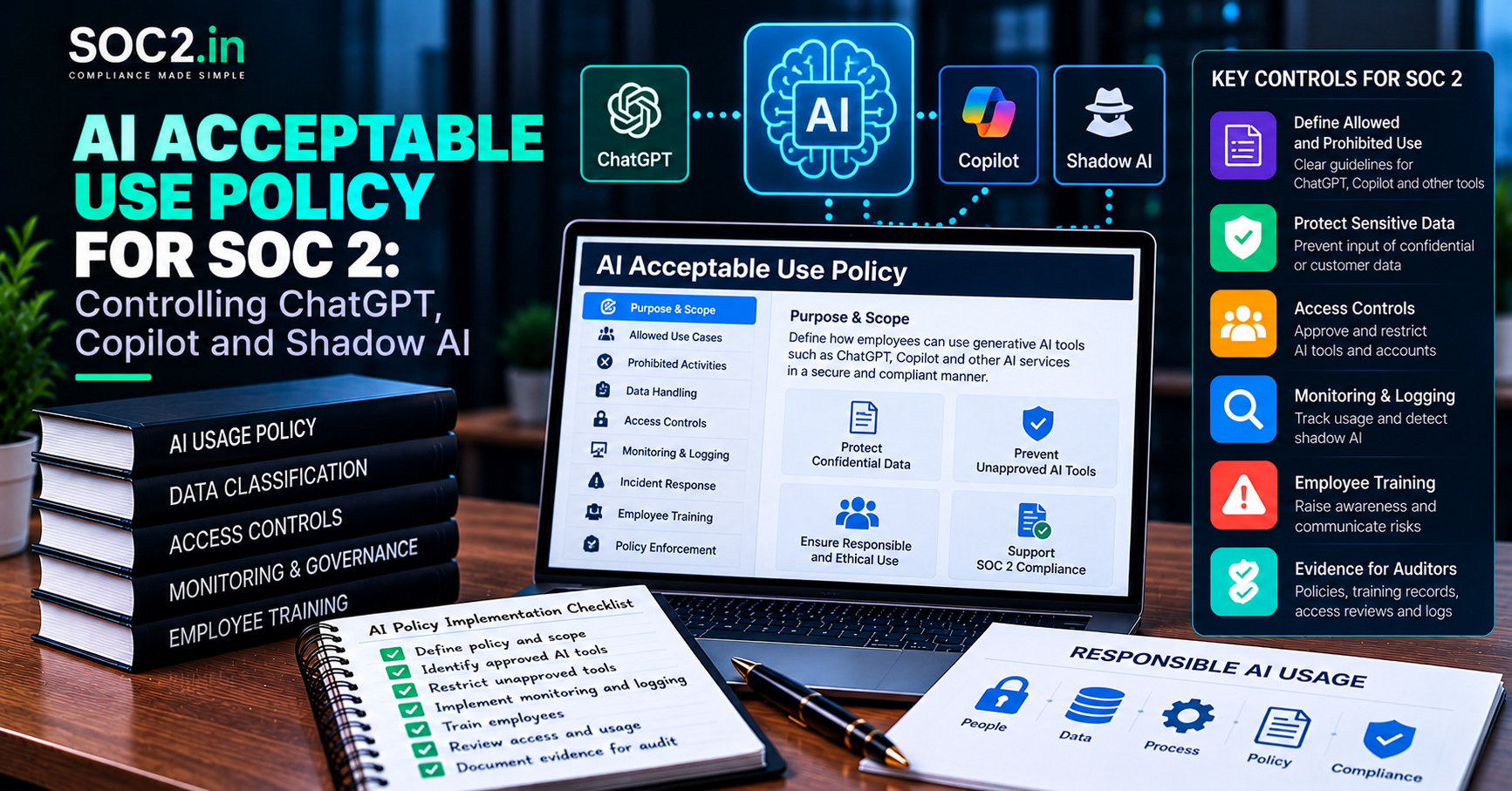
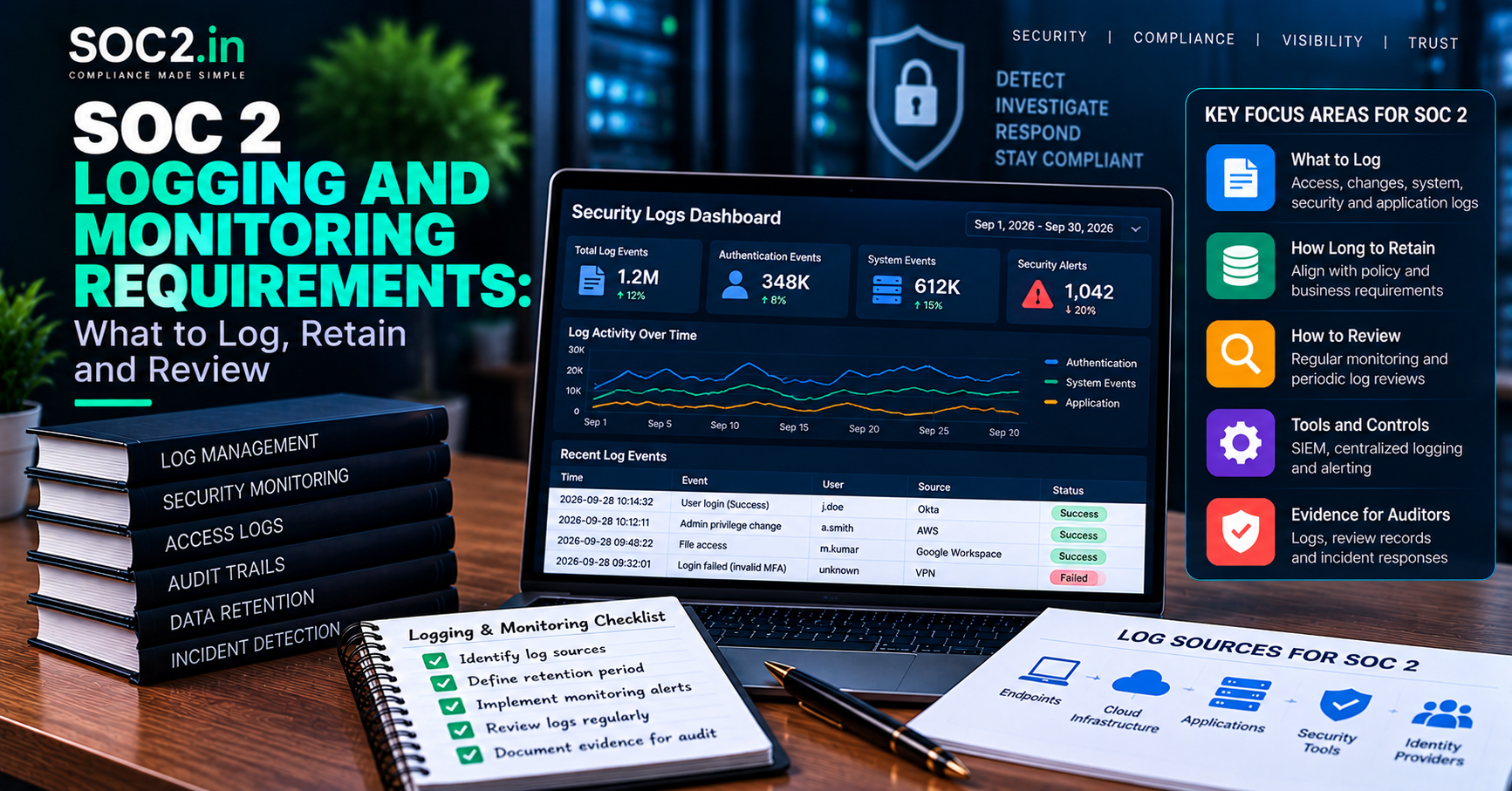
• Monitoring and logging mechanisms
These controls help prevent cyberattacks and unauthorized data access.
2. Confidentiality
Confidential data includes information that should only be accessed by authorized individuals. Examples include application source code, passwords, financial records, and intellectual property.
To comply with the confidentiality principle, organizations should:
• Encrypt sensitive data at rest and in transit
• Apply strict access controls
• Follow the principle of least privilege
• Implement secure data handling processes
These measures help ensure that confidential information remains protected.
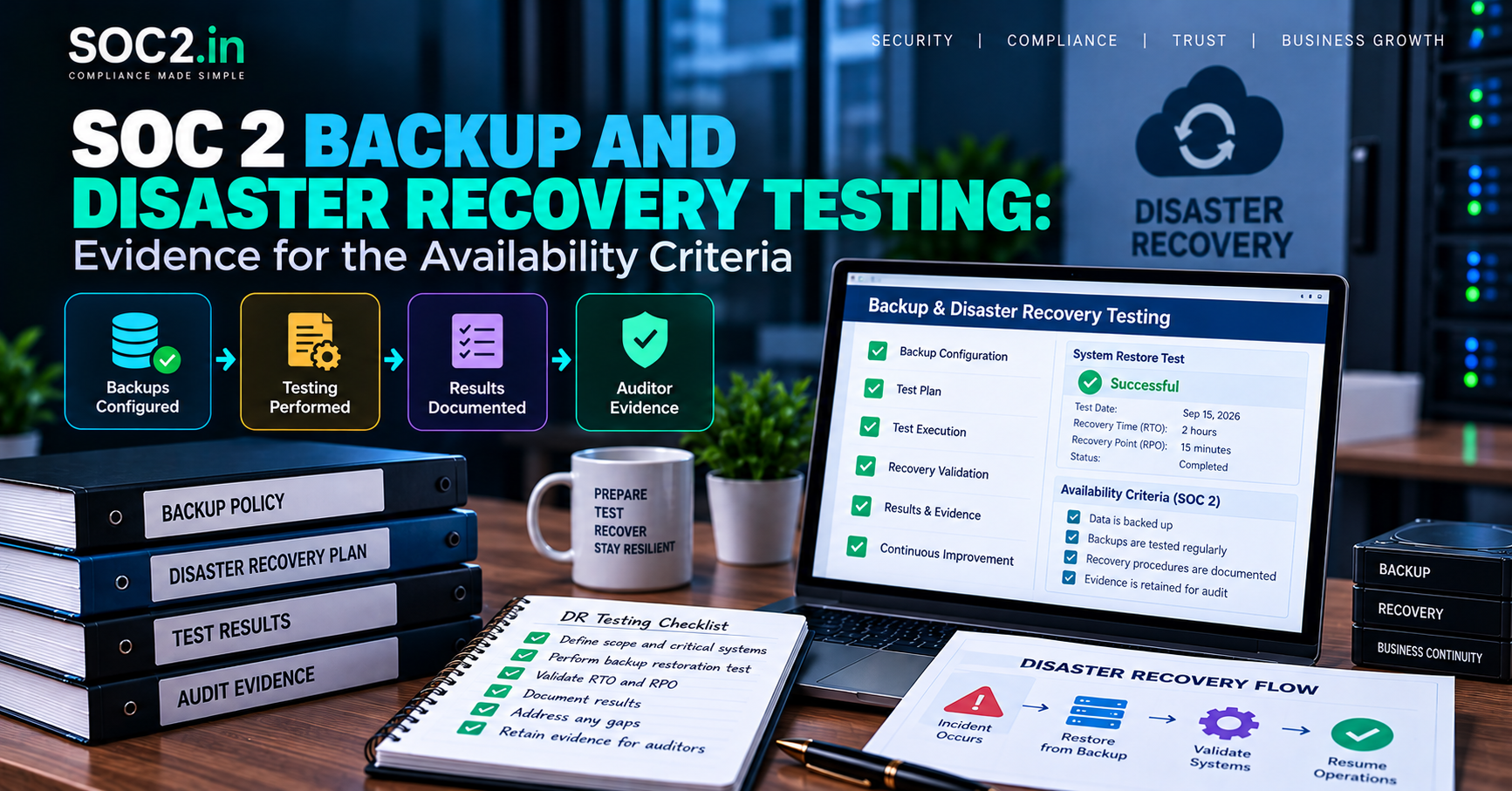
3. Availability
The availability principle focuses on system performance and uptime. Systems must remain accessible and operational according to service-level agreements (SLAs).
To maintain availability, organizations should implement:
• Fault-tolerant infrastructure
• System monitoring tools
• Backup solutions
• Disaster recovery planning
• Performance management systems
These practices ensure that services remain reliable even during high demand or unexpected failures.
4. Privacy
Privacy focuses on how organizations collect, use, store, and dispose of personal data. It ensures that personally identifiable information (PII) is handled according to privacy policies and regulations.
Examples of PII include:
• Name
• Phone number
• Email address
• Payment information
• Identification numbers
Companies must implement strong controls to ensure that personal data is not misused or accessed by unauthorized individuals.
5. Processing Integrity
Processing integrity ensures that systems operate correctly and deliver accurate results. Data must be processed completely, accurately, and without errors.
Organizations can maintain processing integrity through:
• Quality assurance processes
• Automated monitoring systems
• Error detection mechanisms
• Performance monitoring tools
These controls ensure that systems function as intended and produce reliable outputs.
SOC 2 Type 1 vs Type 2
SOC 2 compliance reports are categorized into two types: Type 1 and Type 2.
SOC 2 Type 1
A SOC 2 Type 1 report evaluates whether an organization has properly designed security controls at a specific point in time.
It confirms that the company has the necessary processes and systems in place to protect data.
However, it does not evaluate how those controls perform over time.
SOC 2 Type 2
SOC 2 Type 2 is more comprehensive. It evaluates not only the design of controls but also their operational effectiveness over a period of time, usually 6 to 12 months.
This type of report provides stronger assurance to customers because it demonstrates that security controls work consistently in real-world operations.
Most enterprise clients prefer vendors with SOC 2 Type 2 certification.
SOC 1 vs SOC 2 vs SOC 3
SOC reports are divided into three main categories depending on their purpose and audience.
| Feature | SOC 1 | SOC 2 | SOC 3 |
|---|---|---|---|
| Purpose | Focuses on financial reporting controls | Focuses on data security and operational controls | Public summary of SOC 2 compliance |
| Audience | Auditors and financial regulators | Customers, partners, and stakeholders | General public |
| Example | Financial data processing companies | SaaS and cloud service providers | Public marketing version of SOC 2 |
SOC 2 is the most relevant framework for technology companies that store and process sensitive customer data.
SOC 3 reports are often used as marketing material to demonstrate compliance publicly.
Benefits of an SOC 2 Audit
Achieving SOC 2 compliance offers several advantages for organizations that handle sensitive data.
Improved Security Posture
SOC 2 requires organizations to implement strong security controls, which helps improve their overall cybersecurity maturity.
Increased Customer Trust
When a company is SOC 2 compliant, customers feel confident that their data is handled securely.
Competitive Advantage
Many enterprise clients require SOC 2 compliance before signing contracts with vendors. Having SOC 2 certification helps businesses win larger deals.
Alignment with Other Compliance Standards
SOC 2 requirements often overlap with other frameworks such as ISO 27001, HIPAA, and GDPR, which can simplify compliance efforts across multiple standards.
Reduced Risk of Data Breaches
By implementing strong security controls and monitoring systems, organizations reduce the risk of cyber incidents and data breaches.
SOC 2 Compliance and Identity and Access Management (IAM)
Identity and Access Management (IAM) plays a critical role in achieving SOC 2 compliance.
IAM solutions help organizations control who can access systems and data. This is essential for enforcing the security, confidentiality, and privacy principles of SOC 2.
Modern IAM platforms provide features such as:
• Multi-factor authentication
• Identity federation
• Password management
• Access lifecycle management
• Role-based access control
These capabilities help organizations maintain strict access policies and protect sensitive information.
Why SOC 2 Compliance Matters for SaaS Companies
SOC 2 compliance demonstrates that an organization takes data protection seriously. For SaaS providers and cloud companies, this is especially important because customers rely on them to safeguard critical business data.
When evaluating a SaaS provider, SOC 2 compliance should be one of the top security indicators that customers look for.
Organizations that achieve SOC 2 certification not only strengthen their cybersecurity posture but also build long-term trust with clients and partners.
Conclusion
SOC 2 has become one of the most important cybersecurity compliance frameworks for technology companies. By following the five trust service principles and undergoing independent audits, organizations can prove that their systems and processes protect customer data effectively.
Whether you are a SaaS provider, cloud service company, or technology startup, achieving SOC 2 compliance helps strengthen security practices, enhance credibility, and open doors to new business opportunities.
As cyber threats continue to grow, frameworks like SOC 2 will remain essential for maintaining trust in the digital ecosystem.