The Modern Compliance Gate: Why SOC 2 Type II is Non-Negotiable
In the cloud-first economy, trust is your most valuable currency. If your organization handles customer data—whether through a SaaS application, managed services, or data storage—your partners and customers will demand proof that your security controls are effective.
That proof comes in the form of the SOC 2 Type II report.
This audit is far more than a checklist; it’s a deep, observational dive into your operational controls over a sustained period. While intimidating, preparation is the key to minimizing stress and ensuring a smooth outcome.
This guide breaks down exactly what to expect, from initial scoping to the final report.
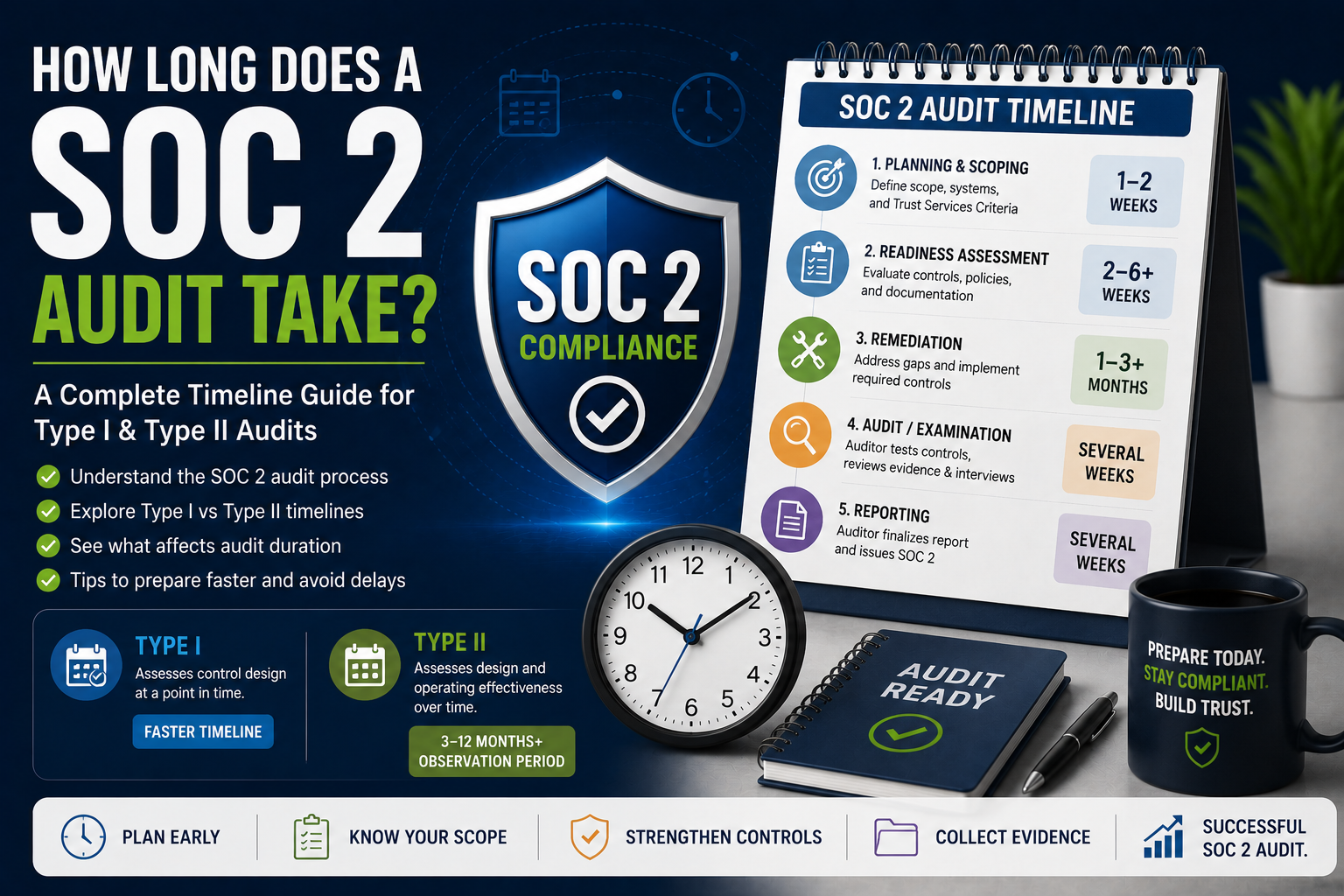
1. Type I vs. Type II: Understanding the Commitment
Before diving in, let’s clarify the “Type II” commitment:
- SOC 2 Type I: A report on the design of your controls at a specific point in time (e.g., January 1st). It confirms what controls you say you have in place.
- SOC 2 Type II: A report on the operating effectiveness of your controls over a period of time, typically 6 to 12 months. It confirms what controls you actually do every day.
The Type II audit is the gold standard because it proves consistency and rigor. The observation period is the main source of documentation and evidence.
2. Pre-Audit Phase: The 80% Rule
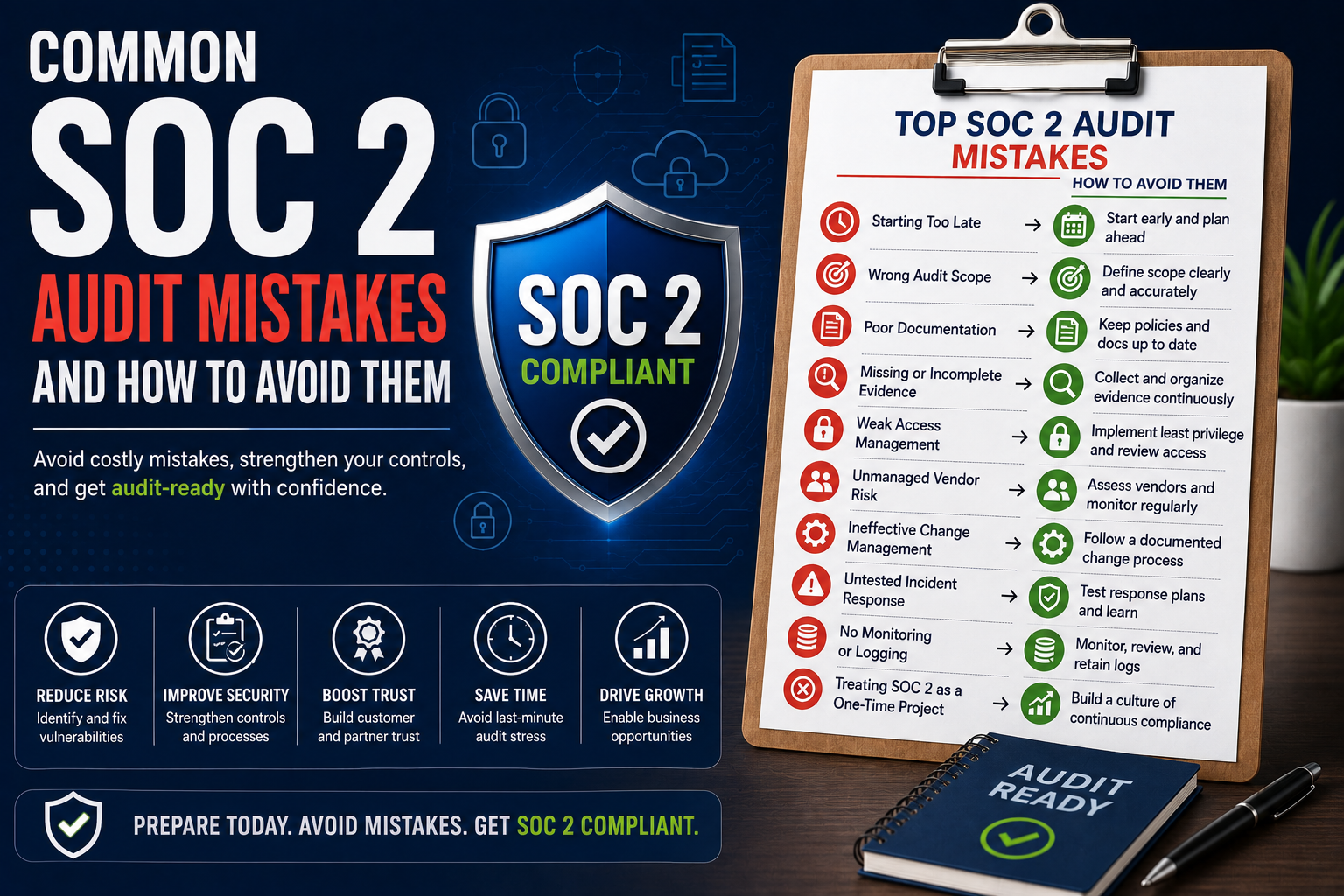
The audit itself should only be 20% of the effort; the readiness phase is the other 80%. Nothing derails an audit faster than rushing the prep work.
Step 1: Define Scope (Trust Service Criteria)
You cannot audit everything. Work with your auditor (CPA firm) to define the scope based on the Trust Service Criteria (TSC) relevant to your business.
While Security is mandatory, you will select others based on customer needs:
| TSC | Focus Area | Relevance |
|---|---|---|
| Security (Mandatory) | Protection against unauthorized access, use, or modification. | Everyone. |
| Availability | System access, performance, and monitoring. | Critical for mission-critical SaaS apps. |
| Processing Integrity | System completeness, accuracy, and timely processing. | Highly relevant for payment processors or financial data. |
| Confidentiality | Protection of confidential customer or business data. | Mandatory if you handle any restricted data. |
| Privacy | Collection, use, retention, disclosure, and disposal of Personal Identifiable Information (PII). | Essential if handling EU/California consumer data. |
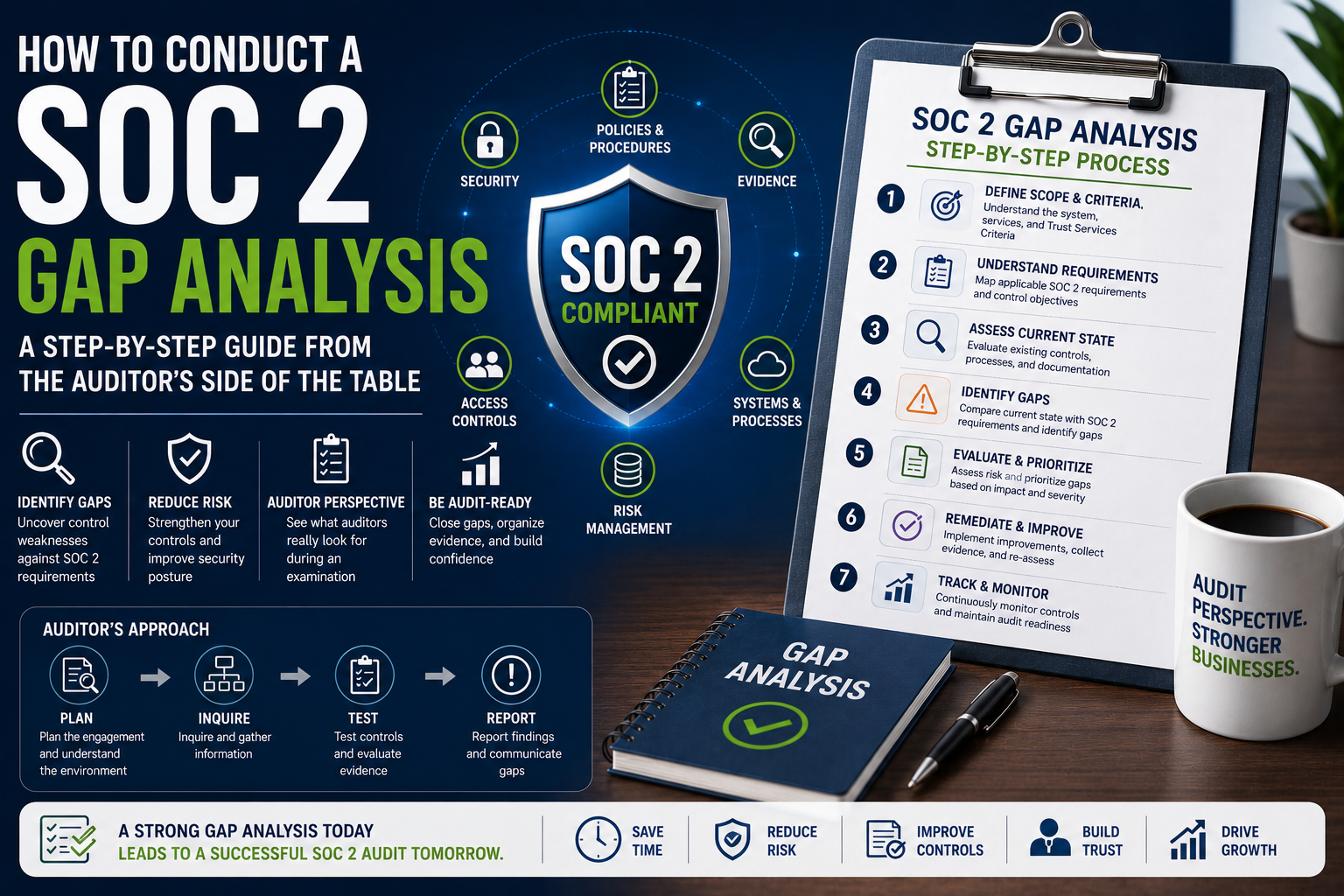
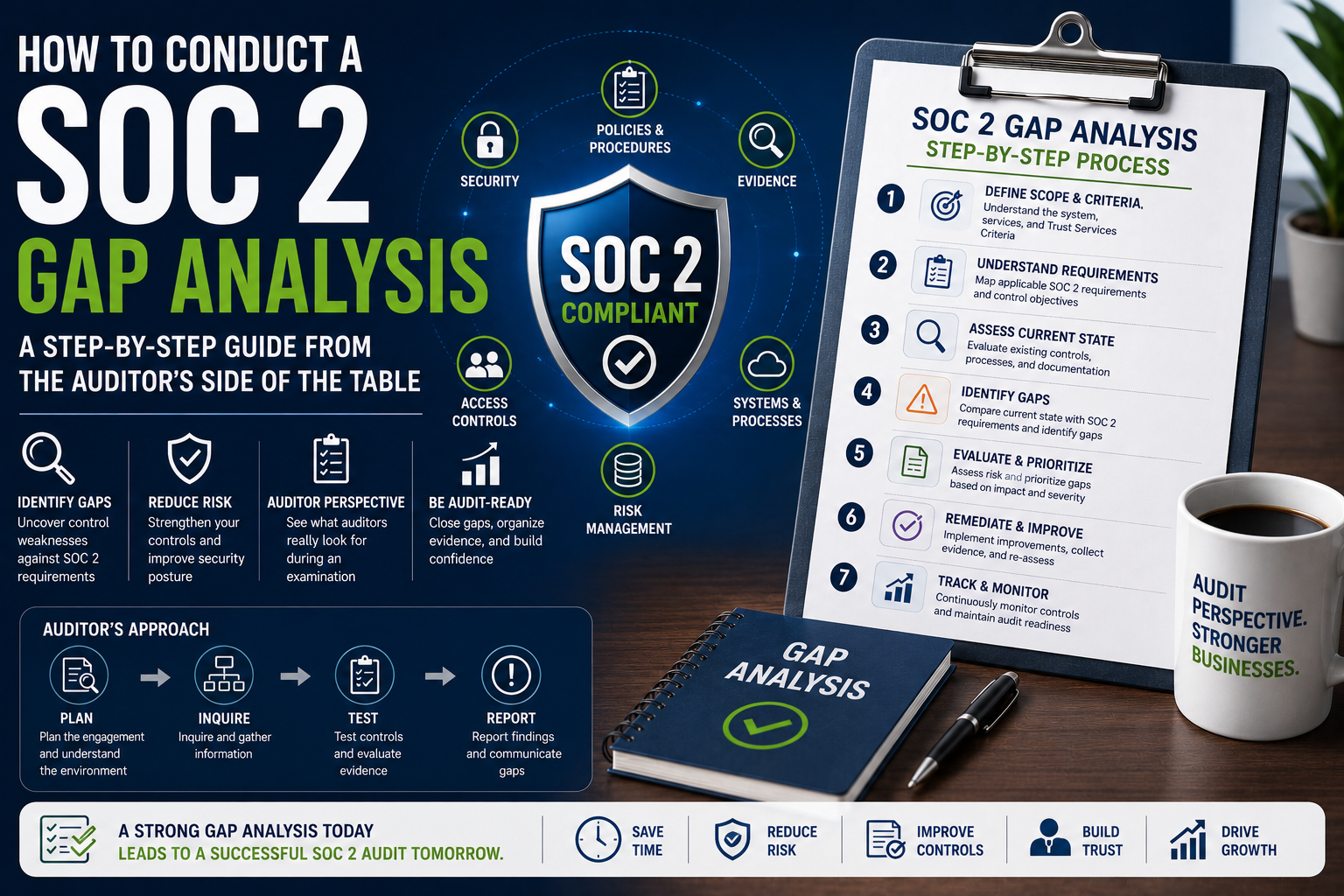
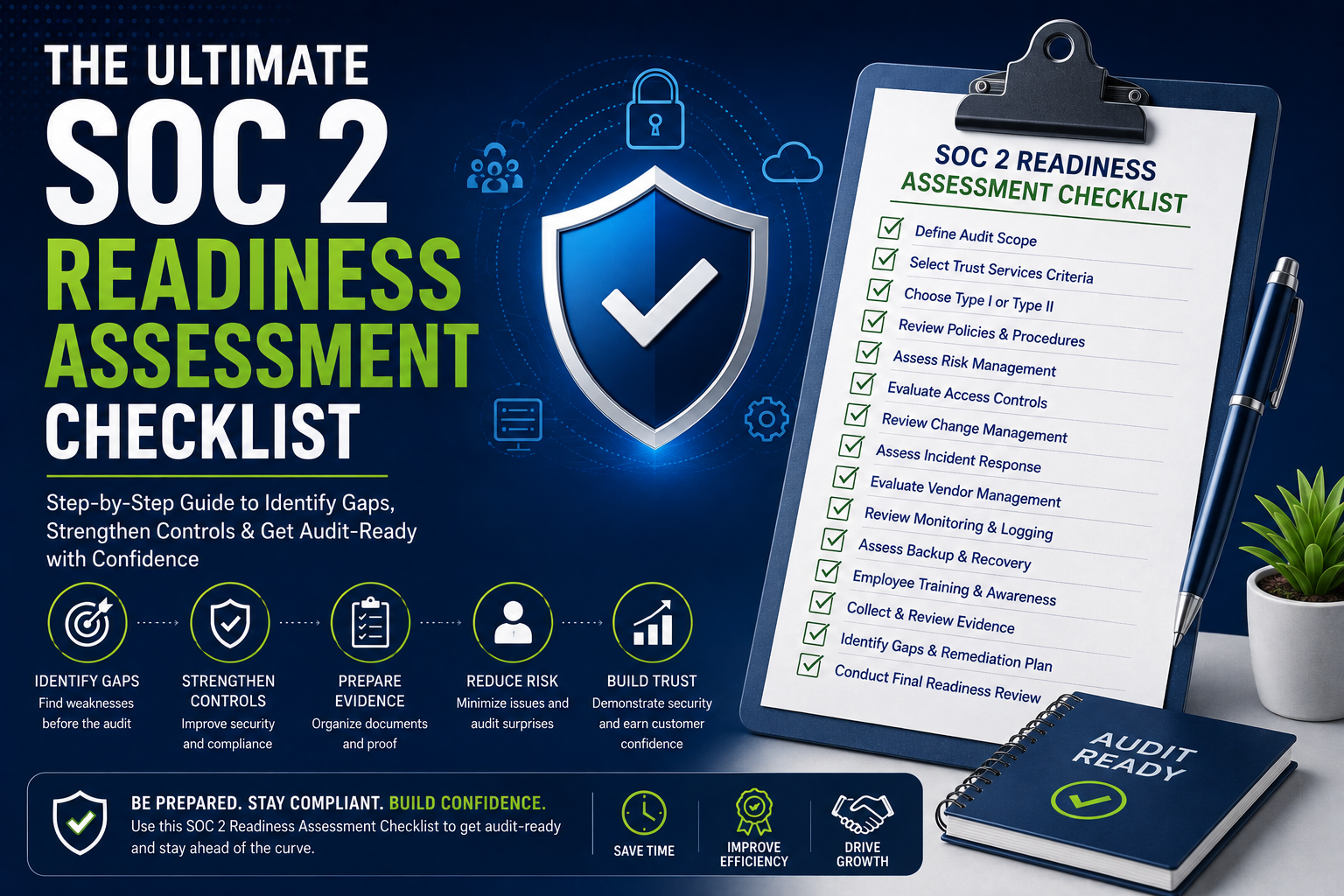
Step 2: Conduct a Gap Analysis
A gap analysis compares your existing controls against the chosen TSC requirements. This will produce a list of missing policies, procedures, or technical configurations that must be implemented before the observation window begins.
Step 3: Implement & Document Everything (Control Remediation)
This is where you write the policies, set up the tools, and train the staff. Crucially, start tracking evidence immediately. This remediation period should last 3-6 months.
3. The Live Audit: Phases and Expectations
Once your chosen observation period (e.g., July 1st to December 31st) ends, the auditor begins their work.
Phase 1: Planning and Kick-Off (1-2 Weeks)
The auditor confirms the control list, identifies the key stakeholders (HR, Engineering, IT, Finance), and outlines the evidence required for each control. They will provide a massive list of requested items.
Phase 2: Evidence Collection (The Bulk of the Work)
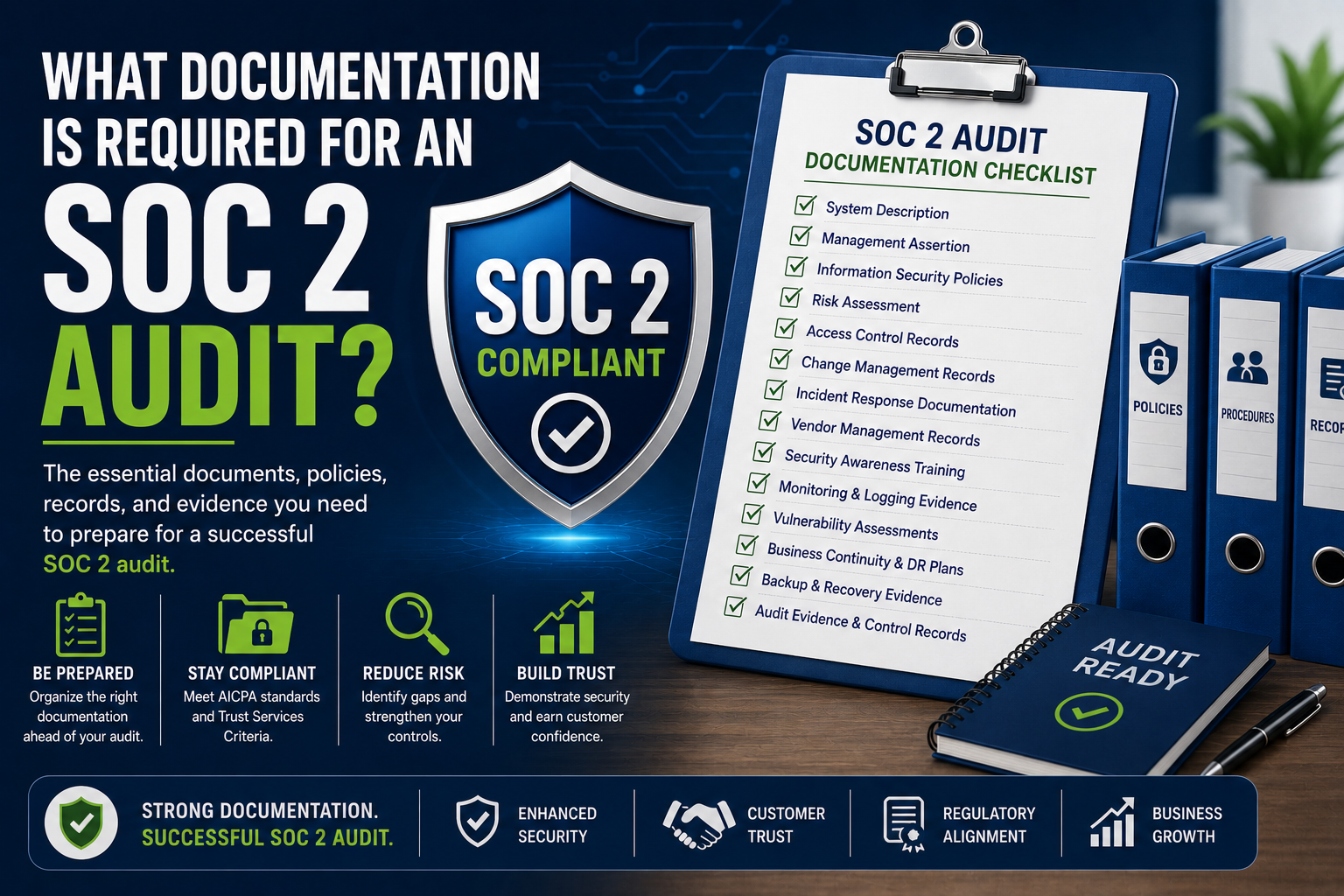
This is the most time-consuming phase. You must provide documentation to prove that your controls operated effectively throughout the entire observation window.
Expect to provide evidence for:
- Access Reviews: Screenshots or reports showing all user access was reviewed and approved quarterly.
- Change Management: JIRA/GitHub logs showing all code changes went through approval, testing, and deployment processes.
- System Configuration: Logs showing monthly vulnerability scans were run and critical patches were applied.
- Employee Offboarding: HR records and IT tickets proving that access was revoked immediately upon employee termination.
- Security Training: Completion certificates for all staff across the period.
Phase 3: Fieldwork and Interviews
This is where the auditor tests the “human controls.” They will randomly select employees across different teams and ask them to walk through specific processes, such as:
- Engineers: “Show me how you deploy code from staging to production. What prevents you from skipping the peer review step?”
- HR/Ops: “Show me the physical sign-in sheet for the data center and the policy on visitor access.”
- IT/Security Lead: “How do you respond to a security incident? Can you show me the log of the last simulated phishing exercise?”
Key Tip: Do not argue with the auditor. Simply answer their questions honestly and refer them to the appropriate documentation.
Phase 4: Reporting
The auditor prepares the final report, which contains two main sections:
- Auditor’s Opinion: The final conclusion (e.g., Unqualified/Clean, Qualified, Adverse).
- Description of Controls: A detailed account of your systems, controls, and the auditor’s tests.
The goal is to receive an Unqualified Opinion, meaning your controls were designed and operated effectively.
4. Modern Best Practices for SOC 2 Success
To make the audit less painful and more successful, adopt these modern strategies:
| Best Practice | Description | Why It Works |
|---|---|---|
| Automate Evidence Collection (GRC Tools) | Utilize Governance, Risk, and Compliance (GRC) platforms (e.g., Vanta, Secureframe). | Connects directly to GitHub, AWS, and HR systems to pull evidence continuously, eliminating manual fetching. |
| Assign a Dedicated Audit Lead | Appoint one person (often the CTO, CISO, or Compliance Officer) to own the audit process. | Prevents scattered communication and ensures consistent evidence submission. |
| “Bake” Security Into the Product | Integrate security tasks into daily workflows (e.g., mandatory vulnerability scanning before merge). | Reduces the feeling that “security is extra work” and proves the “operating effectiveness” the auditor wants to see. |
| Conduct a Mock Audit | Hire a separate third party to perform a practice run 1-2 months before the official audit ends. | Finds last-minute gaps and prepares your staff for the interview process. |
Conclusion
Passing a SOC 2 Type II audit is a marathon, not a sprint. It demands consistency, documentation, and buy-in from every department. While challenging, achieving a clean report solidifies your market position, opens doors to enterprise clients, and proves your commitment to security and compliance.
Start preparing early, focus on automation, and remember that the audit is a process designed to make you a more secure organization.